
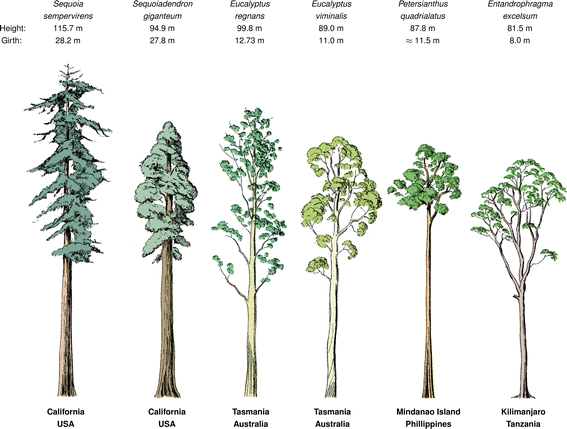
As we explore the fascinating world of trees, one category stands out for its impressive height and versatility – high-canopy trees. These towering plants have adapted to thrive in a variety of environments, making them a crucial part of our ecosystem. In this article, we’ll delve into the world of high-canopy trees, exploring their characteristics, types, and examples.
What are High-Canopy Trees?
High-canopy trees are a diverse group of species that have evolved to grow above 3 meters in height. These trees have developed unique adaptations to overcome challenges such as wind, drought, and competition for resources. Unlike other tree categories, high-canopy trees cannot be confined to a single botanical classification, but rather exist on a spectrum of heights.
Characteristics of High-Canopy Trees
While individual species within this category may exhibit varying traits, certain characteristics are common among high-canopy trees:
- Height above 3 meters: This is the primary characteristic that defines high-canopy trees. They have evolved to reach remarkable heights, allowing them to compete with other vegetation for resources and sunlight.
- Deeply developed root systems: High-canopy trees often have extensive root systems that enable them to absorb water and nutrients from the soil. These roots can stretch far beyond the tree’s canopy, anchoring it in place and providing additional support.
- Adaptations to withstand strong winds and extreme weather conditions: High-canopy trees have developed various adaptations to cope with harsh weather conditions, such as wind, drought, and flooding. These adaptations may include:
- Strong, flexible branches that can bend without breaking
- Deep roots that help stabilize the tree in strong winds
- Thicker bark that provides protection from extreme temperatures and weather conditions
Types of High-Canopy Trees
High-canopy trees come in various shapes, sizes, and species. We can broadly categorize them into three types based on their maximum height:
- First-class high canopy: These trees reach heights above 25 meters, such as the white fir (Abies alba) and the larch (Larix decidua). They are often found in areas with well-drained soil and full sun.
- Second-class high canopy: Trees in this category typically grow between 18-25 meters tall, like the willow (Salix spp.) and the silver maple (Acer saccharinum). They prefer moist soils and partial shade.
- Third-class high canopy: These trees reach heights of 8-18 meters, including species such as the boxwood (Buxus sempervirens) and the holly (Ilex spp.). They often thrive in well-drained soils with full sun.
Examples of High-Canopy Trees
Some notable examples of high-canopy trees include:
- White fir (Abies alba): Native to Europe, this evergreen tree can grow up to 35 meters tall.
- Larch (Larix decidua): Found in Europe and Asia, the larch is known for its distinctive yellow-brown bark and can reach heights of over 30 meters.
- Willow (Salix spp.): With numerous species worldwide, willows are highly adaptable and can grow up to 25 meters tall.
Importance of High-Canopy Trees
High-canopy trees play a vital role in maintaining ecosystem balance. They provide:
- Habitat for wildlife: High-canopy trees offer shelter, food, and breeding grounds for various animal species.
- Soil stabilization: The extensive root systems of these trees help prevent soil erosion and landslides.
- Carbon sequestration: As a significant carbon sink, high-canopy trees contribute to mitigating climate change.
Conclusion
High-canopy trees are awe-inspiring natural wonders that have adapted to thrive in diverse environments. By understanding their characteristics, types, and examples, we can appreciate the importance of these towering plants in maintaining ecosystem balance and providing essential ecological services.
Ecological Role of High-Canopy Trees
High-canopy trees contribute significantly to maintaining ecosystem balance and provide various ecological services:
- Habitat provision: High-canopy trees offer a unique habitat for various animal species, including birds, mammals, and insects.
- Soil stabilization: The extensive root systems of these trees help prevent soil erosion and landslides.
- Carbon sequestration: As a significant carbon sink, high-canopy trees contribute to mitigating climate change.
Conservation Status of High-Canopy Trees
High-canopy trees are often threatened by human activities such as deforestation, over-harvesting, and habitat fragmentation. Efforts should be made to conserve these ecosystems:
- Protected areas: Establishing protected areas can help safeguard high-canopy tree forests from human activities.
- Sustainable forestry practices: Implementing sustainable forestry practices can reduce the impact of forest harvesting on high-canopy trees.
Conclusion
High-canopy trees are a vital component of our ecosystem, providing essential ecological services and maintaining biodiversity. By understanding their characteristics, types, and examples, we can appreciate the importance of these towering plants in maintaining ecosystem balance and mitigating climate change.
In recent years, there has been an increasing focus on the importance of preserving high-canopy tree ecosystems. This is due to the significant role they play in maintaining ecosystem balance, providing habitat for wildlife, and sequestering carbon. In addition to their ecological benefits, high-canopy trees also provide numerous economic and social benefits.
Economic Benefits
High-canopy trees can have a significant impact on local economies through various means:
- Timber production: High-canopy tree forests are often harvested for timber, which can be used for construction, furniture-making, and other purposes.
- Tourism: The unique habitats provided by high-canopy trees attract tourists who come to admire their beauty and learn about their ecological significance.
Social Benefits
High-canopy trees also provide numerous social benefits:
- Cultural significance: High-canopy trees are often culturally significant, with various communities having traditional associations with these ecosystems.
- Recreation: The unique habitats provided by high-canopy trees offer opportunities for recreation and leisure activities such as hiking, birdwatching, and photography.
Conclusion
High-canopy trees are a vital component of our ecosystem, providing essential ecological services and maintaining biodiversity. By understanding their characteristics, types, and examples, we can appreciate the importance of these towering plants in maintaining ecosystem balance and mitigating climate change.
In conclusion, high-canopy trees play a vital role in maintaining ecosystem balance and provide various ecological services. Their unique adaptations to thrive in diverse environments make them awe-inspiring natural wonders that contribute significantly to our planet’s biodiversity.



