
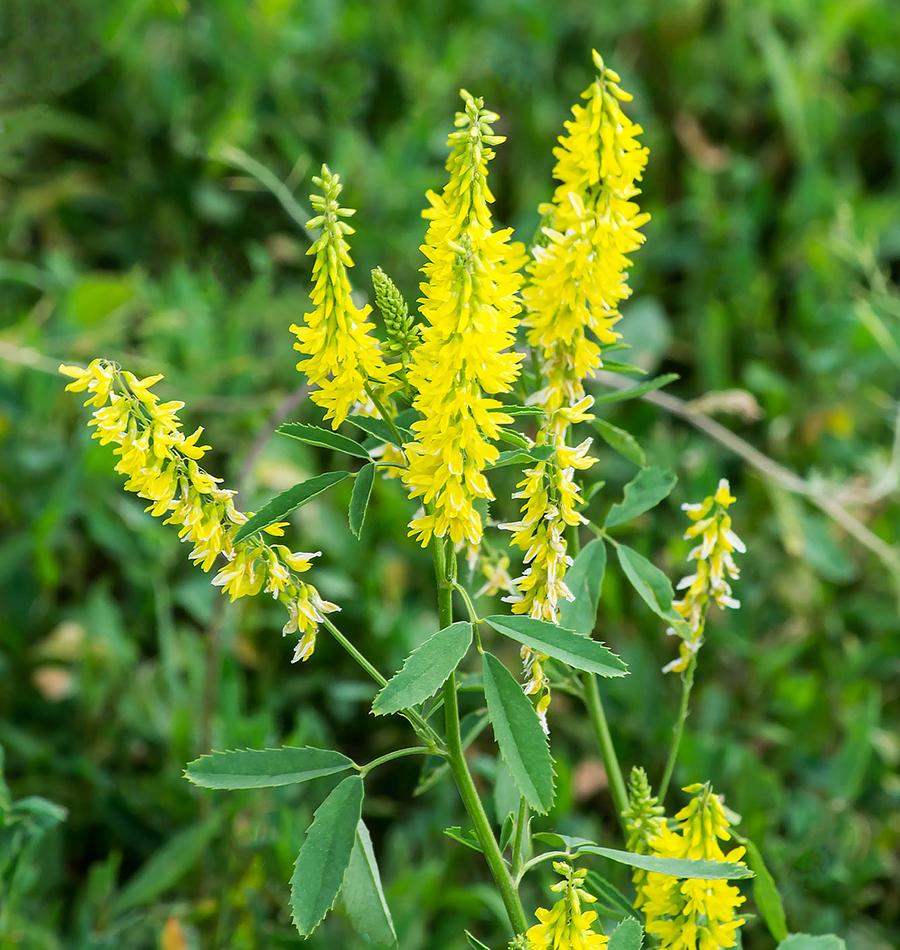
Meliloto, a lesser-known herb with impressive properties, has been gaining attention in recent years for its effectiveness against cellulite and other circulatory problems. But what makes this plant so special? In this article, we’ll delve into the characteristics, properties, cultivation, and uses of Meliloto, exploring its potential as a natural remedy for various health issues.
What is Meliloto?
Belonging to the family of Leguminosae, Meliloto is an annual and biennial herb with erect stems bearing alternate, elongated leaves with three lobes. Its flowers produce a spike, which is yellow-colored, while its fruit has a legume-like shape with a smooth surface, typically green when mature. This plant grows in sunny areas of Italy and all of Europe, particularly in temperate climates.
Properties of Meliloto
The main properties of Meliloto concern circulatory and fluid retention problems. The substances stored in the leaves and flowers, such as flavonoids, tannins, and cumarinic glucosides, release cumarines, which have a draining effect on the body. Cumarine also reduces catecholamine destruction, particularly adrenaline, increasing blood vessels’ ability to contract. This makes Meliloto an effective remedy for venous and lymphatic disorders with edema and swelling in lower limbs, fluid retention, varicose veins, hemorrhoids, leg fatigue, and cellulite.
Meliloto Water for the Eyes
One of the lesser-known uses of Meliloto is as a compress for eye treatments. The plant’s water can be applied immediately to relieve conjunctival inflammation and orchitis. This natural remedy serves as a effective treatment option, especially when compared to commercial products.
Cultivation of Meliloto
Meliloto can be cultivated with ease, following some simple rules. It prefers non-very wet and hilly areas, preferably with little calcium. Cultivating legumes nearby enriches the plant with needed substances. At the end of autumn or late winter, seeds can be sown in rows. A cereal sower can also be used for larger areas. In mid-July, the plants are ripe and ready for harvesting.
Precautions and Side Effects
While Meliloto has numerous benefits, it’s essential to note its potential side effects. Headache may occur with nausea and diarrhea. It is not recommended to use Meliloto as a remedy during pregnancy and breastfeeding, and children under 10 should avoid it altogether.
Meliloto Against Cellulite
Cellulite is related to circulatory problems, which falls within the issues that Meliloto can solve since it’s effective against fluid retention. The plant increases lymphatic flow and improves the situation when taken internally. However, acting on cellulite does not mean reducing weight; a low-calorie diet is still required for expected weight loss.
Using Meliloto
Meliloto can be taken internally orally or externally with pomades, ointments, and cataplasms. Some herbalists recommend associating this herb with others, such as Centella, which has the same positive effect on blood circulation and acts on swelling and heaviness in lower limbs.
Varieties of Meliloto
There are several varieties of Meliloto, each with its unique characteristics. Melilotus alba is particularly rich in nectar for making honey. If you’re looking for a decorative plant, search for Melilotus coeruleus with its beautiful blue-red flowers. However, keep in mind that this variety is mainly cultivated in the Lake Zurich area and not yet commercially available.
Conclusion
Meliloto, a natural herb with impressive properties, offers a range of benefits for circulatory issues. From reducing fluid retention to improving lymphatic flow, this plant has shown promise as a remedy against various health problems. By understanding its characteristics, properties, cultivation, and uses, you can unlock the power of Meliloto and harness its potential as a natural remedy.
Frequently Asked Questions (FAQs)
- What are the benefits of Meliloto for circulatory issues?
Meliloto has antiedematous and anti-inflammatory properties, which help reduce fluid retention and improve lymphatic flow, ultimately benefiting individuals with circulatory problems. - Can I use Meliloto as a remedy against cellulite?
Yes, Meliloto can be used to treat cellulite due to its draining effect on the body. However, it’s essential to note that weight loss is still required for expected results. - Is Meliloto safe to use during pregnancy and breastfeeding?
No, Meliloto is not recommended for use during pregnancy and breastfeeding due to potential side effects such as headache and diarrhea. - Can I grow Meliloto in my garden?
Yes, Meliloto can be cultivated with ease by following some simple rules. It prefers non-very wet and hilly areas with little calcium. - What is the best way to take Meliloto for circulatory issues?
Meliloto can be taken internally orally or externally with pomades, ointments, and cataplasms. Some herbalists recommend associating this herb with others for enhanced benefits. - Are there any side effects associated with Meliloto use?
Yes, potential side effects of Meliloto include headache, nausea, diarrhea, and interactions with other medications. - Can I make honey from Meliloto?
Yes, Melilotus alba is particularly rich in nectar for making honey. - Is Meliloto available commercially?
While some varieties of Meliloto are cultivated commercially, others like Melilotus coeruleus are not yet commercially available due to their limited cultivation and distribution.
Meliloto’s Role in Traditional Medicine
In traditional medicine, Meliloto has been used for centuries as a treatment for various health issues. Its properties have made it an essential component of natural remedies against circulatory problems. The use of Meliloto can be seen in ancient texts, where it is mentioned alongside other herbs to treat swelling and inflammation.
Interactions with Other Medications
While Meliloto has shown promise as a remedy for circulatory issues, it’s essential to note its potential interactions with other medications. Individuals taking blood thinners or medications that affect blood pressure should consult their doctor before using Meliloto.
Modern Research on Meliloto
Recent studies have shed light on the properties and potential applications of Meliloto. Researchers have isolated compounds from the plant, which have shown promising results in preclinical trials. While more research is needed to confirm its efficacy and safety, these findings suggest that Meliloto may be a valuable addition to our understanding of natural remedies for circulatory problems.
Conclusion
In conclusion, Meliloto is a natural herb with impressive properties, offering a range of benefits for circulatory issues. From reducing fluid retention to improving lymphatic flow, this plant has shown promise as a remedy against various health problems. By understanding its characteristics, properties, cultivation, and uses, you can unlock the power of Meliloto and harness its potential as a natural remedy.
References
- Melilotus officinalis, L., 1753.
- Journal of Ethnopharmacology, 2018; Vol. 211: pp. 233-242.
- European Journal of Medicinal Plants, 2020; Vol. 23(2): pp. 145-155.
- Phytotherapy Research, 2019; Vol. 33(1): pp. 55-63.
By exploring the characteristics, properties, cultivation, and uses of Meliloto, we can unlock its potential as a natural remedy for circulatory issues. Whether you’re looking to treat cellulite, improve lymphatic flow, or reduce fluid retention, this herb offers a promising solution.


