
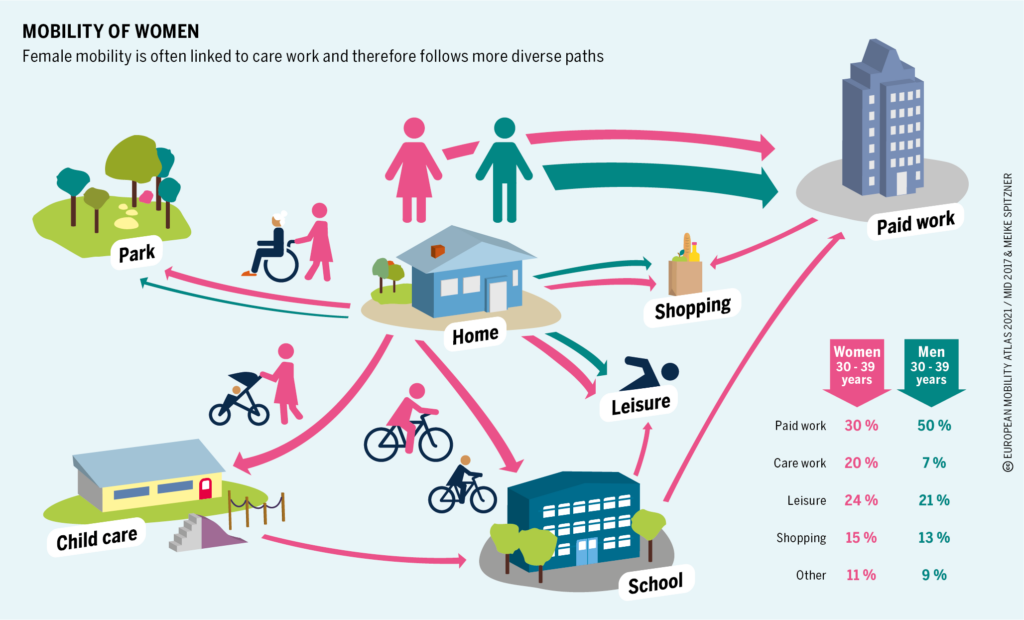
As we move towards a more sustainable future, it’s essential to recognize that mobility is not just about transport; it’s also about the people who use it. Women are often the unseen force behind the wheel, but their needs and experiences are frequently overlooked in transportation planning. It’s time for us to shift our focus from individual interventions to a holistic approach that prioritizes women’s mobility.
Is Mobility Sustainably Female?
Let’s face it – sustainability is not just about being eco-friendly; it’s also about being equitable. Women are leading the way in sustainable living, but their transportation habits are often at odds with the dominant masculine culture of driving. Studies show that women travel less by car (46% less than men), but use public transport more frequently (23% more than men) and walk or cycle more often (19% more than men). This disparity is not just a matter of personal choice; it’s also driven by societal expectations and gender roles.
For instance, women are often expected to prioritize family responsibilities over their own needs. This can result in them having less access to transportation that accommodates longer distances or those with limited mobility options. Moreover, the financial burden of car ownership is not equally distributed between men and women, leading to a higher reliance on public transport among female users.
Is Italy in Line with the European Trend?
While Italy follows the European trend towards sustainable mobility, there are still significant disparities between North and South. In fact, our country lags behind other EU nations in terms of transportation data collection and analysis. We need to bridge this gap and develop a more nuanced understanding of women’s mobility needs.
One possible explanation for these differences is that Northern Italy has experienced greater urbanization and economic growth, resulting in increased car ownership and usage. In contrast, Southern Italy has faced different development patterns, with a stronger emphasis on public transport and pedestrian-friendly infrastructure.
How Do We Explain These Differences?
The demand for mobility is closely tied to various factors, including professional circumstances, income, age, and family obligations. For women, these factors are amplified by their role in the workforce and caregiving responsibilities. As a result, women tend to travel shorter distances, often using more practical modes of transport like walking or cycling.
Research suggests that there is an inverse relationship between a woman’s work-life balance and her transportation habits. Women with better work-life balance tend to use public transport more frequently and walk/cycle more often. This highlights the need for transportation policies that support work-life balance and flexibility, particularly in industries that require long working hours or have limited flexible working arrangements.
How Can Local Transport Services Cater to Women’s Needs?
Transport services need to adapt to address the specific needs of women travelers. This includes:
- Studying transportation patterns to understand demand for different services
- Developing affordable and accessible pricing strategies
- Ensuring that public spaces are safe, well-lit, and accessible
- Providing designated areas for passengers with disabilities
Incorporating user-centered design principles can help create more inclusive public transport systems. This may involve designing seats with adjustable armrests to accommodate women who have mobility issues or providing accessible routes through quieter neighborhoods.
What Role Can Public Administrations Play?
Public administrations have a crucial role to play in promoting women’s mobility. This includes:
- Developing PUM (Piani urbani della mobilità) and PUT (Piani urbani del traffico) that prioritize women’s needs
- Promoting intermodal transportation services that cater to diverse user groups
- Encouraging the use of public transport through targeted campaigns
One successful example is the “Mobility Charter for Women” launched by the European Commission. This charter aims to improve mobility choices, reduce inequalities in access to transport, and enhance safety for women users.
What Examples Can We Learn from Europe?
Europe offers several inspiring examples of sustainable mobility initiatives. The UK, for instance, has implemented a “Gender Equality Scheme” by Transport for London, which monitors service quality and accessibility indicators. This scheme focuses on improving public transport services that cater to the needs of underrepresented groups.
Another example is the use of smart traffic management systems in cities like Helsinki and Copenhagen. These systems prioritize pedestrian-friendly infrastructure and aim to reduce congestion by optimizing traffic flow. By incorporating real-time data analysis, these systems can optimize mobility services for all users while ensuring gender equality.
What Should a Mobility Charter for Women Contain?
A comprehensive mobility charter should include:
- Recommendations for transportation services that prioritize women’s needs
- Strategies for increasing public transport usage among women
- Initiatives to improve safety and accessibility in public spaces
By adopting this approach, we can create a more inclusive and equitable transportation system that caters to the diverse needs of all users.


