
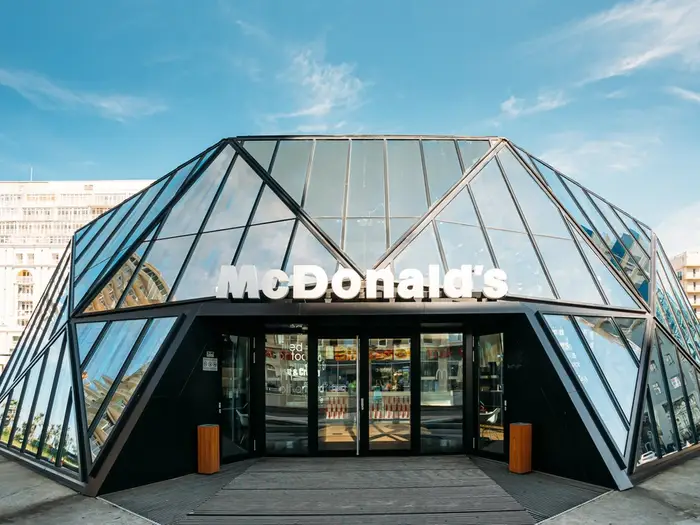
As we drive along the highways, it’s common to see McDonald’s restaurants popping up alongside gas stations. In our culture, these fast-food chains have become an integral part of the urban landscape, often viewed as anonymous structures with little architectural significance. However, a visit to the Republic of Georgia will leave you marveling at a stunning example that challenges this notion.
In the ex-Soviet republic, a classic gas station was transformed into something truly remarkable – a sustainable McDonald’s restaurant designed by Georgian architect Giorgi Khmaladze. This 1,200 square meter building stands out in Batumi’s coastal city, on the eastern shore of the Black Sea. The entire structure is surrounded by lush greenery, which might seem like a novel concept in fast food.
A Masterpiece of Sustainable Design
The design of this McDonald’s is unlike anything we’ve seen before. The massive glass windows provide natural lighting, reducing energy consumption to almost zero. The building has become an iconic symbol of Batumi’s renovation efforts. On one side lies the gas station, while on the other, the restaurant blends seamlessly into its surroundings.
At first glance, the structure appears as a large mosaic made of glass and white panels from above. However, upon entering, visitors are greeted by walls covered in lush greenery, which not only adds aesthetic appeal but also helps to insulate the space and create a peaceful atmosphere for dining. Water is absorbed by the plants and helps regulate the temperature.
The design of this McDonald’s is a testament to sustainable architecture and its potential to revolutionize the way we think about fast food. By incorporating eco-friendly materials, minimizing energy consumption, and blending into its surroundings, this restaurant has set a new standard for the industry.
A Breakthrough in Sustainable Architecture
This project represents a breakthrough in sustainable architecture. Gone are the days of neglecting environmental concerns; McDonald’s has finally taken steps towards becoming more eco-friendly. The Batumi restaurant serves as an exemplary model, showcasing how even fast food chains can adopt environmentally conscious design principles.
But is this too much for a McDonald’s? Will they be able to deliver on their promise of serving real food? Only time will tell. However, we believe that this pioneering effort will inspire other companies in the fast food industry to follow suit and prioritize sustainability in their designs.
A Tour of the Sustainable McDonald’s
As we explore the restaurant, we’re struck by its unique blend of modern art and practicality. The interior features an elegant design that effortlessly balances style with efficiency. From the outside, it looks like just another gas station, but once inside, the contrast is stark.
We can observe how the greenery-covered walls not only add a touch of natural beauty to the space but also help regulate the temperature and reduce energy consumption. The use of eco-friendly materials such as glass and white panels creates a sense of transparency and openness, allowing natural light to flood the interior.
The restaurant’s design is a masterclass in balancing form and function. The sleek lines and minimalist aesthetic create a modern look that appeals to young customers, while the greenery-covered walls provide a soothing touch for parents looking for a peaceful dining experience with their families.
Sustainability Features
This McDonald’s features several sustainability initiatives that make it stand out from other fast food chains:
- Energy Efficiency: The massive glass windows provide natural lighting, reducing energy consumption to almost zero.
- Water Conservation: Water is absorbed by the plants and helps regulate temperature, minimizing water waste.
- Eco-Friendly Materials: The structure is made from eco-friendly materials such as glass, white panels, and lush greenery.
- Minimized Waste: The restaurant has implemented a comprehensive recycling program to minimize waste and reduce its carbon footprint.
Conclusion
In conclusion, the sustainable McDonald’s in Georgia is a game-changer in the fast food industry. As we look to the future, it’s crucial that more companies like McDonald’s adopt environmentally conscious design principles. Will this restaurant be the start of a new era in sustainable architecture? Only time will tell.
However, we believe that this pioneering effort has paved the way for other companies to follow suit and prioritize sustainability in their designs. As consumers become increasingly aware of environmental issues, they will demand more eco-friendly practices from their favorite brands.
Future Directions
As we look to the future, there are several ways that sustainable architecture can revolutionize the fast food industry:
- Incorporating Eco-Friendly Materials: Companies like McDonald’s can incorporate more eco-friendly materials into their designs, such as reclaimed wood and low-VOC paints.
- Implementing Energy-Efficient Systems: Restaurants can implement energy-efficient systems such as solar panels and LED lighting to reduce their carbon footprint.
- Reducing Food Waste: Companies can work on reducing food waste by implementing comprehensive recycling programs and minimizing packaging.
- Promoting Sustainable Agriculture: Restaurants can promote sustainable agriculture practices by sourcing ingredients from local farmers who use environmentally friendly methods.
Conclusion
In conclusion, the sustainable McDonald’s in Georgia is a testament to the potential of sustainable architecture to revolutionize the fast food industry. By incorporating eco-friendly materials, minimizing energy consumption, and promoting sustainability, companies like McDonald’s can set a new standard for the industry.
As we look to the future, it’s crucial that more companies adopt environmentally conscious design principles to minimize their impact on the environment. Will this restaurant be the start of a new era in sustainable architecture? Only time will tell, but one thing is certain – this pioneering effort has paved the way for a more sustainable future.
Frequently Asked Questions (FAQs)
-
What inspired Giorgi Khmaladze to create this unique McDonald’s design?
The architect wanted to create a structure that blended seamlessly into its surroundings, utilizing natural materials and minimizing environmental impact. -
How does the McDonald’s in Batumi reduce energy consumption?
The building features massive glass windows providing natural lighting, reducing the need for artificial illumination. -
What kind of materials were used in the construction of this sustainable McDonald’s?
The structure is made from eco-friendly materials such as glass, white panels, and lush greenery. -
How does the interior design contribute to a peaceful atmosphere?
The walls covered with lush greenery not only add aesthetic appeal but also help insulate the space and regulate temperature. -
Will this McDonald’s serve traditional fast food or prioritize sustainable options?
While we can’t confirm the menu yet, we’re hopeful that this pioneering effort will inspire other locations to follow suit. -
How does this project impact the urban landscape of Batumi?
The restaurant has become an iconic symbol of the city’s renovation efforts, blending seamlessly into its surroundings. -
What is the significance of the location chosen for this McDonald’s?
The structure is situated in one of Batumi’s coastal cities, providing a unique blend of modern art and practicality. -
Can other companies replicate this sustainable design?
While it may be challenging to exactly replicate the design, we can expect to see more environmentally conscious architecture in the future.


