
As we delve into the world of sunflower seeds, it’s hard not to feel a sense of excitement and curiosity. These tiny seeds hold a wealth of nutritional information that can have a significant impact on our overall health and wellbeing.
From their high content of essential fatty acids to their rich stores of vitamins and minerals, sunflower seeds are an incredibly versatile ingredient that can be enjoyed in a variety of ways. In this article, we’ll explore the benefits of sunflower seeds, how to incorporate them into your diet, and where to find them for sale.
The Nutritional Profile of Sunflower Seeds
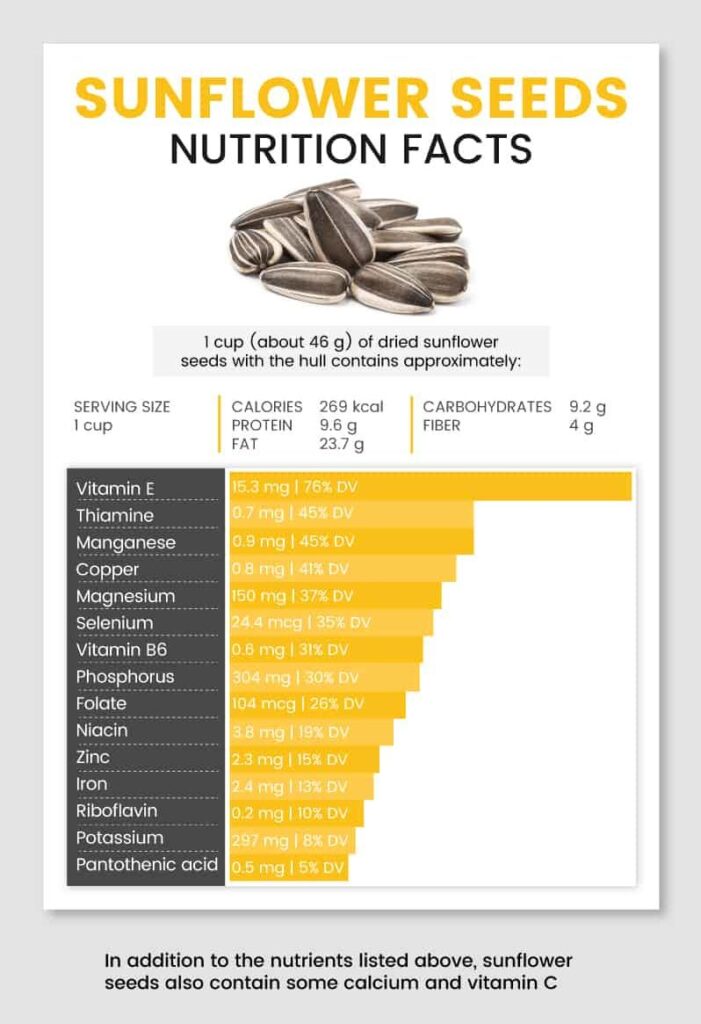
So, what makes sunflower seeds so special? Let’s take a closer look at their nutritional profile:
- Calories: 584 per 100g serving
- Carbohydrates: 20g
- Fat: 51.46g (of which:
- Saturated fat: 4.45g
- Monoinsaturated fat: 18.52g
- Polyunsaturated fat: 23.13g)
- Protein: 20.78g
- Micronutrients:
- Vitamin B1 (Thiamin): 1.48mg
- Vitamin B2 (Riboflavin): 0.355mg
- Vitamin B3 (Niacin): 8.335mg
- Vitamin B9 (Folic acid): 227mcg
- Vitamin J (Colina): 55.1mg
- Vitamin C: 1.4mg
- Vitamin E: 35.17mg
- Calcium: 78mg
- Magnesium: 325mg
- Iron: 5.25mg
- Phosphorus: 660mg
- Potassium: 645mg
- Sodium: 9mg
- Zinc: 5mg
In addition to their impressive nutritional profile, sunflower seeds are also rich in fitosterols, which have been shown to help lower cholesterol levels.
How to Enjoy Sunflower Seeds
Now that we’ve explored the benefits of sunflower seeds, let’s talk about how to incorporate them into your diet. Here are some ideas:
- Add them to salads for a boost of protein and healthy fats
- Use them as a topping for omelets or scrambled eggs
- Sprinkle them on top of yogurt or oatmeal for added crunch and nutrition
- Make sunflower seed butter by blending them into a creamy paste
If you’re new to sunflower seeds, it’s worth noting that they can be quite crunchy, so be sure to toast them before consuming. Simply heat some oil in a pan over medium heat, add the seeds, and stir frequently until they’re lightly browned.
Sunflower Seed Recipes
Here are some delicious recipes that showcase the versatility of sunflower seeds:
- Sunflower Seed Butter Smoothie: Blend 2 tablespoons of sunflower seed butter with 1/2 cup frozen berries, 1/2 banana, and 1/2 cup unsweetened almond milk.
- Roasted Sunflower Seeds: Toss 1/4 cup of sunflower seeds with 2 tablespoons olive oil, salt, and pepper. Roast in the oven at 350°F for 10-12 minutes or until lightly browned.
- Sunflower Seed Energy Balls: Mix 1/4 cup of sunflower seeds with 1 tablespoon honey, 1 tablespoon nut butter, and 1/2 cup rolled oats. Roll into balls and refrigerate for at least 30 minutes.
Where to Buy Sunflower Seeds
So, where can you find high-quality sunflower seeds? Here are some options:
- Look for organic or biodynamic options at your local health food store
- Check out online retailers like Amazon or Thrive Market for a wide selection of products
- Consider purchasing in bulk from a reputable supplier to save money
When shopping for sunflower seeds, be sure to choose varieties that are labeled as “seed-only” or “unsalted.” These will ensure that you get the best nutritional benefits without added salt or preservatives.
Growing Your Own Sunflowers
If you’re interested in growing your own sunflowers for seeds, here are some tips:
- Choose a sunny location with well-draining soil
- Plant seeds 1 inch deep and 6 inches apart in late spring or early summer
- Water regularly and provide support for the plants as they grow
- Harvest seeds when the heads turn brown and dry
Conclusion
Sunflower seeds are an incredible source of nutrition and can be enjoyed in a variety of ways. By incorporating them into your diet, you’ll not only boost your energy levels but also support overall health and wellbeing. Whether you’re looking for a tasty snack or a nutritious addition to your meals, sunflower seeds are definitely worth exploring.
Frequently Asked Questions
Q: Are sunflower seeds good for my heart?
A: Yes! The fitosterols in sunflower seeds have been shown to help lower cholesterol levels and reduce the risk of heart disease.
Q: Can I use sunflower seeds as a substitute for other nuts or seeds?
A: While sunflower seeds can provide some of the same benefits, they are not a direct substitute for other nuts or seeds. Be sure to research specific nutritional profiles and health benefits before making any substitutions.
Q: How do I toast sunflower seeds?
A: Simply heat some oil in a pan over medium heat, add the seeds, and stir frequently until they’re lightly browned.
Q: Can I grow my own sunflowers for seeds?
A: Yes! Sunflowers are easy to grow and can be harvested for their seeds. Be sure to research specific growing conditions and care requirements before planting.
Q: Are sunflower seeds suitable for people with allergies or sensitivities?
A: While sunflower seeds are generally considered safe, some people may experience allergic reactions or sensitivities. Be sure to consult with a healthcare professional before introducing new foods into your diet.
Q: Can I store sunflower seeds properly?
A: Yes! To preserve the nutritional benefits of sunflower seeds, be sure to store them in an airtight container away from heat and moisture.


