
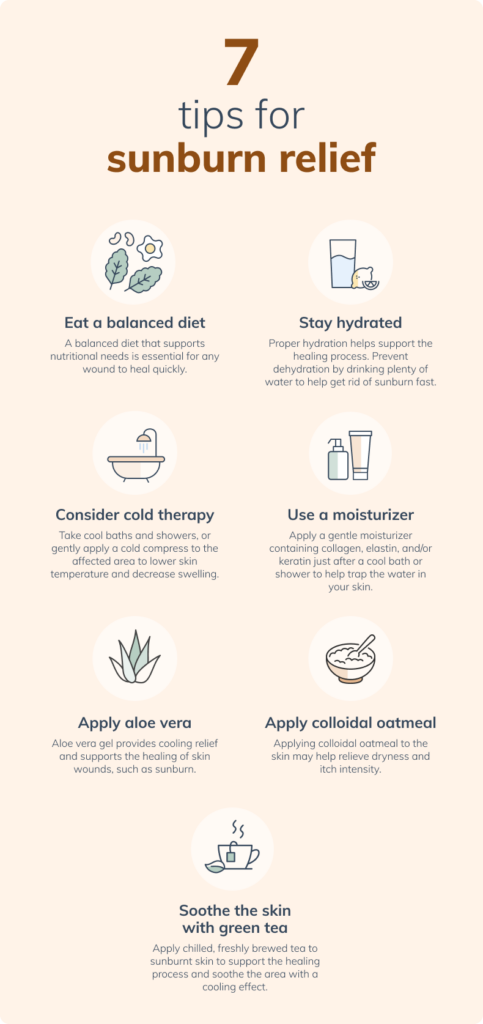
Sunburns are easy to prevent, and you shouldn’t look for remedies if you’ve already developed one. Once sunburned, the pain is just the beginning of your problems. Sunburns increase your risk of developing various skin disorders, making the affected skin more prone to discoloration and less elastic, leading to wrinkles.
The Dangers of Unprotected Skin
When a sunburn forms blisters, the risk of contracting melanoma increases. Melanoma is a serious skin cancer that can spread quickly if not treated promptly. The next time you’re planning to spend time in the sun, think about prevention. In my previous article on sunburns, I explained how different skin types should be protected from the sun.
Preventing Sunburns: The Natural Way
Preventing sunburns is the most effective and safest way to protect your skin. While it’s easy to say this, taking action can be difficult. If you’ve already gotten a sunburn, act quickly by applying the following five remedies.
Act Fast
If you’re at the beach and start feeling a prickling sensation or notice redness on your skin or that of your child, seek shade immediately. It may take anywhere from 4 to 6 hours for sunburn symptoms to fully appear. If you’ve been exposed to UV rays for an extended period, it’s best to stay indoors with the curtains closed until your skin has cooled down.
Vitamins C and E: Natural Remedies
Avoid taking hot showers, use lukewarm water, and apply a moisturizing cream or soothing lotion rich in vitamins C and E after your bath. While studies have not proven that vitamin C and E creams can actually help soothe sunburned skin, many dermatologists recommend using them. Personally, I prefer recommending foods rich in these two micronutrients, such as goji berries, which are a natural source of vitamin C and carotenoids.
Avoid Irritating Actions
Never pull off the burned skin with your fingers or burst blisters yourself. When the blisters have healed, you can proceed with peeling. Using harsh soap or exfoliating products on sunburned skin can further irritate it and slow down the healing process. Instead, gently wash the affected area with a mild soap and lukewarm water.
Hydration: A Key to Recovery
Any burn, no matter how minor, tends to dehydrate a specific area of your body. Drink plenty of water and consider mineral-rich drinks like sports beverages. After sunburn, children are particularly vulnerable to symptoms such as drowsiness, headaches, vertigo, decreased urination, and dry mouth. If you’re dealing with a child who’s gotten sunburned, ensure they have adequate hydration.
Anti-Inflammatory Measures
An anti-inflammatory can be helpful, and ibuprofen (Moment) is also recommended. Applying a cream containing hydrocortisone at 0.5% concentration may alleviate severe skin inflammation. However, always consult your doctor before taking any medication, especially if you’re pregnant or breastfeeding.
Consult a Doctor
In most cases, sunburns can be treated with homemade remedies. While it’s not difficult to treat sunburns, especially when blisters are present, it’s essential not to underestimate sunburns that cover more than 20% of your body surface area or when blisters cover the entire back. In these cases, seeking medical attention may be necessary.
Natural Remedies for Sunburns
Baking soda, potatoes, milk, and aloe vera are just some of the natural remedies that can help with sunburns. Here’s how you can use each one:
- Baking Soda: Mix baking soda with water to create a paste, and apply it to the affected area. The antibacterial properties of baking soda can help reduce inflammation.
- Potatoes: Grate a raw potato and apply the juice directly to the sunburned skin. The antioxidants and anti-inflammatory compounds in potatoes can help soothe the skin.
- Milk: Soak a cloth in milk, wring it out, and apply it to the affected area. Milk contains lactic acid, which can help reduce inflammation and promote healing.
- Aloe Vera: Apply aloe vera gel directly to the sunburned skin. The anti-inflammatory properties of aloe vera can help soothe the skin.
Additional Tips
Here are some additional tips that can help you prevent and treat sunburns:
- Always wear protective clothing, including a hat and sunglasses.
- Use sunscreen with at least SPF 30, and reapply every two hours or immediately after swimming or sweating.
- Seek shade when spending time outdoors, especially during peak sun hours (10am-4pm).
- Avoid tanning beds, which emit UV radiation that can increase your risk of skin cancer.
What to Do If You’ve Already Developed a Sunburn
If you’ve already developed a sunburn, act quickly by following these steps:
- Take cool showers or baths to reduce the temperature of your skin.
- Apply moisturizing creams or lotions rich in vitamins C and E.
- Avoid using harsh soap or exfoliating products on sunburned skin.
- Stay hydrated by drinking plenty of water and considering mineral-rich drinks like sports beverages.
Conclusion
Sunburns are a common occurrence, especially during the summer months when we spend more time outdoors. However, they can have serious consequences if not treated promptly. By preventing sunburns and knowing how to treat them quickly, you can reduce your risk of developing skin disorders and skin cancer. Remember to always wear protective clothing, seek shade, and use sunscreen with at least SPF 30.
In this article, we’ve discussed the risks of sunburns, including the dangers of unprotected skin and the potential for contracting melanoma. We’ve also covered how to prevent sunburns naturally by applying remedies like vitamins C and E, avoiding irritating actions, and staying hydrated. Additionally, we’ve provided some natural remedies that can help soothe sunburned skin, such as baking soda, potatoes, milk, and aloe vera.
Remember, prevention is the best way to protect your skin from sun damage. Take action today by seeking shade, wearing protective clothing, and using sunscreen with at least SPF 30.


