
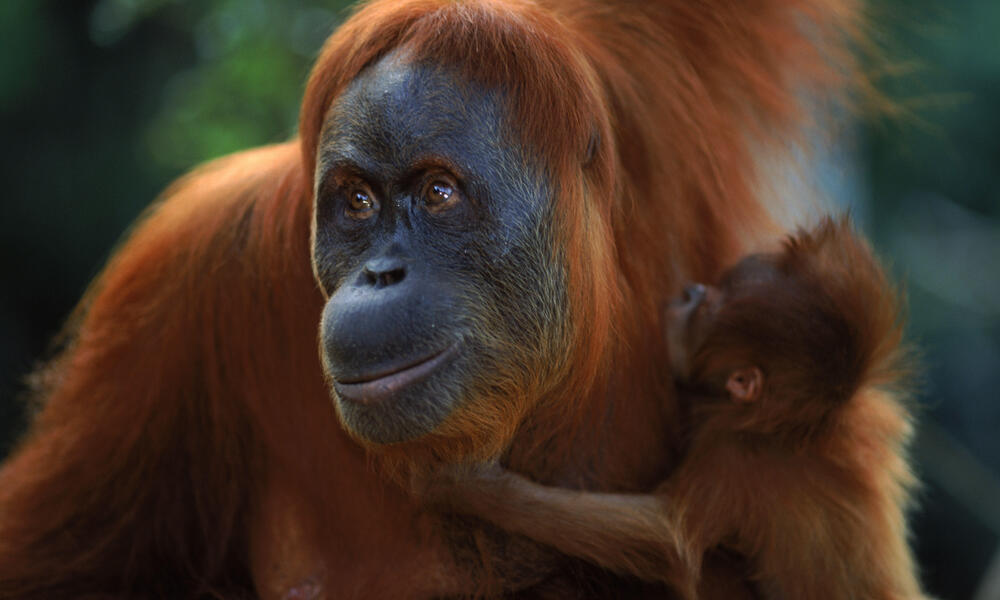
Lorangutan of Sumatra, also known as Pongo abelii, is a species of great ape that lives exclusively in the northern part of the island of Sumatra, Indonesia. This species of orangutan is one of three living orangutan species, along with the orangutan of Borneo and the orangutan of Tapanuli.
Classification
- Species: Orangutan of Sumatra (Pongo abelii)
- Subspecies: Not currently recognized, but some studies propose dividing the species into two subspecies based on genetic and morphological differences between northern and southern populations.
- Evolutionary History: Orangutans were long considered a subspecies of the genus Homo, but are now classified as a separate species. Their evolutionary history dates back to around 15-20 million years ago, when the first divergences occurred between human-like primates and Old World monkeys.
Habitat and Distribution
- Protected Areas: Orangutans live in the rainforests of northern Sumatra, Indonesia. They are considered one of the most endangered species in the world, with a population estimated at around 14,600 individuals remaining in the wild.
- Distribution Geographical: Orangutans are endemics of the island of Sumatra and can be found in various parts of the island, including the provinces of Aceh, North Sumatra, and Riau. The majority of the orangutan population is found in the province of Aceh, where they inhabit mountainous and lowland forests.
- Habitat Characteristics: Orangutans live in a variety of habitats, including tropical rainforests, montane forests, and mangrove swamps. They require specific environmental conditions to survive, such as high humidity, moderate temperatures, and abundant food sources.
Conservation Status
- State of Conservation: Orangutans are currently listed as Critically Endangered on the International Union for Conservation of Nature (IUCN) Red List.
- Threats and Risks: The main threats to the survival of orangutans are deforestation and habitat loss due to palm oil plantations, road construction, and illegal hunting. These practices have led to a significant decline in the orangutan population over the past 75 years.
- Conservation Efforts: Various conservation programs have been implemented to protect orangutans, including the establishment of protected areas such as Gunung Leuser National Park and Bukit Barisan Selatan National Park. International organizations like the World Wildlife Fund (WWF) are also working to conserve orangutans and their habitats.
Biological Characteristics
- Physical Characteristics: Orangutans are one of the largest primates in the world, reaching lengths of up to 1.3-1.8 meters and weighing up to 90 kilograms.
- Body Mass: Adult male orangutans typically weigh between 50-80 kilograms, while adult females weigh between 30-60 kilograms.
- Diet: Orangutans are primarily herbivorous, but they also eat insects and small animals. Their diet consists mainly of fruit, leaves, flowers, and bark.
- Digestive System: Orangutans have a relatively slow digestive system compared to other primates, which allows them to extract nutrients from their food more efficiently.
Behavior and Social Structure
- Social Structure: Orangutans are known for their intelligence and ability to use tools to obtain food. They are also highly social and communicative, using a wide range of sounds to communicate with each other.
- Reproduction and Life Cycle: Orangutans reach maturity at around 8-10 years old and have a gestation period of approximately 9 months. Females give birth to a single offspring, which stays with the mother for about 7-8 years before becoming independent.
- Mating Behavior: Male orangutans engage in complex mating behaviors, including vocalizations, gestures, and displays of dominance.
- Habitat Use: Orangutans use their habitats in a variety of ways, including foraging, resting, and socializing.
Human Interaction
- Conflict and Coexistence: Orangutans have had a history of interaction with humans, both positive and negative. While there are conflicts between orangutans and humans due to habitat loss, there are also examples of peaceful coexistence in certain local communities.
- Cultural Significance: Orangutans hold significant cultural importance in Indonesia and are often depicted in art and mythology. They are also an important indicator of the health of the ecosystem in which they live.
- Community-based Conservation: Community-based conservation programs have been implemented to engage local communities in orangutan conservation efforts, including education, outreach, and benefit-sharing initiatives.
Conclusion
The orangutan of Sumatra is a unique and fascinating species that requires immediate conservation efforts to protect its habitat and ensure its survival. By understanding more about this incredible animal, we can work towards preserving the delicate balance of ecosystems on our planet.
Frequently Asked Questions
- What is the main threat to orangutans?
The primary threats to orangutans are deforestation and habitat loss due to palm oil plantations, road construction, and illegal hunting. - How many orangutans remain in the wild?
There are approximately 14,600 orangutans remaining in the wild. - What is the conservation status of orangutans?
Orangutans are currently listed as Critically Endangered on the International Union for Conservation of Nature (IUCN) Red List. - How long do orangutans live in the wild?
Orangutans can live up to 30 years in the wild, although their average lifespan is estimated to be around 20-25 years due to habitat loss and other threats. - What is the diet of orangutans?
Orangutans are primarily herbivorous, but they also eat insects and small animals. Their diet consists mainly of fruit, leaves, flowers, and bark. - Are orangutans endangered?
Yes, orangutans are considered one of the most endangered species in the world due to habitat loss, hunting, and other human activities. - What is being done to conserve orangutans?
Various conservation programs have been implemented, including the establishment of protected areas and efforts by international organizations like the World Wildlife Fund (WWF) to protect orangutans and their habitats. - Can orangutans be saved?
Yes, with concerted effort and support from governments, local communities, and international organizations, it is possible to save orangutans and their habitats.
Additional Resources
- International Union for Conservation of Nature (IUCN) Red List: Pongo abelii
- World Wildlife Fund (WWF): Orangutan Conservation
- Gunung Leuser National Park: Official Website
- Bukit Barisan Selatan National Park: Official Website


