
As a succulent enthusiast, you’re probably eager to share your plants with friends and family or start a new collection. However, propagating succulents can be a daunting task for beginners. Fear not! With this comprehensive guide, we’ll walk you through the different methods of propagating succulents, ensuring you achieve success every time.
Understanding Succulent Propagation
Before we dive into the propagation methods, it’s essential to understand how succulents reproduce. Most succulents produce offsets or “pups” that grow from the mother plant’s base. These pups can be easily removed and potted up to create new plants.
However, not all succulents produce offsets, and some require specific methods of propagation. For example, some species produce seeds, while others use leaf or stem cuttings. In this guide, we’ll cover the most common methods of propagating succulents.
Propagation via Seeds
Some succulent species produce seeds that can be used to propagate new plants. The process is relatively straightforward:
Preparing Seeds
To start, you’ll need to collect and clean the seeds from your succulent plant. This may involve drying the seeds or soaking them in water to soften the outer shell.
Sowing Seeds
Once the seeds are prepared, sow them on a well-draining seed starting mix in a small pot or container. Cover the seeds with a thin layer of soil and water gently but thoroughly.
Germination and Care
Keep the soil consistently moist during germination, which typically takes 1-3 weeks. Once the seedlings emerge, reduce watering to allow the roots to develop.
Propagation via Offset (Pups)
Many succulent species produce offsets or pups that can be easily removed and potted up. The process is simple:
Removing Pups
Wait for the mother plant to produce new growth, and then carefully remove the pup from the soil using a gentle twisting motion.
Potting Up
Plant the pup in a small pot filled with well-draining soil, making sure not to bury the leaves or crown. Water sparingly until the roots develop.
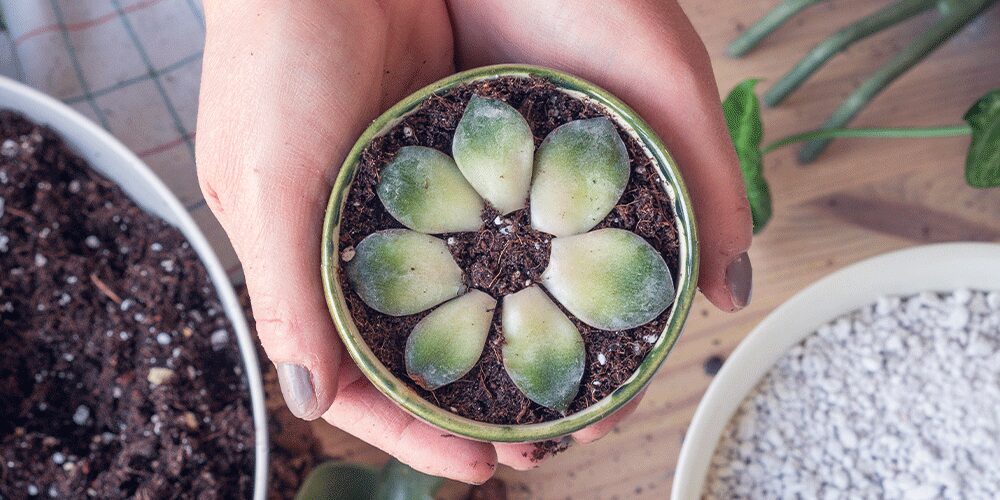
Propagation via Leaf Cuttings
Some succulent species can be propagated using leaf cuttings. This method requires a bit more care:
Preparing Leaf Cuttings
Choose healthy leaves with no signs of damage or disease. Cut the leaves from the mother plant, making sure each cutting has at least one node (where the leaf meets the stem).
Drying and Rooting
Allow the cut ends to dry for 1-3 days to prevent rotting. Then, place the cuttings in a small pot filled with well-draining soil, and water sparingly until roots develop.
Propagation via Stem Cuttings
Stem cuttings are another popular method of propagating succulents:
Preparing Stem Cuttings
Cut a healthy stem section from the mother plant, making sure each cutting has at least two nodes. Remove lower leaves to prevent rotting.
Drying and Rooting
Allow the cut ends to dry for 1-3 days before placing them in a small pot filled with well-draining soil. Water sparingly until roots develop.
Propagation via Division
Some succulents can be propagated by dividing the mother plant into smaller sections:
Preparing Mother Plant
Wait for the mother plant to produce new growth, and then carefully remove it from its container.
Dividing
Separate the mother plant into individual sections, making sure each section has at least one node. Pot up each section in well-draining soil.
Choosing the Right Method
Different succulent species require specific methods of propagation. Research the specific needs of your plant to ensure you’re using the most effective method.
Tips and Tricks for Succulent Propagation
- Use a well-draining potting mix to prevent waterlogged soil.
- Avoid overwatering, as this can lead to root rot and other problems.
- Provide bright, indirect light for most succulents.
- Water sparingly until roots develop.
- Be patient, as propagation may take time.
Common Mistakes to Avoid
When propagating succulents, there are several common mistakes to avoid:
- Overwatering: Succulents don’t like wet feet, so make sure not to waterlog the soil.
- Underwatering: While succulents prefer dry conditions, they still need some moisture to thrive.
- Lack of Light: Most succulents require bright, indirect light to photosynthesize and grow.
- Inadequate Soil Drainage: Use a well-draining potting mix to prevent waterlogged soil.
Propagation Methods for Specific Succulent Species
Different succulent species have unique propagation requirements. Here are some specific methods:
- Aloe Vera: Propagate by leaf cuttings or division.
- Echeveria: Propagate by leaf cuttings or division.
- Cacti and Cactaceae: Propagate by seed or stem cuttings.
Conclusion
Propagating succulents is a simple yet rewarding process that requires minimal equipment. By understanding the different methods of propagation and following these step-by-step guides, you’ll be well on your way to creating new plants for yourself or sharing with friends and family.
Frequently Asked Questions (FAQs)
- What’s the best time to propagate succulents?
The best time to propagate succulents depends on the species and climate. Generally, spring and summer are the best seasons for propagation.
2. How often should I water my newly propagated succulent?
Water your newly propagated succulent sparingly until roots develop. Reduce watering as the plant becomes more established.
3. Can I propagate succulents indoors?
Yes, most succulents can be propagated indoors with proper care and lighting.
4. What’s the best potting mix for succulents?
Use a well-draining potting mix specifically designed for cacti and succulents to prevent waterlogged soil.
- Can I propagate succulents from seeds?
Yes, some succulent species can be propagated from seeds. Research the specific needs of your plant to ensure successful propagation.
Propagation Resources
For more information on propagating succulents, check out these resources:
- The Succulent Source: A comprehensive guide to succulent care and propagation.
- Succulent World: A community forum for sharing knowledge and experiences with succulent enthusiasts.
- The Saguaro National Park: A resource for learning about the unique succulents found in this national park.


