
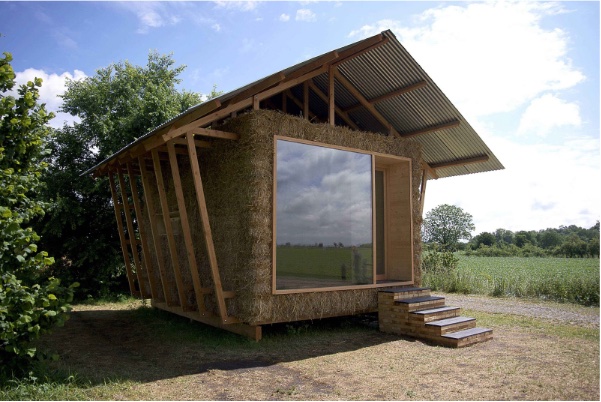
As the world grapples with climate change, sustainable living, and reducing our carbon footprint, there is a growing interest in alternative building methods that are not only environmentally friendly but also cost-effective. One such method is building with straw bales, a technique that has been around for centuries but has gained popularity in recent years.
What is Building with Straw Bales?
Building with straw bales involves using dried straw as a primary building material to construct walls, floors, and roofs. The straw is typically packed tightly into forms or bags, which are then stacked on top of each other to create the desired height. This technique offers several benefits, including excellent insulation properties, high strength-to-weight ratio, and low cost.
A Brief History of Straw Bale Construction
The use of straw bales as a building material dates back thousands of years. In fact, some archaeologists believe that ancient humans used straw bale construction techniques to build their earliest dwellings. The technique was also widely used in medieval Europe, particularly in the 12th and 13th centuries.
Benefits of Straw Bale Construction
So, what are the benefits of building with straw bales? Here are just a few:
- Environmental Benefits: Building with straw bales is an eco-friendly option that reduces waste and minimizes the use of non-renewable resources.
- Cost-Effective: Straw bale construction is a cost-effective alternative to traditional building methods, as it eliminates the need for expensive materials like steel and concrete.
- Energy Efficiency: Straw bale walls provide excellent insulation properties, reducing heat loss in the winter and heat gain in the summer.
- High Strength-to-Weight Ratio: Straw bales are incredibly strong and can support significant loads without compromising their structural integrity.
- Low Maintenance: Straw bale buildings require minimal maintenance and are resistant to pests and diseases.
Applications of Straw Bale Construction
So, where is straw bale construction being used today? Here are a few examples:
- Italy: The use of straw bale construction has become increasingly popular in Italy, particularly among permaculture enthusiasts and eco-friendly architects.
- United States: Straw bale construction is also gaining popularity in the US, particularly in regions like California and Oregon.
- Australia: In Australia, straw bale construction is being used to build sustainable homes and community centers.
Food Forests: A Sustainable Food Source
But what about food forests? What are they all about?
A food forest is a type of permaculture system that mimics the natural ecosystem of a forest. It’s designed to provide a diverse range of fruits, vegetables, nuts, and other edible crops while also promoting biodiversity and soil health.
Auto-Costruzione: The Art of Self-Building
So, what does auto-costruzione mean? In simple terms, it means building something yourself, without relying on external help or materials. It’s a skill that has been passed down through generations and is essential for survival in many parts of the world.
Conclusion
In conclusion, straw bale construction is a sustainable and cost-effective alternative to traditional building methods. With its numerous environmental benefits, high strength-to-weight ratio, and low maintenance requirements, it’s an attractive option for anyone looking to build a home or community center that’s eco-friendly and affordable.
Frequently Asked Questions (FAQs)
- What are the main benefits of straw bale construction?
- Environmental benefits
- Cost-effective
- Energy efficiency
- High strength-to-weight ratio
- Low maintenance requirements
- How do I get started with straw bale construction?
- Research and learn about the process
- Join a community of straw bale builders
- Take a course or workshop to learn the skills
- What are some common challenges associated with straw bale construction?
- Weather resistance
- Pests and diseases
- High labor costs
- Can straw bale construction be used for large-scale projects?
- Yes, but requires careful planning and execution
- Are food forests a sustainable food source?
- Yes, they promote biodiversity and soil health
- What is auto-costruzione, and how does it relate to straw bale construction?
- Auto-costruzione means building something yourself without external help or materials
- Can straw bale construction be used for commercial projects?
- Yes, but requires careful planning and execution


