
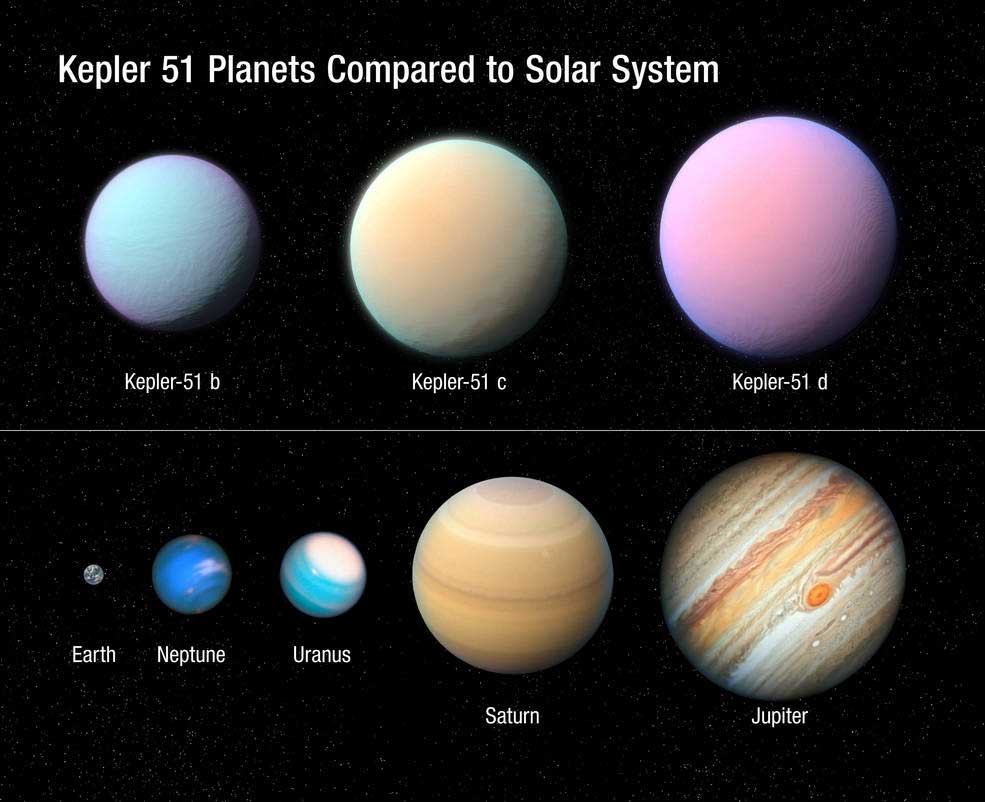
As we gaze up at the night sky, we often find ourselves lost in thought, wondering about the mysteries that lie beyond our solar system. The discovery of exoplanets has opened a new frontier for scientific exploration, and today, we’re going to embark on an extraordinary journey to explore some of the most unusual planets that have been observed recently.
The Discovery of Exoplanets: A New Era in Space Exploration
Over 4,000 exoplanets have been discovered so far, mostly by NASA and ESA telescopes. These planets are a mix of gas giants, rocky worlds, and even super-Earths, with sizes larger than our own planet. The study of exoplanets has become an integral part of modern astronomy, allowing us to expand our understanding of the universe and its many secrets.
One of the key methods used for detecting exoplanets is the transit method, where the decrease in brightness of a star as a planet passes in front of it reveals the presence of the exoplanet. This method has been instrumental in discovering thousands of new planets in recent years.
In addition to the transit method, other techniques such as radial velocity measurements and direct imaging have also helped scientists identify exoplanets. The study of exoplanets has not only expanded our knowledge of the universe but has also sparked a lot of debate about the possibility of life existing elsewhere.
Unveiling Toi 270: A Rare Earth System
Toi 270 b, c, and d are three exoplanets that have captured the attention of scientists due to their unusual characteristics. Discovered by NASA’s Transiting Exoplanet Survey Satellite (Tess), these planets orbit a small star called Toi 270, located approximately 73 light-years from Earth.
The discovery was made possible through the transit method, where the decrease in brightness of the star as the planet passes in front of it reveals the presence of the exoplanet. This system is particularly interesting because the three planets are thought to be part of a rare “Earth system,” with conditions that might allow for life to exist.
Toi 270 b: A Hot and Rocky World
The closest planet to its star is Toi 270 b, with an orbital period of just 3.4 days. This means that it completes one rotation around its star much faster than Mercury does around our Sun. With a surface temperature estimated at 254 degrees Celsius, this planet is scorching hot and unlikely to support life as we know it.
Toi 270 b is also thought to be a rocky world, with a mass similar to that of Earth. This makes it an interesting candidate for hosting liquid water, which is essential for life as we know it.
The Enigmatic Kelt 9b: An Infernal Planet
Meet Kelt 9b, an exoplanet that’s often referred to as an “infernal” world due to its surface temperature of approximately 3,780 degrees Celsius. This gas giant is about twice the size of Jupiter and orbits a star that’s significantly hotter than our Sun.
The extreme conditions on this planet make it unlikely to support any known form of life. However, scientists are interested in studying Kelt 9b because of its unique characteristics and potential insights into planetary formation.
HD 189733 b: A Deadly Rain World
Located in the Volta constellation, approximately 63 light-years away from Earth, HD 189733 b is an exoplanet with a surface temperature that can melt lead. With gusts of wind reaching up to two kilometers per second and temperatures soaring to 900 degrees Celsius, this planet is not exactly a welcoming place for life.
Despite the extreme conditions on HD 189733 b, scientists believe that it might have a thick atmosphere that could provide some protection from the harsh environment. Further study is needed to determine whether this exoplanet has any potential for hosting life.
Gliese 1214 b: A Water World
In the Ophiuchus constellation, approximately 48 light-years away from our solar system, lies Gliese 1214 b, a super-Earth with an enormous amount of liquid water. This exoplanet is thought to be mostly composed of ocean, making it an intriguing candidate for hosting life.
Gliese 1214 b orbits its star in a highly eccentric orbit, which causes the planet’s distance from the star to vary greatly throughout its orbit. Scientists are interested in studying this system because of its potential for supporting liquid water and, therefore, life.
GJ 504 b: A Colored Giant
Located in the constellation of Cetus, approximately 45 light-years away from Earth, GJ 504 b is a gas giant that shines intensely with a pinkish color. This unusual hue is likely due to its high surface temperature and composition.
Scientists are eager to learn more about this enigmatic planet because of its unique characteristics and potential insights into planetary formation. GJ 504 b is also thought to be one of the largest planets discovered so far, making it an interesting candidate for further study.
55 Cancri: A Carbon Planet
In the constellation of Cancer, approximately 40 light-years from our solar system, lies 55 Cancri e, a carbon planet with temperatures reaching up to 2,400 degrees Celsius. This extreme environment makes it unlikely to support life as we know it.
However, scientists believe that 55 Cancri e could provide insights into the formation of planets and the conditions necessary for life to exist. Further study is needed to determine whether this exoplanet has any potential for hosting life.
The J1407 b: A Giant Ring System
Meet J1407 b, an exoplanet that’s been dubbed the “Saturn under steroids” due to its enormous ring system. With a radius estimated at around 90 million kilometers and a total mass comparable to Earth, this planet is a marvel of celestial engineering.
J1407 b orbits a small star located approximately 320 light-years away from Earth. Scientists are interested in studying this exoplanet because of its unique ring system and potential insights into planetary formation.
Conclusion: Unraveling the Secrets of Extraterrestrial Planets
As we explore the vast expanse of our universe, we’re constantly reminded of how small and insignificant we are. The discovery of extraterrestrial planets has opened doors to new possibilities for scientific exploration and raised fundamental questions about the nature of life in the cosmos.
The study of exoplanets is an ongoing endeavor that continues to captivate scientists and the public alike. As technology advances, we can expect even more discoveries about these enigmatic worlds and their potential for supporting life.
Frequently Asked Questions (FAQs)
-
What is the most distant exoplanet discovered so far?
The most distant exoplanet discovered so far is Earendel, located approximately 12.9 billion light-years away from Earth. -
Are there any exoplanets with liquid water?
Yes, several exoplanets have been discovered to have liquid water on their surfaces, including Gliese 1214 b and Kepler-452b. -
Can we live on any exoplanet?
Most exoplanets are hostile environments that make it impossible for human life as we know it to exist. However, some scientists believe that certain planets might be capable of supporting life under specific conditions. -
How many exoplanets have been discovered so far?
Over 4,000 exoplanets have been discovered so far, with new discoveries being made regularly. -
What is the largest exoplanet discovered so far?
The largest exoplanet discovered so far is WASP-12b, which has a radius approximately twice that of Jupiter. -
Can we communicate with extraterrestrial life?
While there’s currently no definitive evidence of intelligent life beyond Earth, scientists are exploring various methods for communicating with potential extraterrestrial civilizations. -
Are exoplanets just as likely to be hostile as our own planet?
Yes, many scientists believe that the conditions on other planets could make them equally or even more hostile than Earth. -
Can we travel to other exoplanets in the near future?
While there are plans for interstellar travel in the distant future, current technology makes it difficult to imagine sending humans to other planets anytime soon.


