
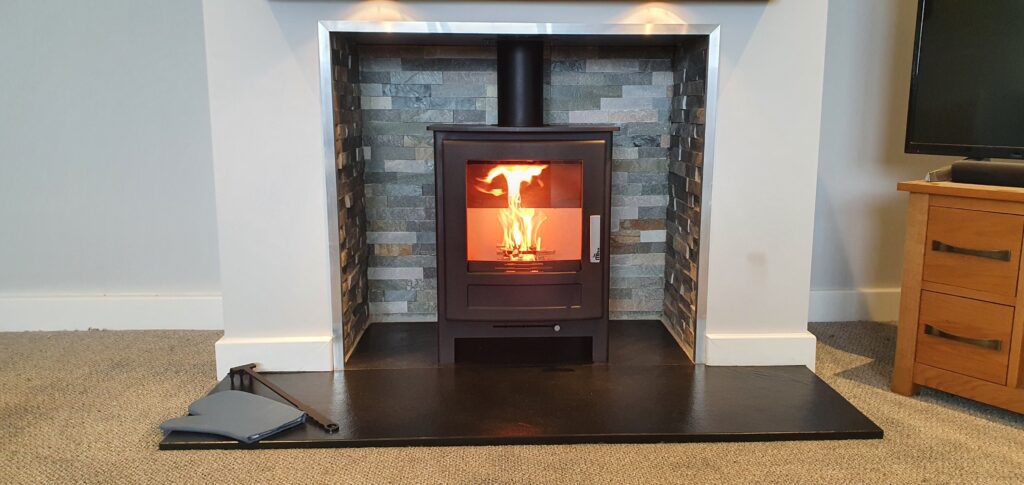
As we discuss stoves without chimney, it’s essential to understand that this term refers not to a stove without an exhaust pipe, but rather to one with a simple installation method that involves a single 8 cm tube with a terminal spout protruding from the wall. This type of stove is designed to release fumes through this tube, which is installed on the roof, in compliance with the UNI 10863 standard.
Why Stoves Without Chimney?
Many have wondered about the functioning of stoves without chimney, but it’s crucial to note that these stoves still emit fumes that need to be evacuated. The term “without chimney” was coined because this installation method simplifies the process, whereas in traditional stoves, the exhaust pipe is connected directly to the chimney.
Types of Stoves Without Chimney
There are various models of stoves without chimney, which can be fueled by:
- Wood
- Pellets
- Gas
- Bioethanol (see also bioethanol chimneys)
- Oil
- Methane
The stove with pellet fuel operates through forced draft, where the fumes produced in the combustion chamber are expelled through an electric fan. It’s essential to note that these fumes can reach temperatures of 200/300 °C and must be handled safely.
Automatic Ventilation
In case of a power outage or malfunction, the stove needs a backup ventilation system to function safely. This is often achieved by installing a condenser pipe or chimney, allowing for natural ventilation during this time.
Stove Selection Before Purchase
Before purchasing a stove without chimney, ensure that it includes an automatic ventilation system as an option, which will prevent any inconvenience in case of an electrical failure. If the stove does not have this feature, the fumes may escape from the combustion chamber and enter your home!
How Do Stoves Without Chimney Function?
Stoves with pellet or wood fuel operate through a helical motion that sucks up fuel from the storage tank and releases it into the combustion chamber. The ignition of a stove is achieved through the injection of high-temperature air, which creates a flame. During this process, there’s a significant energy absorption peak!
The upper part of the combustion chamber houses the water reservoir, which humidifies the air to reduce dryness.
Most Stoves Without Chimney Feature Automation
All types of stoves without chimney generally have an automated system for starting and stopping (working similarly to a traditional thermostat). This optimization feature reduces energy consumption.
Stoves can also include pressure sensors that monitor fuel combustion efficiency.


