
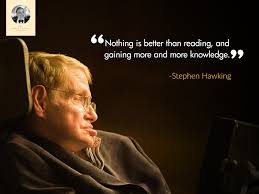
It’s hard to imagine a world without the brilliant mind of Stephen Hawking, who left an indelible mark on our understanding of the universe. As a renowned British science communicator, he bridged the gap between physics, cosmology, mathematics, and astronomy with remarkable intelligence. Although he passed away in 2018, his legacy continues to inspire and educate people around the world.
Early Life and Education
Born on January 8, 1942, in Oxford, England, Stephen Hawking’s life was a testament to his insatiable curiosity and passion for learning. He gained recognition primarily for his studies of black holes, quantum cosmology, and the origin of the universe. His groundbreaking work led to the discovery of Hawking radiation and the Hartle-Hawking theory, which discusses a boundaryless beginning to the universe.
Hawking’s early life was marked by a strong interest in science and mathematics. He attended St. Albans School in Hertfordshire, where he developed a passion for physics and astronomy. In 1962, he enrolled at the University of Oxford to study physics, but his academic career was soon disrupted by a motor neuron disease that would eventually leave him confined to a wheelchair.
Motor Neuron Disease and Adaptation
In 1963, Hawking was diagnosed with a motor neuron disease that would eventually become amyotrophic lateral sclerosis (ALS). Despite this debilitating condition, he continued to work tirelessly as a scientist and science communicator. He used a speech synthesizer to express his thoughts and ideas, but it didn’t prevent him from appearing publicly and on screen often.
Hawking’s determination to continue working despite his physical limitations was inspiring to many. He credited his wife, Jane Wilde Hawking, with helping him cope with the disease and its effects on his body. Together, they formed a loving partnership that lasted for over 50 years.
Scientific Career
Hawking’s scientific career was marked by several notable achievements. He spent three decades as the Lucasian Professor of Mathematics at Cambridge University, where he developed physical and astronomical theories that made complex concepts accessible to a broad audience.
In the early 1970s, Hawking worked with Roger Penrose to develop the theory of general relativity and the origin of the universe. This work led to the discovery of Hawking radiation, which describes the emission of radiation from black holes. The theory also led to the development of the Hartle-Hawking theory, which discusses a boundaryless beginning to the universe.
Hawking’s scientific contributions were recognized worldwide, and he was awarded numerous accolades, including the Presidential Medal of Freedom, the most prestigious honor in the United States.
Environmental Thought
Hawking’s thoughts on the environment were just as profound as his scientific contributions. He believed that humans have an active role in maintaining the health of our planet and that our observation creates history. He was concerned about environmental destruction and the arrival of robots and artificial intelligence technologies, which he saw as more worrisome for humanity’s greed.
Hawking’s environmental thoughts were shaped by his work on black holes and the origins of the universe. He believed that the universe was governed by laws that could be understood through science, and that human activity must be balanced with a respect for the natural world.
Involvement with The Global Goals Initiative
In 2015, Hawking joined forces with other celebrities to launch The Global Goals initiative, aimed at achieving the 17 global goals by 2030. These goals focus on poverty, inequality, injustice, and climate change. Hawking’s commitment to environmental causes continued until the end of his life, reflecting an urgency to act that resonated with people worldwide.
Hawking’s involvement with The Global Goals initiative highlighted his dedication to using science and technology to address global challenges. He believed that by working together, we could create a better future for all humanity.
Beyond Science: Music and Film
Hawking’s impact extended beyond science into music and film. He provided the synthesized voice for the Pink Floyd song “Keep Talking” in 1994 and appeared in several documentaries and programs. His life story was portrayed in the BBC film “Hawking” (2004) and the 2008 film “Superhero,” cementing his status as a cultural icon.
Hawking’s music career began when he collaborated with Pink Floyd on their song “Keep Talking.” The song features Hawking’s synthesized voice, which adds a haunting quality to the lyrics. The collaboration was seen as a fitting tribute to Hawking’s unique perspective and talents.
Famous Quotes
Stephen Hawking’s quotes continue to inspire and challenge our perspectives on the universe and human nature. Two of his most famous quotes are:
- “Limiting our attention to terrestrial matters would be a limitation of the human spirit.”
- “The greatest enemy of knowledge isn’t ignorance, but the illusion that we have knowledge.”
These quotes capture Hawking’s unique perspective on science, philosophy, and humanity. His words continue to inspire people around the world, offering valuable insights into the nature of existence and our place within it.
Conclusion
Stephen Hawking’s legacy is a testament to the power of human curiosity and ingenuity. His groundbreaking work in physics and cosmology continues to shape our understanding of the universe, while his thoughts on environmental issues serve as a reminder of our responsibility to protect our planet. As we reflect on his life and achievements, we are reminded that even in the face of adversity, determination and passion can lead to greatness.
Frequently Asked Questions
- What was Stephen Hawking’s most famous scientific contribution?
Stephen Hawking’s most famous scientific contribution is likely his theory of Hawking radiation, which describes the emission of radiation from black holes. - How did Stephen Hawking contract a motor neuron disease?
Hawking contracted a motor neuron disease in 1963, at the age of 21, due to a genetic mutation. - What was The Global Goals initiative, and what are its goals?
The Global Goals initiative is a global effort aimed at achieving the 17 United Nations Sustainable Development Goals (SDGs) by 2030, focusing on poverty, inequality, injustice, and climate change. - How did Stephen Hawking use technology to overcome his physical limitations?
Hawking used a speech synthesizer to express his thoughts and ideas, allowing him to communicate with others despite being confined to a wheelchair. - What is the difference between Hawking radiation and the Hartle-Hawking theory?
Hawking radiation describes the emission of radiation from black holes, while the Hartle-Hawking theory discusses a boundaryless beginning to the universe. - How did Stephen Hawking’s environmental thoughts influence his public persona?
Hawking’s environmental thoughts led him to speak out on issues such as climate change and the impact of human activity on the planet. - What is The Theory of Everything, and what does it have to do with Stephen Hawking?
The Theory of Everything is a 2014 film about Hawking’s life, directed by James Marsh and starring Eddie Redmayne as Hawking. - How did Stephen Hawking’s work influence our understanding of the universe?
Hawking’s work in physics and cosmology helped shape our understanding of black holes, the origin of the universe, and the nature of space and time.
By exploring the life, opinions, and famous quotes of Stephen Hawking, we gain a deeper appreciation for his impact on science, environmentalism, and culture. His legacy continues to inspire and educate people around the world, offering valuable insights into the human condition and our place in the universe.


