
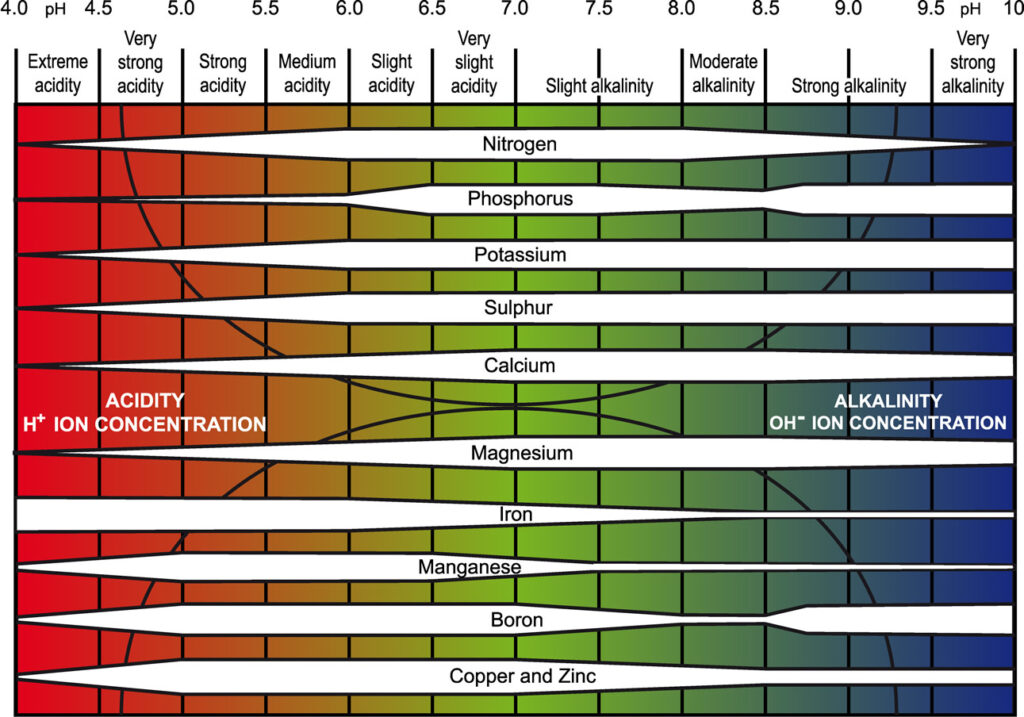
Soil pH is a fundamental property that significantly influences various physical, chemical, and biological processes in the soil. As a result, it has a profound impact on crop cultivation. In this article, we will delve into the world of soil pH, its effects on nutrient availability, and explore how to determine the optimal pH range for different plants.
What is Soil pH?
Soil pH ranges from 4 to 9. Below 5.5, the soil is considered acidic. A pH range of 5.6 to 6 indicates a “moderately acidic” soil, while a pH between 6.1 and 6.5 represents a “weakly acidic” soil. The neutral pH range falls between 6.6 and 7.3, while a pH above this value is considered alkaline.
How Does Soil pH Affect Nutrient Availability?
Soil pH plays a crucial role in regulating the solubility of essential nutrients and the activity of microorganisms present in the soil. As a result, it affects the availability of many nutrients for plants to grow. Different nutrients are affected by different pH ranges. For example:
- Calcium: readily available in slightly acidic to neutral soils (pH 6-7)
- Magnesium: readily available in neutral to alkaline soils (pH 7-8)
- Phosphorus: more soluble and available in acidic soils (pH 4-5.5)
- Aluminum: highly mobile and potentially toxic in acidic soils
- Iron, Manganese, Copper, Zinc, and Boron: more readily available in alkaline soils
What is the Optimal pH Range for Different Plants?
The optimal pH range varies depending on the type of plant being grown. Acid-loving plants, such as blueberries and rhododendrons, thrive in acidic soils with pH values below 6.5. In contrast, alkaline-tolerant plants like alfalfa and sugar beets prefer soils with a pH above 7.4.
Here are some general guidelines for different plant species:
- Acid-loving plants: pH 4-6
- Neutral plants: pH 6-7
- Alkaline-tolerant plants: pH 7.4-8
Disavailability of Nutrients Based on Soil pH
Soil with a pH between 6 and 7 is favorable for plant growth as most essential nutrients are present in this range. However, soil with a pH below 5.5 tends to have low availability of calcium, magnesium, and phosphorus, while offering high levels of aluminum, iron, and boron.
On the other hand, soil with a pH around 8 is characterized by an abundance of calcium and magnesium but low levels of nutrients like iron, manganese, copper, zinc, and especially boron and phosphorus.
Factors Influencing Soil pH
Soil pH is influenced by various factors, which can be generalized as follows:
- Climate conditions: areas with high rainfall or humidity tend to have acidic soils
- Irrigation practices: soils irrigated are more likely to be acidic than those left undisturbed
- Soil type: different soil types have varying pH ranges, such as sandy soils (more alkaline) and clay soils (more acidic)
- Organic matter content: high levels of organic matter can buffer the pH, while low levels can lead to rapid changes in pH
Conclusion
Soil pH is a critical factor that affects nutrient availability and plant growth. Understanding the optimal pH range for different plants and factors influencing soil pH can help us create suitable conditions for optimal crop cultivation.
By regularly monitoring soil pH and making adjustments as necessary, farmers and gardeners can ensure optimal growth and productivity of their crops.
Frequently Asked Questions
Q: What is the optimal pH range for most crops?
A: A pH range of 6 to 7 is generally favorable for most crops, as it allows for adequate nutrient availability.
Q: How does climate affect soil pH?
A: Climate conditions can significantly impact soil pH, with areas experiencing high rainfall or humidity tending towards acidic soils and arid regions producing alkaline soils.
Q: Can irrigation change the pH of the soil?
A: Yes, irrigation practices can alter soil pH, making it more acidic in irrigated soils compared to undisturbed soils.
Q: What are some common nutrient deficiencies associated with acidic soils?
A: Acidic soils often exhibit low levels of calcium, magnesium, and phosphorus but high levels of aluminum, iron, and boron.
Q: How do alkaline soils affect plant growth?
A: Alkaline soils can lead to nutrient deficiencies in elements like iron, manganese, copper, zinc, and especially boron and phosphorus.
Q: Can pH levels be changed through amendments or fertilizers?
A: Yes, applying specific amendments or fertilizers can help adjust soil pH. However, it is crucial to choose products compatible with the type of plant being grown.
Q: How often should soil pH be checked for optimal crop growth?
A: Regularly monitoring soil pH helps ensure that nutrient availability remains suitable for your crops.
Additional Resources
For more information on soil pH and nutrient availability, consider the following resources:
- Soil Testing Laboratories
- University Extension Services
- Soil Science Societies


