
Introduction
In the same way that urban areas are growing, farmland is dwindling, making it increasingly difficult to find space for farming fresh produce. Singapore has found a solution with its cutting-edge technology that utilizes vertical space to grow crops. The “Sky Green Farm” is a revolutionary vertical farm producing commercial-grade vegetables, addressing a pressing issue in the city-state.
The Problem: Urbanization and Land Scarcity
Only 7% of the fruits and vegetables consumed in Singapore are locally grown due to the lack of cultivable land. This scarcity has led to an increased reliance on imported produce, which can be detrimental to both the environment and local economies. The effects of urbanization have resulted in a significant decrease in arable land, leading to concerns about food security.
Enter Sky Green Farm
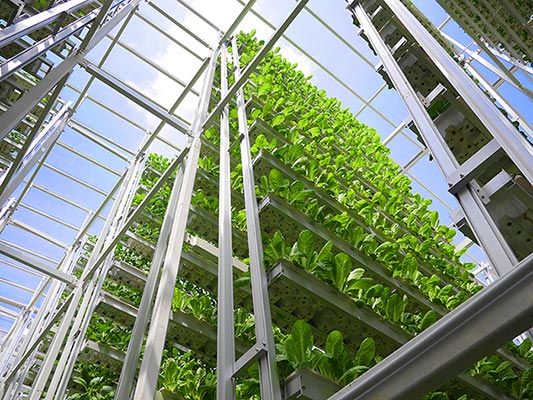
Located in the Lim Chu Kang district, the “Sky Green Farm” is a 9-story tower made of aluminum, housing 120 vertical farming units that cultivate vegetables at an impressive rate of half a ton every 24 hours. With an estimated conversion rate to land equivalent to 3.65 hectares of cultivated land, this innovative farm has opened up new possibilities for urban agriculture.
How It Works
The farm’s innovative design allows for maximum space utilization while minimizing energy consumption. The use of LED lighting and advanced irrigation systems helps promote healthy plant growth, resulting in higher yields per square foot. Additionally, the vertical layout reduces transportation costs and increases crop freshness by allowing for quick delivery to nearby supermarkets.
One of the key factors contributing to Sky Green Farm’s success is its ability to optimize water usage. The farm employs a sophisticated system that recycles and reuses 98% of the water used in the farming process. This not only conserves precious resources but also minimizes waste, making it an attractive option for environmentally conscious consumers.
A Cost-Effective Solution
Although the prices of Sky Green Farm’s products are slightly higher than traditional produce (ranging from 10 to 20 cents), consumers seem to appreciate the local origin and fresher quality. The farm aims to address this discrepancy in pricing through increased production capacity and reduced energy consumption. By leveraging advanced technology, Sky Green Farm can maintain a competitive edge while minimizing costs.
Energy Consumption and Sustainability
The “Sky Green Farm” acknowledges that the cost of maintaining its high-tech infrastructure is a significant factor. Energy costs, including lighting and irrigation systems, contribute to the higher price point of the produce. However, the farm’s goal is to optimize energy efficiency through continued research and development. This commitment to sustainability has earned Sky Green Farm recognition as one of Singapore’s leading green businesses.
Expansion Plans
To increase production capacity and meet growing demand, Sky Green Farm plans to expand its tower from 300 units to over 2 tons per day. The expansion will require an additional $21 million investment, which has already been secured by the project’s Japanese investors. This strategic partnership is expected to further accelerate growth and solidify Sky Green Farm as a leading player in Singapore’s agricultural sector.
Public Reception and Sales
Sky Green Farm has received significant interest from consumers in Japan before even opening its doors. Despite initial concerns about pricing, local produce has proven to be a hit among customers eager for fresher, locally sourced products. The farm’s commitment to quality and sustainability has earned it a loyal following, with many customers willing to pay a premium for the unique opportunity to purchase locally grown produce.
The success of Sky Green Farm can be attributed to its innovative approach to urban agriculture, which not only addresses pressing issues related to food security and sustainability but also provides consumers with access to fresh, high-quality produce. As the demand for sustainable and locally sourced products continues to grow, it is likely that Sky Green Farm will play a significant role in shaping the future of urban farming.
Conclusion
The “Sky Green Farm” represents a breakthrough in urban farming innovation. By harnessing vertical space and advanced technology, this project addresses pressing issues related to food security, sustainability, and economic viability. As the world’s population continues to urbanize, Sky Green Farm’s pioneering approach will likely inspire other cities to explore new agricultural possibilities.
The success of Sky Green Farm serves as a model for sustainable agriculture in urban environments, demonstrating that innovative technologies can be used to create thriving agricultural ecosystems within even the most densely populated areas. By adopting cutting-edge methods and reducing energy consumption, Sky Green Farm serves as a shining example of what can be achieved when technology and sustainability come together.
Frequently Asked Questions
- What inspired the creation of Sky Green Farm?
Sky Green Farm was conceived as a response to Singapore’s pressing issues with land scarcity and reliance on imported produce. - How does Sky Green Farm differ from traditional farming methods?
The farm utilizes vertical space, advanced technology, and energy-efficient systems to maximize crop yields while minimizing environmental impact. - What types of vegetables are grown at Sky Green Farm?
Sky Green Farm focuses on producing a variety of commercial-grade vegetables for local supermarkets. - How does the cost of production compare to traditional produce?
The prices of Sky Green Farm’s products are slightly higher than traditional produce, primarily due to energy costs associated with maintaining its high-tech infrastructure. - What is the expected impact on Singapore’s food security?
Sky Green Farm aims to increase local produce availability and reduce reliance on imports, thereby enhancing food security for the city-state. - How will Sky Green Farm contribute to urban sustainability?
By adopting cutting-edge technology and reducing energy consumption, Sky Green Farm serves as a model for sustainable agriculture in urban environments. - What is the current production capacity of Sky Green Farm?
The farm currently produces half a ton of vegetables every 24 hours from its initial 120 units. - Are there plans to expand Sky Green Farm’s operations further?
Yes, plans are underway to increase production capacity and reach over 2 tons per day through additional investments and infrastructure development. - How do the prices of Sky Green Farm’s products compare to other supermarkets in Singapore?
Sky Green Farm’s products are priced between 10 to 20 cents higher than traditional produce due to energy costs associated with maintaining its high-tech infrastructure. - Can consumers purchase Sky Green Farm’s produce outside of Singapore?
Currently, Sky Green Farm’s produce is only available for purchase within the local market.


