
Skin mites, also known as Demodex, are tiny parasites that live on human skin. They are a type of commensal organism, which means they feed off our body’s resources without causing harm. In most cases, the presence of skin mites is asymptomatic, meaning it doesn’t cause any symptoms like itching or infection.
What are Skin Mites?
Skin mites belong to the order Acarina and are part of the Demodex genus. There are two main species: Demodex folliculorum (Demodecio dei follicoli) and Demodex brevis (demodecio brevis). These tiny creatures live in the sebaceous glands and hair follicles on human skin, particularly on the face.
The Life Cycle of Skin Mites
Skin mites have a complex life cycle that involves several stages:
- Eggs: Female skin mites lay eggs in the sebaceous glands or hair follicles.
- Larvae: The eggs hatch into larvae, which feed on dead skin cells and other debris.
- Pupae: After several weeks, the larvae transform into pupae, which are non-feeding stages that resemble tiny cysts.
- Adults: Adult skin mites emerge from the pupae and begin the cycle again.
Symptoms of Skin Mites
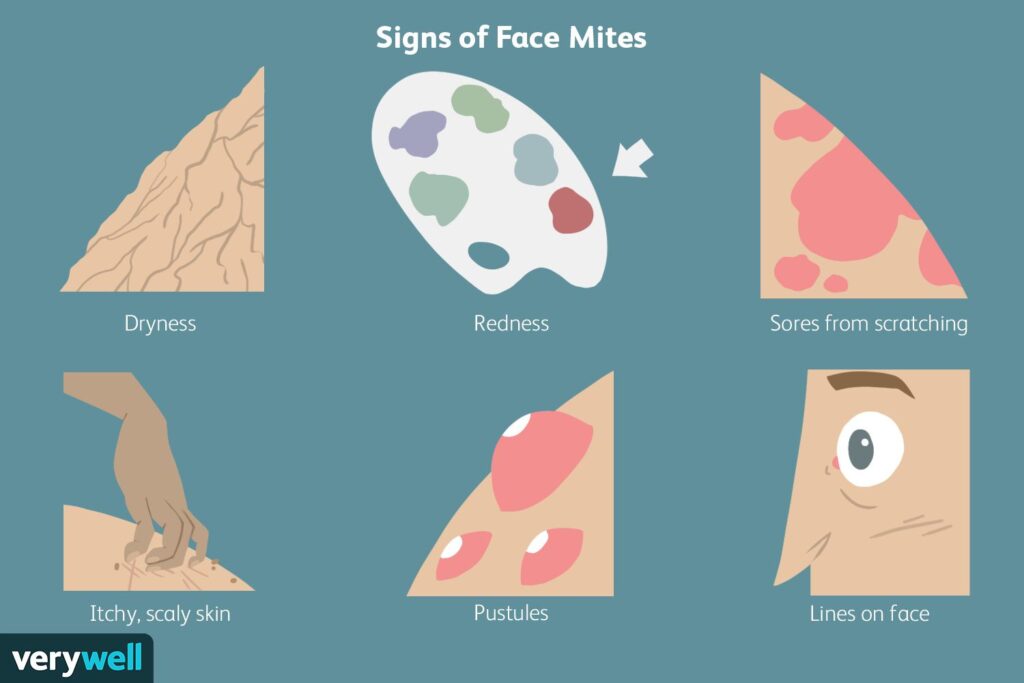
While skin mites are generally harmless, they can cause problems if they proliferate excessively. Some symptoms associated with an overgrowth of skin mites include:
- Acne
- Folliculitis (inflammation of the hair follicles)
- Rosacea
- Cherry angiomas (red spots on the skin)
Can Skin Mites Cause Infections?
Skin mites can cause infections in people with weakened immune systems, such as those with AIDS or other conditions that affect the immune system. When skin mites multiply rapidly, they can accumulate debris and cause inflammation, leading to symptoms like acne, folliculitis, or rosacea.
How to Identify Skin Mites on Your Skin
Unfortunately, it’s challenging to spot skin mites using a regular camera. However, with the help of a microscope, you can observe these tiny creatures in their natural habitat. If you’re interested in learning more about skin mites and how to identify them, check out our resources section.
Treating Skin Mites
If you suspect you have skin mites, consult a dermatologist for proper diagnosis and treatment. In the meantime, here are some over-the-counter treatments that may help:
- Sulfur-based products: These can be effective in treating skin mite infestations by killing the parasites and reducing sebum production.
- Antibacterial soaps: Using antibacterial soaps can help reduce bacterial growth, which can contribute to acne and other skin issues.
Important Notes
It’s essential to keep in mind that:
- Skin mites cannot be eliminated entirely. They are a natural part of our skin microbiome.
- The symptoms caused by skin mites are often similar to those of other skin conditions, making diagnosis challenging without proper medical evaluation.
If you have any questions or concerns about skin mites, consult with a dermatologist for personalized advice.
Frequently Asked Questions
- Can I get rid of skin mites?
No, skin mites cannot be eliminated entirely. However, over-the-counter treatments like sulfur-based products and antibacterial soaps can help manage symptoms. - How do I treat skin mite infestation?
Consult a dermatologist for proper diagnosis and treatment. Over-the-counter treatments like sulfur-based products and antibacterial soaps may also be effective in managing symptoms. - Can skin mites cause acne?
Yes, skin mites can contribute to acne by accumulating debris and causing inflammation. - Are skin mites contagious?
No, skin mites are not contagious and cannot be transmitted from person to person. - How common are skin mite infestations?
Skin mite infestations are relatively common, especially in people with weakened immune systems or those who experience excessive sweating. - Can skin mites cause rosacea?
Yes, skin mites can contribute to rosacea by causing inflammation and accumulating debris on the skin. - How do I prevent skin mite infestations?
Good hygiene practices, regular washing of the face, and using antibacterial soaps can help reduce the risk of skin mite infestations.
Please note that these FAQs are not a substitute for professional medical advice. Consult with a dermatologist if you have any concerns about skin mites or other skin-related issues.


