
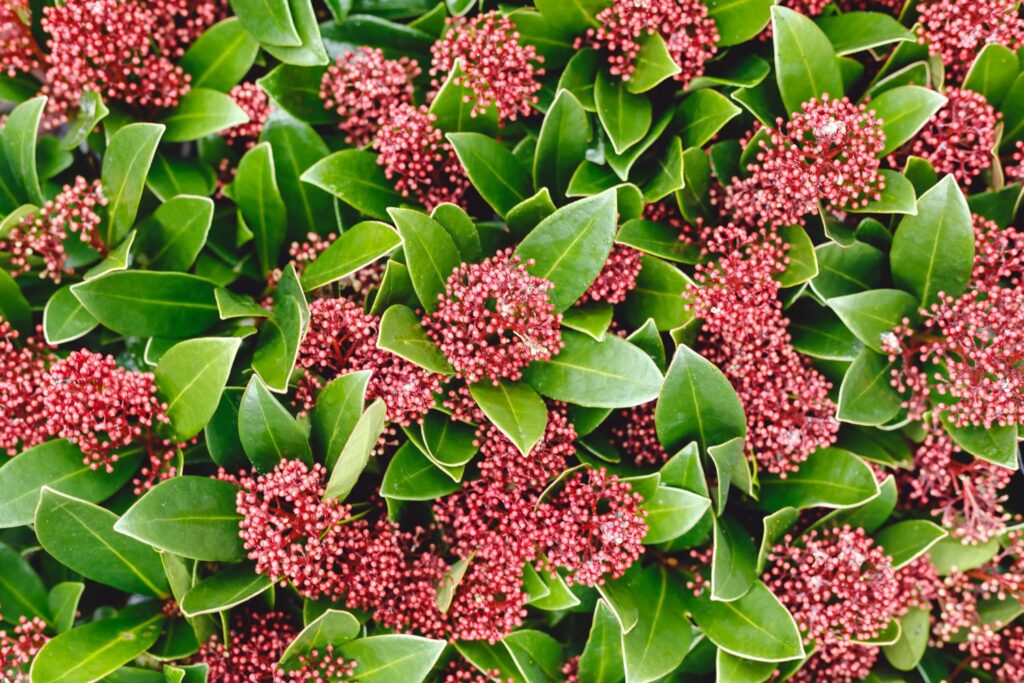
As a plant enthusiast, it’s not uncommon to stumble upon the beautiful Skimmia, a member of the Rutaceae family. Native to Japan, China, and the Himalayan region, this evergreen shrub or small tree is prized for its vibrant flowers and edible fruits.
But before we dive into the world of Skimmia, let’s explore its classification. There are two types of plants within the genus Skimmia: male and female. The males produce fragrant flowers, which are more abundant than those produced by females. While both sexes have fruits, only the males have edible berries.
Cultivation of Skimmia
Skimmia is a low-maintenance plant that can thrive in partial shade with moderate temperatures. It’s an ideal choice for gardeners who don’t have a green thumb or a lot of time to devote to their plants. Here are some essential tips for cultivating Skimmia:
- Lighting: Place the plant in a shaded area, away from direct sunlight. While Skimmia can tolerate partial shade, it will thrive best in an environment with filtered light.
- Watering: Use non-calcareous water, such as rainwater or demineralized water, and avoid overwatering. The soil should be kept consistently moist but not waterlogged, which could lead to root rot.
- Soil: The ideal soil composition is a mix of peat moss, perlite, pine needles, and heathland soil. Make sure the soil is acidic and rich in humus.
Skimmia requires minimal pruning to maintain its shape and size. The only necessary pruning is for aesthetic purposes, such as shaping or reducing its height.
Diseases and Pests
Like all plants, Skimmia is susceptible to diseases and pests. Here are some common issues that can affect your Skimmia:
- Powdery mildew: A fungal disease that causes a white powdery coating on the leaves.
- Leaf spot: A bacterial or fungal infection that leads to yellowing or browning of the leaves.
- Root rot: Overwatering causes the roots to decay, leading to plant death.
To combat these issues, use the following methods:
- For powdery mildew, apply a fungicide specifically designed for this disease.
- For leaf spot, use a bactericide or fungicide as needed.
- For root rot, reduce watering and repot the plant in fresh soil.
Species of Skimmia
There are several species within the genus Skimmia, each with unique characteristics. Let’s explore some of the most popular varieties:
- Japonica: A compact evergreen shrub that grows up to 2 meters tall.
- Reevesiana: An ermafrodite species with fragrant white flowers and red fruit.
- Rubella: The most widely cultivated Skimmia species, known for its pink flowers and red fruit.
Skimmia X Confusa is a more vigorous variety that grows up to 3 meters tall. Its ‘Kew Green’ cultivar produces bright yellow flowers in inflorescences.
Propagation of Skimmia
Skimmia can be propagated using seeds or stem cuttings. For stem cuttings, take 10-15 cm long sections during the summer months, remove lower leaves, and plant them in a well-draining mix of peat moss, perlite, and pine needles. Keep the soil moist but not waterlogged.
Skimmia can also be propagated by layering. This method involves bending a stem down to the ground and securing it with wire or a rock. The buried part of the stem will root over time.
Care in Winter
In regions with cold winters, Skimmia may need protection from frost and freezing temperatures. Here are some tips for caring for your Skimmia during winter:
- Prune: Prune your Skimmia back to about one-third of its height after it has finished flowering.
- Mulch: Mulch around the base of the plant to protect it from extreme cold and frost.
- Bring indoors: Bring potted Skimmia plants indoors during extremely cold winters.
Skimmia is a fascinating plant with unique characteristics. By following these tips, you can grow a thriving Skimmia in your garden or indoor space.
Frequently Asked Questions
Here are some common questions about Skimmia:
- Q: Can I grow Skimmia indoors?
A: Yes, Skimmia can thrive indoors with proper care and lighting. - Q: How often should I water my Skimmia?
A: Water your Skimmia when the soil is dry to the touch, but avoid overwatering. - Q: Can Skimmia be grown in containers?
A: Yes, Skimmia can grow well in pots with good drainage and a balanced fertilizer.
Skimmia is a stunning plant that can add beauty and fragrance to any garden or indoor space. By understanding its needs and characteristics, you can create the perfect environment for this versatile shrub or small tree.


