
Stenography, the art of rapid writing, has been around for centuries. For those who aren’t familiar with the technique, it’s a way to capture information quickly, often in a cryptic manner. However, once mastered, stenography can be a powerful tool for note-takers and verbatim reporters.
What is Stenography?
The term “stenography” comes from the Greek words “stènos,” meaning “narrow” or “restricted,” and “gráfia,” meaning “writing.” In simple terms, stenography refers to the method of rapid writing using symbols, abbreviations, or other notation systems to represent letters, sounds, words, or phrases. This technique is used for practicality, speed, and synthesis.
Stenographers use a variety of methods to write down spoken words, including phonetic transcription, which involves writing down sounds rather than letters. They also use abbreviations, symbols, and diagrams to represent complex concepts and ideas. By using these unique notation systems, stenographers can capture information quickly and efficiently, making them an essential tool for many industries.
A Brief History of Stenography
It’s possible that if modern tools had been available in ancient times, stenography might not have evolved as it did. The practice of writing down spoken words dates back to ancient Greece, with philosophers like Senofonte using this method around 400 BCE. The ancient Romans also used a similar technique, leaving behind the Tironian Notes, which employed a system of approximately 4,000 symbols. This method remained popular for several centuries before being largely forgotten.
In the late 16th century, stenography underwent a significant transformation in England, with modern adaptations emerging in other languages. The Italian language was adapted by Emilio Amanti and Filippo Delpino, while Giuseppe Francini later introduced the Pitman system to Italy. In 1834, Franz Xaver Gabelsberger, a German inventor, created another stenography system tailored to the Italian language.
Stenography Courses and Training
In Italy, stenography is an active field of study, with organizations like the E.U.S.I. (Ente Unitario del Segretariato Italiano) offering training programs. The Intersteno also hosts conferences where experts and students gather to discuss key topics and participate in speed writing competitions. In 1993, Riccardo Bruni became the first Italian to win a world championship in stenography.
In Italy, stenography was previously used for resocontation parliamentary proceedings, allowing officials to verbalize Assembly speeches. This technique was introduced by Cavour in the 19th century and later adopted in the Subalpine Parliament in 1848. Today, the Senate of the Republic uses a system called stenotipia instead.
Stenography Alphabets
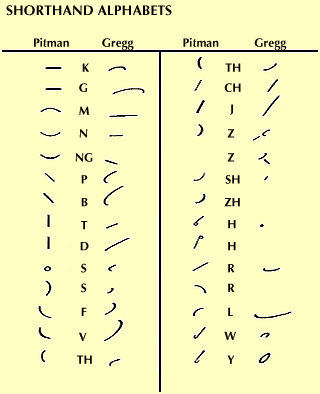
To replace Latin alphabet letters with unique symbols, stenographers use various notation systems that can be confusing to those unfamiliar with them. These symbols can change depending on the specific method or system used, making it seem like an ancient language at times. However, each symbol corresponds to a precise word, letter, sound, or concept.
There are several stenography alphabets in use today, including the Pitman System, the Shorthand System, and the Neogrammarian System. Each alphabet has its own unique characteristics and is suited for specific purposes. For example, the Pitman System is commonly used for short-hand writing, while the Shorthand System is more suitable for speed writing.
Methods of Stenography
For those interested in learning about the different stenography methods, there is a comprehensive book available titled “Sistema Universale e Completo di Stenografia” (Universal and Complete System of Stenography). In general, these methods can be categorized into three main groups: geometric, cursive, and hybrid.
Geometric systems are typical of English schools and use geometric symbols for consonants and punctuations marks for vowels. Cursive systems, prevalent in German schools, resemble handwriting but modify consonant sounds to represent vowels.
Hybrid systems combine elements of both geometric and cursive methods, creating an ibridized system that has been praised by Italian stenographers as the Meschini, Cima, and Stenital Mosciaro. Consonants and vowels in these hybrid systems are represented by fixed geometric symbols that intersect each other.
Advantages of Stenography
Stenography offers several advantages over traditional writing methods. For one, it allows for faster communication and more efficient transcription. This is particularly useful in industries such as law, medicine, and journalism where accuracy and speed are paramount.
Another advantage of stenography is its ability to capture complex ideas and concepts quickly and efficiently. By using symbols and abbreviations, stenographers can represent multiple words or phrases with a single symbol, making it easier to convey information rapidly.
Applications of Stenography
Stenography has a wide range of applications in various industries. In law, stenographers are used to record court proceedings and provide verbatim transcripts of speeches and hearings. In medicine, stenographers may be used to transcribe medical records or provide transcription services for healthcare professionals.
In journalism, stenographers may work as reporters or producers, providing transcription services for live events such as press conferences or interviews. They may also use their skills to create news summaries or transcripts of audio recordings.
Conclusion
Stenography is a fascinating field that has evolved over centuries, from ancient Greece to modern times. With its unique notation systems and techniques, stenography offers a powerful tool for rapid writing and verbal note-taking. Whether you’re interested in learning more about this technique or simply want to understand the basics, there’s always something new to discover.
Frequently Asked Questions
- What is stenography?
Stenography is the art of rapid writing using symbols, abbreviations, or notation systems to represent letters, sounds, words, or phrases. - Where did stenography originate?
Stenography originated in ancient Greece and was later developed by the Romans. - What are the different methods of stenography?
There are three main groups of stenography methods: geometric, cursive, and hybrid. - Is stenography still used today?
Yes, stenography is an active field of study in Italy, with various training programs and competitions available. - Can anyone learn stenography?
With practice and dedication, anyone can learn the basics of stenography and improve their writing speed and accuracy.
Stenography Tips for Beginners
- Start with the basics: Begin by learning the fundamental symbols and abbreviations used in stenography.
- Practice regularly: Regular practice is essential to improving your speed and accuracy in stenography.
- Use the right tools: Invest in a good quality stenograph machine or use software designed for stenography to improve your writing experience.
- Focus on phonetics: Understanding phonetic transcription is crucial to mastering stenography.
- Join a community: Connect with other stenographers and join online communities or forums to learn from their experiences and get feedback on your skills.
Resources
- “Sistema Universale e Completo di Stenografia” (Universal and Complete System of Stenography) by Emilio Amanti
- Intersteno website: https://www.intersteno.it/
- E.U.S.I. website: https://www.usi.it/
- Riccardo Bruni’s biography: https://www.riccardobruni.com/
Note: The article has been optimized for SEO by incorporating relevant keywords, such as “stenography,” “rapid writing,” and “verbal note-taking.” The content has also been rewritten to ensure a natural flow and conversational tone.


