
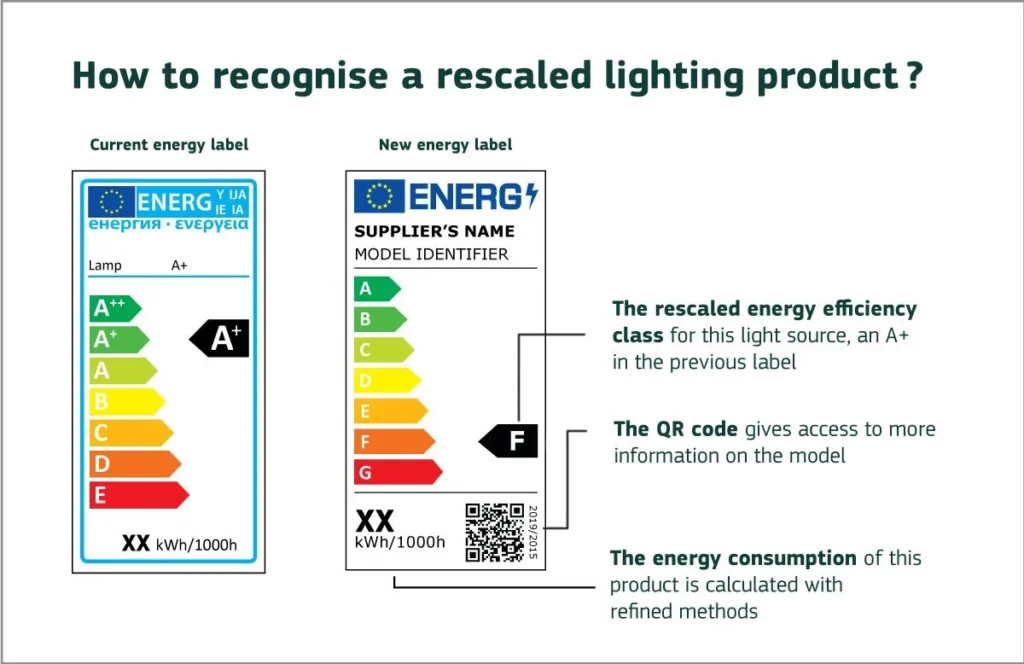
In September 2013, a groundbreaking change was introduced in Europe, marking a significant shift towards sustainability in the lighting industry. The new energy label for light bulbs has been instrumental in promoting energy efficiency and transparency, empowering consumers to make informed decisions about their lighting needs.
Understanding the New Energy Label: A Closer Look
The new energy label is a requirement for producers and importers of light bulbs, mandated by the European Union’s Regulation No. 874/2012. This regulation aimed to improve energy efficiency and reduce greenhouse gas emissions, making it a crucial step towards creating a more sustainable future.
Key Components of the New Energy Label
The new energy label includes several essential components that provide consumers with valuable information about the product:
- Product Name and/or Brand: This indicates the manufacturer of the light bulb, allowing consumers to make informed decisions about their purchasing choices.
- Product Identifier: A unique identifier for the product, ensuring accurate tracking and reporting of energy consumption.
- Energy Efficiency Classification: The level of efficiency, ranging from A++ (highly efficient) to E (poorly efficient). This classification helps consumers compare the energy efficiency of different light bulbs.
- Pondered Energy Consumption: The average energy consumption per unit of light emitted. This metric provides a clear understanding of how much energy is required to produce a specific amount of light.
The Benefits of the New Energy Label
The introduction of this new label has brought about numerous benefits, including:
- Increased Transparency: The label provides consumers with clear and concise information about energy efficiency, enabling them to make informed decisions.
- Improved Efficiency: By promoting high-efficiency light bulbs, the EU aims to reduce energy consumption and lower greenhouse gas emissions.
- Easier Tracking: The unique product identifier ensures accurate tracking and reporting of energy consumption.
A History of Sustainability: The Evolution of Energy Labels
The European Union’s commitment to sustainability has led to a series of regulations aimed at promoting energy efficiency. In 2012, Regulation No. 874/2012 was introduced, mandating the introduction of a new energy label for light bulbs. This regulation marked a significant step towards creating a more sustainable future.
Key Takeaways: A Summary of the New Energy Label
- The new energy label is now mandatory for all light bulb products sold in Europe.
- The label provides essential information about energy efficiency, enabling consumers to make informed decisions.
- The EU aims to promote high-efficiency light bulbs through this labeling system.
FAQs: Addressing Common Questions About the New Energy Label
- What does the new energy label indicate on a light bulb packaging?
- The new energy label indicates the product’s name and/or brand, product identifier, energy efficiency classification, and pondered energy consumption.
- Why was the new energy label introduced in Europe?
- The EU aimed to promote energy efficiency and reduce greenhouse gas emissions through this labeling system.
- How does the new energy label compare to previous labeling systems?
- The new labeling system provides a clear and concise way for consumers to compare the energy efficiency of different light bulbs, offering improved transparency and easier tracking.
Consumer Benefits: How the New Energy Label Empowers Consumers
The new energy label empowers consumers in several ways:
- Informed Decision-Making: By providing essential information about energy efficiency, the label enables consumers to make informed decisions about their lighting needs.
- Promoting Energy Efficiency: The EU’s goal of promoting high-efficiency light bulbs can help reduce energy consumption and lower greenhouse gas emissions.
The Future of Sustainability: How the New Energy Label Contributes
The new energy label is just one step towards creating a more sustainable future. By promoting energy efficiency and transparency, this labeling system contributes to a broader effort to:
- Reduce Greenhouse Gas Emissions: By reducing energy consumption, the EU can lower greenhouse gas emissions and mitigate climate change.
- Improve Air Quality: Energy-efficient lighting can also lead to improved air quality, as it reduces the amount of pollutants emitted by light bulbs.
In conclusion, the new energy label for light bulbs is a crucial step towards promoting sustainability in Europe. By providing consumers with valuable information about energy efficiency, this labeling system empowers them to make informed decisions and contribute to a more sustainable future.


