Seismic Risk in Italy: Mapping the Territory
Italy is no stranger to seismic activity, with a significant portion of its territory prone to earthquake risks. However, by understanding the risks and working together with scientific institutions, we can take steps to minimize damage from earthquakes.
What does Seismic Risk Mean?
Seismic risk refers to the likelihood that earthquakes will occur within a specific area over a certain period. In Italy, the Italian National Institute of Geology and Volcanology (INGV) is responsible for collecting data on seismic activity, working together with five main scientific institutions:
- The Italian National Institute of Geophysics
- The Vesuvius Observatory
- The International Association of Vulcanologists
- The Institute of Geochemical Fluids
- The Research Center for Seismic Risk
INGV’s Mapped Perilous Seismic Zone
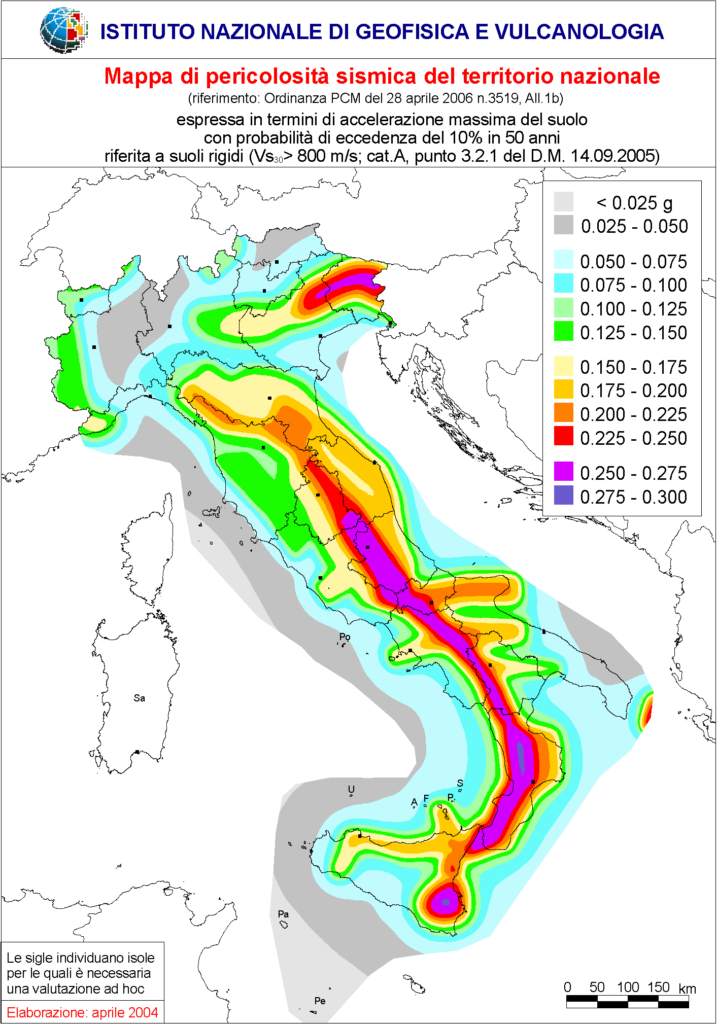
In 2004, the INGV created a map of seismic risk, highlighting areas with varying levels of danger. The colors used to indicate risk include:
| Color | Description |
|---|---|
| Grigio chiaro | Moderate risk |
| Viola | High-risk zone |
| Azzurro | High risk |
| Blu | Very high risk |
| Verde | Low risk |
| Giallo | Low risk |
| Arancione | Low-moderate risk |
| Rosso | Moderate-high risk |
The map shows that the region with the lowest seismic risk is Sardinia, while areas such as Calabria, Sicily’s south-eastern coast, Friuli-Venezia Giulia, and parts of central-southern Italy have higher risks. Regions like Tuscany and Lazio along the Tyrrhenian coast, Liguria, and the eastern part of the Po Plain also experience moderate to high risk levels.
How was the Map Created?
The map took into account various data sources, including:
- Analysis of past earthquakes
- Geologic information
- Current scientific knowledge about how seismic waves propagate from an earthquake’s epicenter
By comparing these data, scientists determined values for maximum ground acceleration, which is expressed in terms of the acceleration due to gravity (g).
Building with Anti-Seismic Criteria
While ancient structures were often built without consideration for seismic risks, modern construction techniques can create buildings that withstand significant seismic forces. However, this comes at a cost, and demolition of existing high-value historical buildings may be necessary.
Conversely, transforming current structures into seismically resilient ones is possible but not an easy task. New constructions should adhere to the most up-to-date anti-seismic technologies to minimize the risk of seismic damage.
Earthquakes, Tsunamis, and the Risks Associated with Them
In addition to earthquakes themselves, tsunamis also pose a significant threat in some regions. The 2004 Indonesian tsunami, for example, highlighted this danger. Similarly, the 2011 Japanese earthquake tsunami led to concerns about nuclear power plants.
Can We Predict Earthquakes?
Currently, scientists are unable to predict with certainty when and where earthquakes will occur. However, research is ongoing into potential “early warning” systems that could help mitigate damage from seismic events.
The INGV identifies certain precursor signs, known as “sismic precursors,” such as unusual changes in the speed of seismic waves or variations in radon levels in deep wells. While these signs are not yet reliable enough to trigger evacuations or warnings, they hold promise for future research and development.
Addressing Seismic Risk in Italy
To address seismic risk in Italy, various initiatives have been implemented:
- The Italian National Institute of Geology and Volcanology (INGV) has developed a comprehensive plan to reduce seismic risk across the country.
- The government has established a network of early warning systems to detect potential seismic events.
- Research institutions are working together to develop new technologies for seismic hazard assessment and mitigation.
Conclusion
Seismic risk is a significant concern in Italy, but by understanding the risks and working together with scientific institutions, we can take steps to minimize damage from earthquakes. By building with modern anti-seismic technologies and investing in research into early warning systems, we may one day be able to better prepare for seismic events and reduce their impact.
FAQs
- What is seismic risk in Italy?
- How does the INGV create its mapped perilous seismic zones?
- What are some potential precursor signs of a seismic event?
- Can we predict earthquakes with certainty?
- How can modern construction techniques help minimize seismic damage?
- Are there any areas in Italy particularly vulnerable to tsunamis?
- What is the role of the INGV in addressing seismic risk in Italy?
- How can we balance the need for seismically resilient buildings with concerns about historical preservation?