
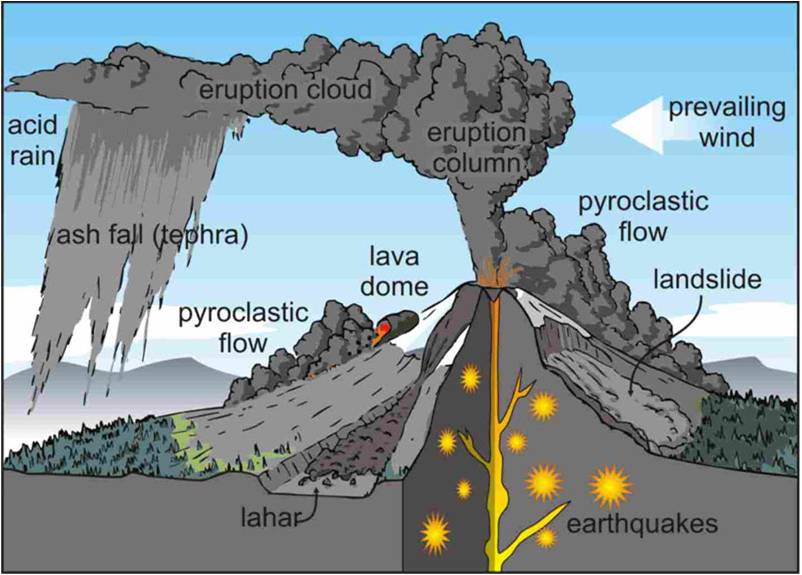
Imagine a world beneath our feet, where magma and hot gases simmer in the darkness, waiting to erupt into the surface world. This is the realm of secondary volcanism, a phenomenon that’s just as fascinating as it is lesser-known. In this article, we’ll delve into the mysteries of secondary volcanism, exploring its various manifestations and uncovering the secrets behind these enigmatic events.
What is Secondary Volcanism?
Secondary volcanism occurs when a volcanic basin cools down to a temperature that’s no longer capable of producing lava or hot materials. However, this doesn’t mean that the magmatic activity ceases. Instead, it continues in a different form, manifesting as a series of natural phenomena known as “secondary volcanism.” These events are characterized by the emission of warm waters and gases.
Understanding Secondary Volcanism
So, what exactly is secondary volcanism? To answer this question, let’s break down its main components. We’ll explore the various manifestations of secondary volcanism, from sulfates to hot springs, and examine each one in detail.
What are Sulfates?
Sulfates are a specific phenomenon linked to volcanic activity, consisting of the emission of hot gases that deposit sulfur crystals when they come into contact with air. The hot gases emitted from the volcanic basin consist mainly of hydrogen sulfide and sulfur dioxide. In Italy, there is a notable example – the night solfatara of Pozzuoli, located near the Flegrei fields in the Naples area.
What are Mud Pots?
Mud pots are another manifestation of secondary volcanism, characterized by emissions of carbonic acid that tend to settle close to the ground. This makes it possible for people to breathe, but it’s essential to note that mud pots can still be hazardous due to their acidic nature.
What are Fumaroles?
Fumaroles are steam vents that emit hot gases and vapors into the atmosphere. They’re often found near volcanic fields and can indicate the presence of magma beneath the surface.
What are Geysers?
Geysers are natural springs that erupt periodically, shooting steam and water high into the air. This phenomenon is caused by the buildup of pressure in underground reservoirs.
What are Steam Vents?
Steam vents are similar to fumaroles but tend to emit more steam than hot gases. They’re often found near volcanic fields and can be an indicator of magma activity.
What are Putrid Springs?
Putrid springs are a type of spring that emits acidic, sulfurous water. The name “putrid” comes from the Greek word for rotting flesh, which is fitting due to the noxious odor emitted by these springs.
What are Hot Springs?
Hot springs are natural sources of hot water that can be found in volcanic regions. They’re often rich in minerals and can have therapeutic properties.
Pseudovulcanic Phenomena
While exploring the main manifestations of secondary volcanism, we’ve also stumbled upon pseudovulcanic phenomena – events that appear to be volcanic but are actually caused by different factors.
These pseudovulcanic phenomena include:
- Volcanic mud
- Mud volcanoes
- Fiery fountains
The Role of Geothermal Energy
Geothermal energy plays a significant role in shaping the landscape and creating secondary volcanism. The heat from deep within the Earth’s crust can cause rocks to melt, producing magma that rises to the surface. This process is known as volcanic activity.
However, when the magma cools down, it can no longer produce lava or hot materials, leading to the formation of secondary volcanism. The geothermal energy remains, but its expression changes, resulting in the emission of warm waters and gases.
The Impact on Local Ecosystems
Secondary volcanism can have a significant impact on local ecosystems. The emissions of warm waters and gases can alter the chemistry of the surrounding environment, affecting the growth and distribution of plants and animals.
In some cases, secondary volcanism can also lead to the formation of new landforms, such as mud volcanoes or geysers. These formations can provide habitats for unique species that have adapted to the changing conditions.
Conclusion
Secondary volcanism is a fascinating phenomenon that reveals the hidden world beneath our feet. By understanding its various manifestations and pseudovulcanic phenomena, we can gain insight into the complex processes that shape our planet.
Through the study of secondary volcanism, we can learn more about the Earth’s internal dynamics and the forces that shape our landscape. This knowledge can have significant implications for fields such as geology, ecology, and environmental science.
Frequently Asked Questions (FAQs)
- What is secondary volcanism?
Secondary volcanism occurs when a volcanic basin cools down to a temperature that’s no longer capable of producing lava or hot materials. - How does secondary volcanism manifest?
Secondary volcanism manifests as the emission of warm waters and gases, including sulfates, mud pots, fumaroles, geysers, steam vents, putrid springs, and hot springs. - What is a sulfate?
A sulfate is a phenomenon linked to volcanic activity, consisting of the emission of hot gases that deposit sulfur crystals when they come into contact with air. - What are mud pots?
Mud pots are manifestations represented by emissions of carbonic acid that tend to settle close to the ground. - What are fumaroles?
Fumaroles are steam vents that emit hot gases and vapors into the atmosphere. - What is a geyser?
A geyser is a natural spring that erupts periodically, shooting steam and water high into the air. - What are steam vents?
Steam vents are similar to fumaroles but tend to emit more steam than hot gases. - What are putrid springs?
Putrid springs are a type of spring that emits acidic, sulfurous water. - What are hot springs?
Hot springs are natural sources of hot water that can be found in volcanic regions.
By understanding secondary volcanism and its various manifestations, we can gain a deeper appreciation for the complex processes that shape our planet.


