
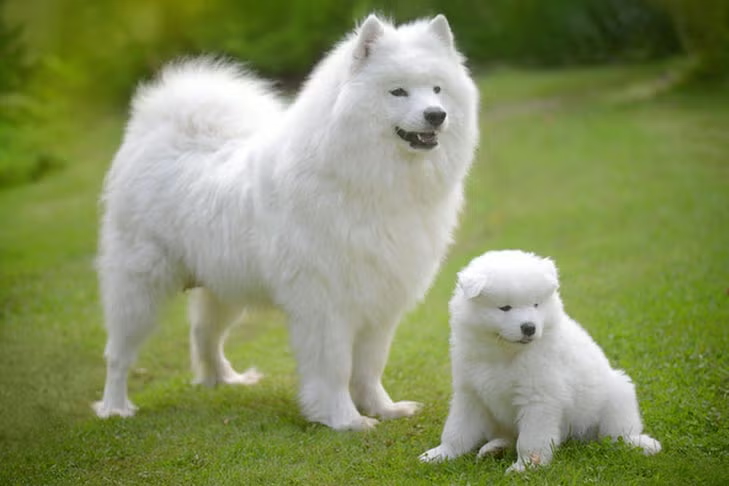
As we delve into the world of dog breeds, it’s easy to get lost in the sea of similar-looking canines. But amidst all the sameness, there’s one breed that stands out for its unique characteristics – the Samoyed.
This Arctic-dwelling breed has a rich history, originating from the Nenets people of Siberia who relied on them as companions and working dogs. Over time, the Samoyed has evolved into the sleek, white, and intelligent canine we know today.
Physical Characteristics: A Study in Elegance
The Samoyed’s physical attributes are a masterclass in balance and proportion. With its medium to large size and robust build, this breed is perfectly suited for its native Arctic environment. Its striking features include:
- A white coat with a subtle cream coloration, which gives it an air of elegance
- Dark eyes that seem to sparkle with intelligence
- A distinctive “smile” that’s both captivating and endearing
But the Samoyed’s beauty extends beyond its physical appearance. Its intelligence, affectionate nature, and adaptability make it a beloved companion for many.
The Origins of the Samoyed: A Story of Adaptation
The Samoyed’s ancestors were part of the Nenets people, who relied on them to aid in hunting, herding, and companionship. As these nomadic tribes traversed the Siberian tundra, they developed a breed that was both resilient and gentle.
Fast forward to the late 19th century, when British aristocrats began importing Samoyeds to England, where they were further refined and bred for their exceptional qualities. This selective breeding led to the development of two distinct types: the “Type Orso” (bear-like) and the “Type Lupo” (wolf-like).
The Rise of the Samoyed as a Companion Dog
In the early 20th century, the Samoyed gained popularity as a companion dog, thanks in part to its affectionate nature and striking appearance. As its reputation grew, so did its price – making it one of the most expensive breeds on the market.
But with great cost comes great responsibility. Potential owners must be aware of the Samoyed’s potential health issues, such as:
- Eye problems like cataracts and retinal dysplasia
- Hip dysplasia
- Diabetes
Grooming: The Key to a Healthy Coat
Samoyeds are known for their thick, double coat. This requires regular grooming to prevent matting and tangling. Here’s what you need to know:
- Brush your Samoyed daily to remove loose hair and distribute skin oils
- Bathe them every 2-3 months to keep their coat clean and shiny
- Trim their nails regularly to prevent overgrowth
- Clean their ears weekly to prevent wax buildup
Training: A Key to a Happy Relationship
Samoyeds are intelligent dogs that thrive on structure and discipline. They respond well to positive reinforcement training methods, such as clicker training and reward-based learning.
Here’s what you need to know:
- Start training early, ideally from puppyhood
- Use high-value rewards to motivate your Samoyed
- Be consistent in your commands and expectations
- Socialize your Samoyed extensively to prevent fear-based aggression
Health Issues: What You Need to Know
As with any breed, potential owners must be aware of the Samoyed’s potential health issues. Here are some common problems to watch out for:
- Eye problems like cataracts and retinal dysplasia
- Hip dysplasia
- Diabetes
- Hypothyroidism
- Bloat
Conclusion: The Samoyed – A Rare Gem
In conclusion, the Samoyed is a rare breed that embodies both elegance and adaptability. With its rich history, striking appearance, and affectionate nature, it’s no wonder why this canine has captured the hearts of many.
But as with any breed, potential owners must be aware of its potential health issues and take steps to ensure their furry friend leads a long and happy life.


