
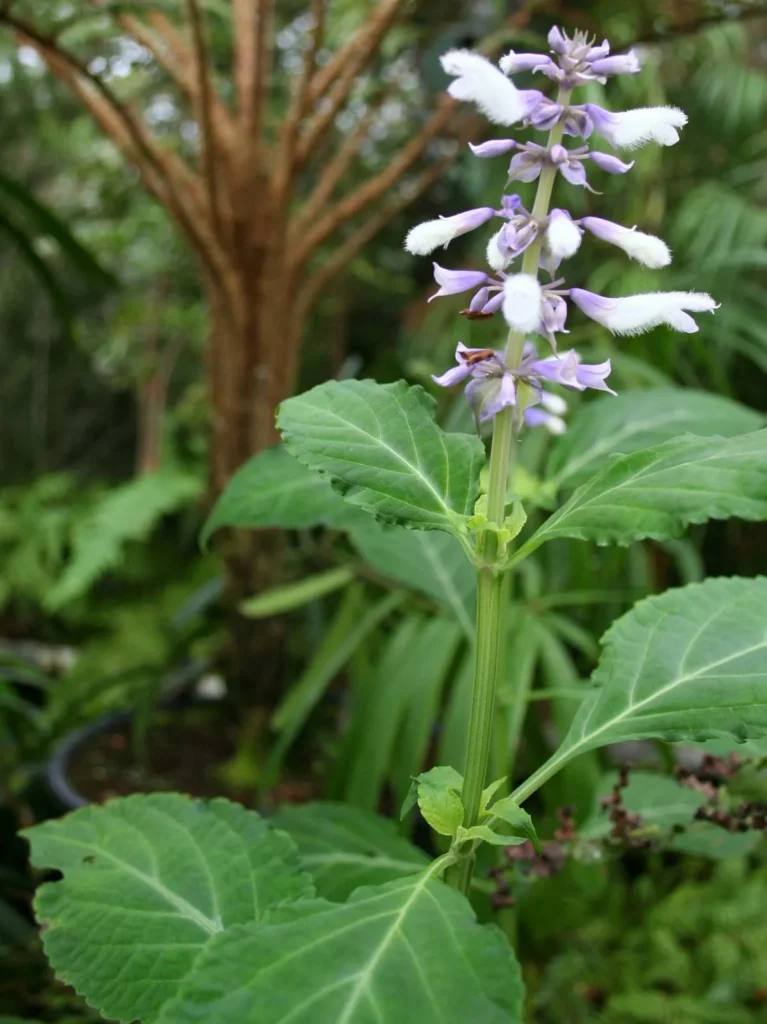
As we delve into the world of psychoactive plants, one species stands out for its extraordinary properties: Salvia divinorum. Native to Mexico, particularly in the regions of Oaxaca and Sierra Mazateca, this plant has been revered by indigenous communities for centuries as a sacred herb.
What is Salvia Divinorum?
Unlike the common sage used in cooking, Salvia divinorum contains a potent natural psychoactive substance that sets it apart from other Salvia species. Its name, “Salvia” originates from Latin words meaning “healthy” and “salvation,” reflecting its perceived health benefits. The term “divinorum” means “of the seer,” referencing the plant’s use in divination rituals by the Mazatec people.
Characteristics of Salvia Divinorum
At first glance, Salvia divinorum appears similar to culinary sage. However, a closer look reveals its unique characteristics. Both common and sacred sage belong to the Lamiaceae family and the same genus as Salvia officinalis (common sage). The primary difference lies in the presence of the psychoactive compound that defines this plant.
Salvia divinorum is an evergreen perennial shrub that typically grows up to 3 feet tall. Its leaves are oval-shaped, pointed at the tip, and have a wavy edge. The stems are smooth and grayish-brown in color. This plant thrives in humid environments with moderate temperatures, making it well-suited for tropical regions.
Properties of Salvia Divinorum
Salvia divinorum’s distinguishing feature is its ability to induce profound psychological effects. To cultivate this plant, one must use its cuttings, as seeds have low germination rates. All existing species worldwide stem from the collection of tissue by Hoffman and Wasson.
The authenticity of Salvia divinorum as a distinct species is still under investigation, with ongoing research examining its psychoactive effects on humans. The various methods for consuming this plant include smoking it pure or mixed with tobacco in specialized pipes or rolling it like cigarettes. Some individuals even separate the active principle from the leaves using acetone and DMSO, resulting in an intense experience.
Effects of Salvia Divinorum
When consumed, users often report a complete separation between their physical and spiritual selves, loss of consciousness, and altered perceptions. The effects can vary greatly depending on individual sensitivity and health. Common experiences include revisiting past events or perceiving the world from an external perspective.
The power of these experiences can be overwhelming, causing anxiety, fear, and unease. These effects typically last up to 30 minutes but may leave a lasting impact.
History of Salvia Divinorum
Salvia divinorum has been used for centuries by indigenous cultures in Mexico, particularly the Mazatec people in Oaxaca. They employed it in rituals for divination and healing purposes, alongside other psychoactive plants like mushrooms and seeds from similar species.
In ancient times, communities utilized this plant to gain insight into mysterious events or seek guidance on pressing matters. The primary goal was not recreation but rather a deeper understanding of the world around them.
The Early Discovery and Recognition
J.B. Johnson is credited with introducing Salvia divinorum to the international community in 1939, describing it as “hierba María” and highlighting its use in Mazatec rituals alongside fungi and seeds from similar plants.
Roberto J. Weitlaner’s writings in 1952 further fueled interest in this plant, but it wasn’t until Gordon Wasson and Alexander Hoffman identified the species in 1961 that Salvia divinorum gained widespread recognition. The active compound responsible for its effects was not isolated until much later.
Today, we know that the psychoactive principle is salvinorin A.
Cultivation of Salvia Divinorum
Growing Salvia divinorum requires careful attention to detail and a controlled environment. This plant thrives in warm temperatures between 65°F-75°F (18°C-24°C) and high humidity levels above 60%. It can be grown indoors or outdoors, but it prefers well-draining soil with moderate moisture.
The most effective way to cultivate this plant is by using its cuttings, which should be taken from the mother plant during the spring and summer months. To root these cuttings, one must submerge them in water for several days before transferring them to a pot filled with moistened soil.
Precautions and Risks
While Salvia divinorum has been used safely by many individuals, it’s essential to exercise caution when consuming this plant. Its potent effects can cause anxiety, fear, and unease, especially in people with pre-existing health issues.
Users should also be aware of the potential risks associated with smoking tobacco while using Salvia divinorum, as it can lead to nicotine dependence and other respiratory problems.
Regulation and Legal Status
The legal status of Salvia divinorum varies depending on jurisdiction. In some countries, this plant is considered a controlled substance due to its psychoactive properties. However, in many regions, it remains unregulated or has been decriminalized.
It’s essential for users to familiarize themselves with local laws and regulations before consuming Salvia divinorum.
Potential Therapeutic Applications
Research on Salvia divinorum’s potential therapeutic applications is ongoing, although more studies are needed to confirm these findings. Some possible uses of this plant include:
- Pain management: Studies have shown that salvinorin A may be effective in reducing pain perception.
- Anxiety and stress relief: The anxiolytic effects of Salvia divinorum may make it a useful treatment for anxiety disorders.
- Addiction treatment: The plant’s potential to reduce nicotine cravings makes it a promising adjunct therapy for smoking cessation programs.
Conclusion
Salvia divinorum has captivated our imagination with its extraordinary properties and profound effects on human consciousness. While it remains a topic of debate among researchers, this plant’s allure cannot be denied. As we continue to explore its mysteries, let us approach them with respect and caution.
Frequently Asked Questions (FAQs)
- What is the primary psychoactive compound in Salvia divinorum?
The main active ingredient responsible for Salvia divinorum’s effects is salvinorin A. - How does one consume Salvia divinorum?
There are various methods, including smoking it pure or mixed with tobacco in specialized pipes or rolling it like cigarettes. - Are the effects of Salvia divinorum safe and reliable?
While generally considered safe when consumed under controlled conditions, its effects can be overwhelming and may not be suitable for everyone. - Can anyone use Salvia divinorum without risk?
No, the plant’s potent effects can cause anxiety, fear, and unease in some individuals, especially those with pre-existing health issues. - Is Salvia divinorum a controlled substance?
Its legal status varies depending on jurisdiction; it is often considered a regulated substance due to its psychoactive properties. - Can I grow Salvia divinorum myself?
Yes, by using cuttings from established plants or purchasing seeds, one can attempt to cultivate this unique plant at home. - What are the most common effects of consuming Salvia divinorum?
These include a complete separation between physical and spiritual selves, loss of consciousness, altered perceptions, revisiting past events, and experiencing oneself in multiple locations simultaneously. - Is there ongoing research on Salvia divinorum’s potential therapeutic applications?
Yes; studies are being conducted to explore its possible uses in medicine, though more research is needed to confirm these findings.
By understanding the complexities of Salvia divinorum and exercising caution when exploring its effects, users can unlock the mysteries of this extraordinary plant and discover new avenues for personal growth and self-discovery.


