
As a precious spice, saffron has been coveted for centuries. Its use dates back to ancient Rome, where it was enjoyed with wine and stigmas from the Crocus sativus plant. To grasp the ancient value of this spice, imagine an image of “Saffron Pickers” found among the ruins of Akrotiri, on the island of Thera, dating back to 1500 BCE.
Introduction to Saffron Botany
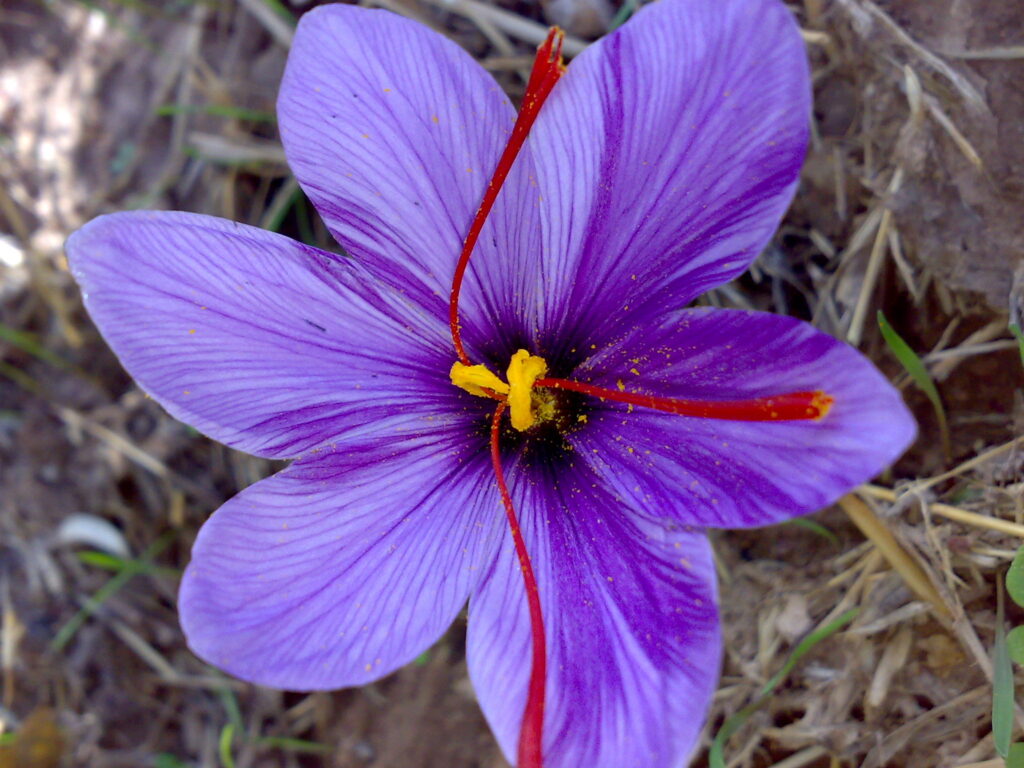
Saffron is derived from the Crocus sativus L., a perennial bulbous plant belonging to the family Iridaceae. The bulb can range in diameter from 2.5 to 6 cm, and the height of the plant can vary between 10 to 25 cm. The saffron plant has linear, sessile leaves with a dark green color and white striation on the central vein. The flowers have a campanula-like shape, closed at the base, with six petals in shades of purple-red.
The only part of the plant used for production is its three filamentous stigmas, which are 3-4 cm long, possessing an amaro-piccante flavor and a distinctive aromatic odor when dried. These stigmas are commercially known as saffron.
Origin and Adaptability
Saffron originated in the mountainous regions between Afghanistan and Iran but can thrive in Mediterranean climates with minimal excessive rainfall. The ideal climate for saffron production is characterized by mild winters, cool summers, and well-defined wet and dry seasons. This allows for a 120-day period of growth, where the plant is subjected to frost only during its first year.
The plant prefers full sun exposure and can tolerate short periods of drought but requires regular watering. In regions with high rainfall, saffron cultivation should be adapted by planting at higher elevations or in well-drained areas to avoid excessive moisture.
Saffron Production: A Step-by-Step Guide
Where to Grow Saffron
In Italy, saffron prefers zones with calcareous soils, well-drained, and deep. It can be grown up to 800-1200 meters above sea level. In regions with high humidity, such as the Mediterranean, it’s essential to consider factors like soil moisture, heat stress, and pest management.
Diseases of Saffron
When evaluating saffron production, it’s crucial to consider the potential pests and diseases that may impact yields. The saffron plant is relatively rustic, resistant to both pests and climate-related adversities.
However, factors like waterlogged soil can attract pathogens, leading to common issues like fungal infections (Rhizoctonia violacea – “The Malvin”) and Phoma crocophila (Crocus rot). Another threat is the Fusarium fungus, which may cause abnormal leaf growth, diverting energy from bulb development.
Other animals, such as cinghiali, istrici, topi, and ratti, can also feed on the bulbs. To mitigate these risks, farmers should adopt integrated pest management techniques, including crop rotation, pruning, and the use of organic pesticides.
Saffron Production: Annual Cycle
Annual cultivation of saffron in Italy primarily occurs in the Florence hills. The annual cycle begins with the first-year expanse when bulbs are unearthed late spring, allowing for a period of dormant growth during summer.
In saffron production at this stage, attention is paid to terrains setup: each area ranges from 150 to 1000 sqm based on soil conditions. Within these areas, rectangular plots (porches) measuring 80-85 cm wide and varying in length are cultivated. Porches are arranged parallelly with intervening paths of 30 cm width for easy passage during harvests.
For improved drainage, porches are elevated by about 25-30 cm above the walkways. This design helps to prevent waterlogging, reduces soil erosion, and facilitates harvesting.
Saffron Production: Biennial Cycle
Biennial cultivation is more prevalent in saffron production, where plants remain in the ground for three to four years. In regions with abundant rainfall, supplementary canals are used to manage lateral water flow.
In biennial systems, bulbs naturally reproduce during the growth cycle, so it’s essential to respect the depth of planting about 20 cm deep at harvest time. This allows the bulb to establish itself before flowering and encourages healthy growth.
Required Land Area
To evaluate a substantial saffron production, an extensive area is needed. While smaller areas may yield small quantities, significant production requires larger plots of land, as seen in Spains (60-120 bulbs/m²) and Sardinia (10-50 bulbs/m²), though yields and costs vary with the chosen cycle and planting density, along with the specific variety.
Farmers should carefully assess their resources before selecting a location for saffron cultivation. A 2000 sqm plot can support approximately 500 bulbs, depending on spacing and variety.
Factors Influencing Saffron Production
Several factors influence saffron production, including climate, soil quality, irrigation management, pest control, and harvesting techniques.
- Climate: A mild winter, cool summers, and well-defined wet and dry seasons are ideal for saffron cultivation.
- Soil Quality: Well-drained, calcareous soils with a pH range of 6.5-7.5 are preferred for saffron production.
- Irrigation Management: Regulated irrigation is crucial to avoid excessive moisture, which can lead to fungal diseases and pest infestations.
- Pest Control: Integrated pest management techniques should be employed to minimize the risk of pests and diseases affecting the crop.
- Harvesting Techniques: Proper harvesting methods are essential to ensure high-quality stigmas and maximize yields.
Best Practices for Saffron Production
Farmers can adopt several best practices to improve saffron production:
- Soil Preparation: Regular soil testing helps identify nutrient deficiencies, allowing farmers to implement targeted fertilization strategies.
- Crop Rotation: Rotating crops with saffron can help break disease cycles and reduce pest populations.
- Pruning: Pruning the plant during dormancy promotes healthy growth and increases yields.
- Irrigation Management: Regulated irrigation ensures optimal moisture levels, reducing the risk of fungal diseases and pests.
- Pest Control: Implementing integrated pest management techniques minimizes the use of chemical pesticides and maintains a balanced ecosystem.
By following these best practices and understanding the complexities of saffron production, farmers can optimize yields, improve quality, and contribute to sustainable agriculture practices.
Challenges Facing Saffron Production
Despite its potential, saffron production faces several challenges:
- Climate Change: Rising temperatures and changing precipitation patterns affect soil moisture, plant growth, and pest management.
- Water Scarcity: Limited water availability in regions with low rainfall can impact crop health and yields.
- Pests and Diseases: The increasing use of chemical pesticides threatens ecosystem balance and increases the risk of developing pesticide-resistant pests.
- Market Fluctuations: Volatile market prices and demand for saffron can make it challenging for farmers to maintain profitability.
- Labor Shortages: Labor shortages in regions with high labor costs can impact harvest efficiency and yields.
Farmers must be aware of these challenges and work collaboratively to address them through sustainable practices, research, and policy initiatives.
Conclusion
Saffron production is a complex process that requires careful attention to detail. By understanding the intricacies of saffron botany, adapting to regional climate conditions, and adopting best practices for cultivation, farmers can optimize yields and contribute to sustainable agriculture practices.
The challenges facing saffron production must be acknowledged and addressed through research, policy initiatives, and collaborative efforts among farmers, researchers, and policymakers.


