
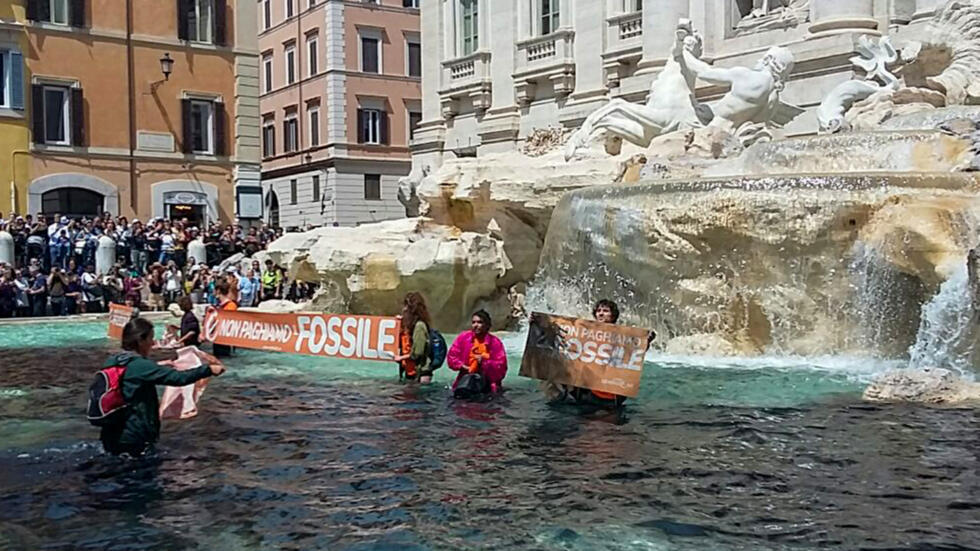
The city of Rome has officially declared a climate and environmental emergency, marking a significant step towards addressing the growing threat of global warming. The decision was made with broad support from all political parties in the city council, which has committed to implementing an ecological conversion in economic and social spheres.
In the lead-up to the third global strike for the climate on September 27, 2019, the Rome city council approved a motion calling on the government and parliament to prioritize all possible actions to combat the climate emergency. This move was made possible by the signatures of 100,000 citizens who supported the petition #EmergencyClimateRome, launched on Change.org by Alfonso Pecoraro Scanio, president of the Univerde Foundation, and former Minister of the Environment.
The petition also gained support from young activists with Fridays For Future Roma, as well as Italian journalists, associations, and professionals in green economy. The document emphasizes that while Rome has already made significant commitments to reducing CO2 emissions by half, concrete investments are needed to address the issue.
Friday’s For Future Roma: A Call for Ecological Conversion
The idea behind Friday’s For Future Roma is that an ecological conversion should be guided by principles of climate justice, democratic participation, and transparency. The group believes that the costs of transitioning to a more sustainable economy should not disproportionately burden the most vulnerable populations, but rather those who have caused the greatest environmental harm.
Furthermore, it advocates for the recognition of citizen assemblies in the process of identifying necessary measures to combat the climate emergency. This would enable citizens to monitor and ensure that government declarations of emergency are followed by concrete and effective actions.
Impegnements del Comune
When a city declares an ecological crisis, it acknowledges the severity of environmental and socio-economic consequences caused by global warming. However, it also assumes responsibility in pursuing concrete and effective actions to address the issue immediately.
The city council’s commitments include reducing CO2 emissions by at least 40% with every effort to reach 50% by 2030; prioritizing climate change as a critical issue for the next decade; not allowing new cementification requests without addressing land consumption issues; improving energy efficiency in public buildings and incentivizing private sector development; tackling waste management with a focus on recycling and reuse; and supporting efforts to reduce water losses.
Additionally, the council has committed to establishing an observatory that will monitor Rome’s environmental situation and track the implementation of commitments made. Other initiatives include engaging with the region and government on sustainable mobility and public transportation issues; developing a ‘climate infrastructure’ through expanded green spaces; phasing out intensive livestock farming; reducing pesticide use; adopting a plastic-free approach; and transitioning to renewable energy sources.
The Third Global Climate Strike
As part of this effort, thousands of people gathered in Rome’s city center on September 27 for the third global climate strike. Over 200,000 citizens from various age groups joined the protest, reaffirming that addressing climate change should be a top priority for the next decade.
A Call to Action
The time has come to fundamentally transform our way of life and adopt eco-sustainable behaviors. We must act now to save the planet we live on. This requires collective effort from both governments and individuals.
As Christel Schachter notes in her introduction, “We can no longer afford to wait until 2040 to make a change.” It is time for us to take immediate action and support policies that prioritize ecological conversion.
The Importance of Citizen Engagement
Citizen engagement is crucial in addressing the climate crisis. By involving citizens in the decision-making process, governments can ensure that the needs and concerns of all stakeholders are taken into account. This can be achieved through various mechanisms, such as public consultations, participatory budgeting, and citizen assemblies.
The Role of Education and Awareness
Education and awareness-raising are essential in promoting ecological conversion. By educating citizens about the causes and consequences of climate change, we can inspire behavioral change and encourage individuals to make eco-friendly choices.
However, education alone is not enough. We need to recognize that individual actions are just a drop in the ocean compared to the scale of the problem. Therefore, it is crucial to address systemic issues such as economic inequality, social injustice, and policy intransigence.
Challenges and Opportunities
Addressing the climate crisis poses significant challenges, including:
- Economic costs: Transitioning to a more sustainable economy requires significant investments in infrastructure, technology, and human capital.
- Social justice: The costs of ecological conversion should not disproportionately burden vulnerable populations.
- Policy intransigence: Governments may resist adopting policies that prioritize ecological conversion over economic growth.
However, these challenges also present opportunities for innovation, cooperation, and collective action.
Conclusion
The declaration of a climate and environmental emergency by the city of Rome marks a significant turning point in the global response to climate change. By committing to an ecological conversion in economic and social spheres, the city council has acknowledged the severity of environmental and socio-economic consequences caused by global warming.
As we move forward, it is essential that governments, civil society organizations, and individuals work together to address the climate crisis. This requires a fundamental transformation of our way of life and adoption of eco-sustainable behaviors.
The time for action is now. We must take immediate steps to reduce greenhouse gas emissions, transition to renewable energy sources, and promote sustainable development.
FAQs
- What prompted the city of Rome to declare an ecological emergency?
Answer: The city council was influenced by the signatures of 100,000 citizens who supported the petition #EmergencyClimateRome, launched on Change.org. - What specific commitments has the city council made regarding climate change?
Answer: The city council has committed to reducing CO2 emissions by at least 40% with every effort to reach 50% by 2030; prioritizing climate change as a critical issue for the next decade; and supporting efforts to reduce water losses. - How does Friday’s For Future Roma envision an ecological transformation in Rome?
Answer: The group advocates for the recognition of citizen assemblies in the process of identifying necessary measures to combat the climate emergency, ensuring that government declarations of emergency are followed by concrete and effective actions. - What are some key initiatives aimed at reducing waste and improving energy efficiency in Rome?
Answer: The city council has committed to tackling waste management with a focus on recycling and reuse; improving energy efficiency in public buildings; incentivizing private sector development; and transitioning to renewable energy sources. - What role do you see citizen assemblies playing in addressing the climate crisis?
Answer: Citizen assemblies can provide a platform for citizens to monitor and ensure that government declarations of emergency are followed by concrete and effective actions. - Can you elaborate on the challenges of transitioning to a more sustainable economy without disproportionately burdening vulnerable populations?
Answer: The costs of ecological conversion should not disproportionately burden vulnerable populations, but rather those who have caused the greatest environmental harm. - How can individuals contribute to an ecological transformation, beyond just making personal lifestyle changes?
Answer: Individuals can support policies that prioritize ecological conversion; engage in citizen participation mechanisms; and promote sustainable consumption patterns. - What are the most pressing deadlines for addressing the climate emergency, according to the Intergovernmental Panel on Climate Change (IPCC)?
Answer: The IPCC has identified 2030 as a critical deadline for reducing greenhouse gas emissions and limiting global warming to 1.5°C above pre-industrial levels. - Can governments implement policies that address climate change while also promoting economic growth and job creation?
Answer: Yes, governments can implement policies that address climate change while also promoting economic growth and job creation, but this requires a fundamental transformation of our way of life and adoption of eco-sustainable behaviors. - How can we balance short-term economic needs with long-term ecological sustainability?
Answer: This requires a comprehensive approach that prioritizes ecological conversion over economic growth; promotes sustainable consumption patterns; and supports innovative technologies and policies that address the climate crisis.


