
Understanding the Impact of Human Activity on Himalayan Ecosystems
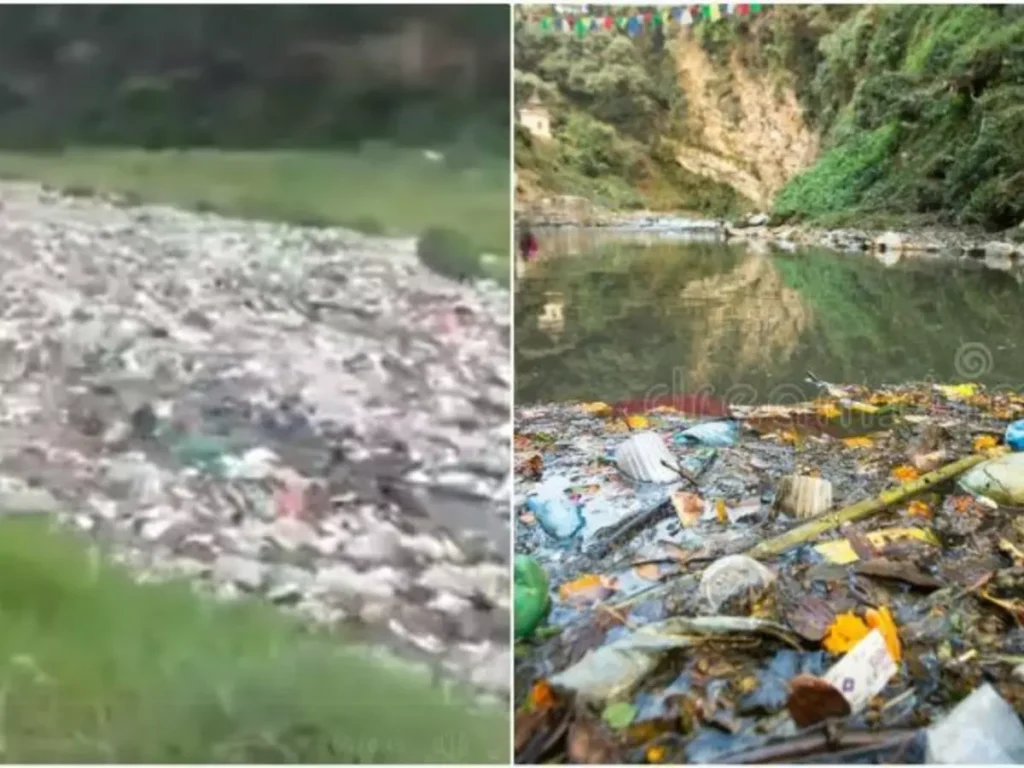
The majestic Himalayas, a region of breathtaking natural beauty, are also home to a multitude of water bodies that have been contaminated due to human activity. The high-altitude lakes and rivers in this region serve as natural recorders of environmental changes, making them an ideal location for studying the effects of pollution on these ecosystems.
Why Study Remote Areas?
Remote areas of the world have long been considered privileged locations for studying environmental issues. In the 1980s, research on long-distance transport mechanisms of pollutants was already well-established in polar regions such as Greenland and the remote Pacific islands. However, the study of mountainous regions like the Himalayas had not yet received the same level of attention globally.
In 1989, the EvK2CNR committee decided to initiate research in the Himalayan region, specifically in Asia Central, due to the lack of suitable environmental studies in these areas.
Where and What?
The research project focused on two objectives:
- Naturalistic Investigation: Conducting a comprehensive study of the ecological knowledge gap in the Mount Everest area, where very little information was available at that time.
- Acquisition of Indications on Pollutants in Deposits and Lakes: Investigating the presence of pollutants in moist deposits and lakes.
The stillness of these water bodies and sediments serves as natural recorders of environmental changes, yet they are also reservoirs for chemical species. Since human activity is minimal in these areas, the high-altitude lakes become ideal witnesses to understanding the extent of pollutant inputs generated in more urbanized and industrialized regions.
Approach and Challenges
The approach chosen for this research was interdisciplinary, which proved to be a challenge due to the lack of adequate support structures, difficulties in operating at high altitudes, limited energy supply, and distance from laboratory facilities.
During the first campaign, an additional need arose to acquire morphological, geological, climatic, hydrochemical (of rainfall/neve), water current, and limnological data (the most recent study was conducted in the mid-1960s).
Current Status
Over a period of two decades, a comprehensive network of climate measurements has been established, which is now one of the longest series for the Himalayan region. This is fundamental for interpreting variations in morpho-hydrological environments and those associated with glaciated areas.
The connection between global changes and glacier dynamics was clearly demonstrated, while other studies have confirmed significant phenomena (ion transport from seawater, primary and secondary acidifying agents, local geochemical factors in determining aqueous matrices, identification of nitrogen limitations to primary lacustrine production).
IRSA Research Work
Dozens of campaigns have been conducted by IRSA, along with the ISE-CNR Institute for Environmental Science, thanks to support from EvK2CNR. These studies have demonstrated that integrating multiple disciplines is essential in remote areas.
Some examples include:
- Micro-pollutant Organic Persistent Compounds: Measured in lake sediments and soils at different altitudes, where xenobiotics were found, sometimes in high concentrations due to condensation effects under low pressure and temperature conditions.
- Implications for Global Environmental Change: Highlighting that the relationship between climate, atmosphere, and terrestrial ecosystems is becoming increasingly inseparable as one moves towards remote regions of our planet.
SHARE-RIVERS Project
Currently underway is the SHARE-RIVERS project, which aims to provide a general, quantitative, and qualitative evaluation of surface water flow in the Sagarmatha National Park (SNP) basin. Particular attention will be given to the potential effects caused by climate change on the availability and utilization of this resource.
In this context, indicators for water quality will also be monitored to assess local and global anthropogenic impacts.
Conclusion
The research conducted in these remote areas has provided valuable insights into the impact of human activity on Himalayan ecosystems. The natural recorders in these regions have allowed us to understand the extent of pollution generated by urbanized and industrialized areas. These findings emphasize the importance of continued interdisciplinary research efforts.
Frequently Asked Questions (FAQs)
- What motivated you to conduct research in remote areas?
The motivation behind conducting research in remote areas was driven by the lack of suitable environmental studies in these regions. The EvK2CNR committee decided to initiate research in the Himalayan region, specifically in Asia Central, due to this lack.
- How did you address challenges related to data collection in these areas?
Challenges were addressed through an interdisciplinary approach, which proved to be a challenge due to the lack of adequate support structures, difficulties in operating at high altitudes, limited energy supply, and distance from laboratory facilities. Additional measures such as acquiring morphological, geological, climatic, hydrochemical (of rainfall/neve), water current, and limnological data were taken.
- What are some examples of pollutants found in lake sediments and soils?
Some examples of pollutants found in lake sediments and soils include micro-pollutant organic persistent compounds, where xenobiotics were measured at different altitudes due to condensation effects under low pressure and temperature conditions.
- Can you elaborate on the connection between global changes and glacier dynamics?
Global changes have been clearly demonstrated in connection with glacier dynamics, along with other significant phenomena (ion transport from seawater, primary and secondary acidifying agents, local geochemical factors in determining aqueous matrices, identification of nitrogen limitations to primary lacustrine production).
- How does this research contribute to our understanding of environmental change?
This research contributes significantly to our understanding of environmental change by providing valuable insights into the impact of human activity on Himalayan ecosystems. The natural recorders in these regions have allowed us to understand the extent of pollution generated by urbanized and industrialized areas, emphasizing the importance of continued interdisciplinary research efforts.
Understanding the Impact of Human Activity on Himalayan Ecosystems
The majestic Himalayas, a region of breathtaking natural beauty, are also home to a multitude of water bodies that have been contaminated due to human activity. The high-altitude lakes and rivers in this region serve as natural recorders of environmental changes, making them an ideal location for studying the effects of pollution on these ecosystems.
Understanding the role of remote areas in studying environmental issues is crucial. Remote areas are considered privileged locations for studying environmental issues, with research on long-distance transport mechanisms of pollutants already well-established in polar regions such as Greenland and the remote Pacific islands. However, the study of mountainous regions like the Himalayas had not yet received the same level of attention globally.
In 1989, the EvK2CNR committee decided to initiate research in the Himalayan region, specifically in Asia Central, due to this lack of suitable environmental studies. The project focused on two objectives:
- Naturalistic Investigation: Conducting a comprehensive study of the ecological knowledge gap in the Mount Everest area, where very little information was available at that time.
- Acquisition of Indications on Pollutants in Deposits and Lakes: Investigating the presence of pollutants in moist deposits and lakes.
The stillness of these water bodies and sediments serves as natural recorders of environmental changes, yet they are also reservoirs for chemical species. Since human activity is minimal in these areas, the high-altitude lakes become ideal witnesses to understanding the extent of pollutant inputs generated in more urbanized and industrialized regions.
Understanding the approach taken for this research was crucial due to the challenges faced while conducting it. The interdisciplinary approach proved to be a challenge due to the lack of adequate support structures, difficulties in operating at high altitudes, limited energy supply, and distance from laboratory facilities. During the first campaign, an additional need arose to acquire morphological, geological, climatic, hydrochemical (of rainfall/neve), water current, and limnological data.
Over a period of two decades, a comprehensive network of climate measurements has been established, which is now one of the longest series for the Himalayan region. This is fundamental for interpreting variations in morpho-hydrological environments and those associated with glaciated areas. The connection between global changes and glacier dynamics was clearly demonstrated, while other studies have confirmed significant phenomena (ion transport from seawater, primary and secondary acidifying agents, local geochemical factors in determining aqueous matrices, identification of nitrogen limitations to primary lacustrine production).
Dozens of campaigns have been conducted by IRSA, along with the ISE-CNR Institute for Environmental Science, thanks to support from EvK2CNR. These studies have demonstrated that integrating multiple disciplines is essential in remote areas.
Some examples include:
- Micro-pollutant Organic Persistent Compounds: Measured in lake sediments and soils at different altitudes, where xenobiotics were found, sometimes in high concentrations due to condensation effects under low pressure and temperature conditions.
- Implications for Global Environmental Change: Highlighting that the relationship between climate, atmosphere, and terrestrial ecosystems is becoming increasingly inseparable as one moves towards remote regions of our planet.
Currently underway is the SHARE-RIVERS project, which aims to provide a general, quantitative, and qualitative evaluation of surface water flow in the Sagarmatha National Park (SNP) basin. Particular attention will be given to the potential effects caused by climate change on the availability and utilization of this resource. In this context, indicators for water quality will also be monitored to assess local and global anthropogenic impacts.
The research conducted in these remote areas has provided valuable insights into the impact of human activity on Himalayan ecosystems. The natural recorders in these regions have allowed us to understand the extent of pollution generated by urbanized and industrialized areas. These findings emphasize the importance of continued interdisciplinary research efforts.
Frequently Asked Questions (FAQs)
- What motivated you to conduct research in remote areas?
The motivation behind conducting research in remote areas was driven by the lack of suitable environmental studies in these regions. The EvK2CNR committee decided to initiate research in the Himalayan region, specifically in Asia Central, due to this lack.
- How did you address challenges related to data collection in these areas?
Challenges were addressed through an interdisciplinary approach, which proved to be a challenge due to the lack of adequate support structures, difficulties in operating at high altitudes, limited energy supply, and distance from laboratory facilities. Additional measures such as acquiring morphological, geological, climatic, hydrochemical (of rainfall/neve), water current, and limnological data were taken.
- What are some examples of pollutants found in lake sediments and soils?
Some examples of pollutants found in lake sediments and soils include micro-pollutant organic persistent compounds, where xenobiotics were measured at different altitudes due to condensation effects under low pressure and temperature conditions.
- Can you elaborate on the connection between global changes and glacier dynamics?
Global changes have been clearly demonstrated in connection with glacier dynamics, along with other significant phenomena (ion transport from seawater, primary and secondary acidifying agents, local geochemical factors in determining aqueous matrices, identification of nitrogen limitations to primary lacustrine production).
- How does this research contribute to our understanding of environmental change?
This research contributes significantly to our understanding of environmental change by providing valuable insights into the impact of human activity on Himalayan ecosystems. The natural recorders in these regions have allowed us to understand the extent of pollution generated by urbanized and industrialized areas, emphasizing the importance of continued interdisciplinary research efforts.
The study of remote areas is essential for studying environmental issues. Remote areas are considered privileged locations for studying environmental issues, with research on long-distance transport mechanisms of pollutants already well-established in polar regions such as Greenland and the remote Pacific islands. However, the study of mountainous regions like the Himalayas had not yet received the same level of attention globally.
In 1989, the EvK2CNR committee decided to initiate research in the Himalayan region, specifically in Asia Central, due to this lack of suitable environmental studies. The project focused on two objectives:
- Naturalistic Investigation: Conducting a comprehensive study of the ecological knowledge gap in the Mount Everest area, where very little information was available at that time.
- Acquisition of Indications on Pollutants in Deposits and Lakes: Investigating the presence of pollutants in moist deposits and lakes.
The stillness of these water bodies and sediments serves as natural recorders of environmental changes, yet they are also reservoirs for chemical species. Since human activity is minimal in these areas, the high-altitude lakes become ideal witnesses to understanding the extent of pollutant inputs generated in more urbanized and industrialized regions.
Understanding the approach taken for this research was crucial due to the challenges faced while conducting it. The interdisciplinary approach proved to be a challenge due to the lack of adequate support structures, difficulties in operating at high altitudes, limited energy supply, and distance from laboratory facilities. Additional measures such as acquiring morphological, geological, climatic, hydrochemical (of rainfall/neve), water current, and limnological data were taken.
Over a period of two decades, a comprehensive network of climate measurements has been established, which is now one of the longest series for the Himalayan region. This is fundamental for interpreting variations in morpho-hydrological environments and those associated with glaciated areas. The connection between global changes and glacier dynamics was clearly demonstrated, while other studies have confirmed significant phenomena (ion transport from seawater, primary and secondary acidifying agents, local geochemical factors in determining aqueous matrices, identification of nitrogen limitations to primary lacustrine production).
Dozens of campaigns have been conducted by IRSA, along with the ISE-CNR Institute for Environmental Science, thanks to support from EvK2CNR. These studies have demonstrated that integrating multiple disciplines is essential in remote areas.
Some examples include:
- Micro-pollutant Organic Persistent Compounds: Measured in lake sediments and soils at different altitudes, where xenobiotics were found, sometimes in high concentrations due to condensation effects under low pressure and temperature conditions.
- Implications for Global Environmental Change: Highlighting that the relationship between climate, atmosphere, and terrestrial ecosystems is becoming increasingly inseparable as one moves towards remote regions of our planet.
Currently underway is the SHARE-RIVERS project, which aims to provide a general, quantitative, and qualitative evaluation of surface water flow in the Sagarmatha National Park (SNP) basin. Particular attention will be given to the potential effects caused by climate change on the availability and utilization of this resource. In this context, indicators for water quality will also be monitored to assess local and global anthropogenic impacts.
The research conducted in these remote areas has provided valuable insights into the impact of human activity on Himalayan ecosystems. The natural recorders in these regions have allowed us to understand the extent of pollution generated by urbanized and industrialized areas. These findings emphasize the importance of continued interdisciplinary research efforts.
Frequently Asked Questions (FAQs)
- What motivated you to conduct research in remote areas?
The motivation behind conducting research in remote areas was driven by the lack of suitable environmental studies in these regions. The EvK2CNR committee decided to initiate research in the Himalayan region, specifically in Asia Central, due to this lack.
- How did you address challenges related to data collection in these areas?
Challenges were addressed through an interdisciplinary approach, which proved to be a challenge due to the lack of adequate support structures, difficulties in operating at high altitudes, limited energy supply, and distance from laboratory facilities. Additional measures such as acquiring morphological, geological, climatic, hydrochemical (of rainfall/neve), water current, and limnological data were taken.
- What are some examples of pollutants found in lake sediments and soils?
Some examples of pollutants found in lake sediments and soils include micro-pollutant organic persistent compounds, where xenobiotics were measured at different altitudes due to condensation effects under low pressure and temperature conditions.
- Can you elaborate on the connection between global changes and glacier dynamics?
Global changes have been clearly demonstrated in connection with glacier dynamics, along with other significant phenomena (ion transport from seawater, primary and secondary acidifying agents, local geochemical factors in determining aqueous matrices, identification of nitrogen limitations to primary lacustrine production).
- How does this research contribute to our understanding of environmental change?
This research contributes significantly to our understanding of environmental change by providing valuable insights into the impact of human activity on Himalayan ecosystems. The natural recorders in these regions have allowed us to understand the extent of pollution generated by urbanized and industrialized areas, emphasizing the importance of continued interdisciplinary research efforts.
Understanding the role of remote areas is essential for studying environmental issues. Remote areas are considered privileged locations for studying environmental issues, with research on long-distance transport mechanisms of pollutants already well-established in polar regions such as Greenland and the remote Pacific islands. However, the study of mountainous regions like the Himalayas had not yet received the same level of attention globally.
In 1989, the EvK2CNR committee decided to initiate research in the Himalayan region, specifically in Asia Central, due to this lack of suitable environmental studies. The project focused on two objectives:
- Naturalistic Investigation: Conducting a comprehensive study of the ecological knowledge gap in the Mount Everest area, where very little information was available at that time.
- Acquisition of Indications on Pollutants in Deposits and Lakes: Investigating the presence of pollutants in moist deposits and lakes.
The stillness of these water bodies and sediments serves as natural recorders of environmental changes, yet they are also reservoirs for chemical species. Since human activity is minimal in these areas, the high-altitude lakes become ideal witnesses to understanding the extent of pollutant inputs generated in more urbanized and industrialized regions.
Understanding the approach taken for this research was crucial due to the challenges faced while conducting it. The interdisciplinary approach proved to be a challenge due to the lack of adequate support structures, difficulties in operating at high altitudes, limited energy supply, and distance from laboratory facilities. Additional measures such as acquiring morphological, geological, climatic, hydrochemical (of rainfall/neve), water current, and limnological data were taken.
Over a period of two decades, a comprehensive network of climate measurements has been established, which is now one of the longest series for the Himalayan region. This is fundamental for interpreting variations in morpho-hydrological environments and those associated with glaciated areas. The connection between global changes and glacier dynamics was clearly demonstrated, while other studies have confirmed significant phenomena (ion transport from seawater, primary and secondary acidifying agents, local geochemical factors in determining aqueous matrices, identification of nitrogen limitations to primary lacustrine production).
Dozens of campaigns have been conducted by IRSA, along with the ISE-CNR Institute for Environmental Science, thanks to support from EvK2CNR. These studies have demonstrated that integrating multiple disciplines is essential in remote areas.
Some examples include:
- Micro-pollutant Organic Persistent Compounds: Measured in lake sediments and soils at different altitudes, where xenobiotics were found, sometimes in high concentrations due to condensation effects under low pressure and temperature conditions.
- Implications for Global Environmental Change: Highlighting that the relationship between climate, atmosphere, and terrestrial ecosystems is becoming increasingly inseparable as one moves towards remote regions of our planet.
Currently underway is the SHARE-RIVERS project, which aims to provide a general, quantitative, and qualitative evaluation of surface water flow in the Sagarmatha National Park (SNP) basin. Particular attention will be given to the potential effects caused by climate change on the availability and utilization of this resource. In this context, indicators for water quality will also be monitored to assess local and global anthropogenic impacts.
The research conducted in these remote areas has provided valuable insights into the impact of human activity on Himalayan ecosystems. The natural recorders in these regions have allowed us to understand the extent of pollution generated by urbanized and industrialized areas. These findings emphasize the importance of continued interdisciplinary research efforts.
Frequently Asked Questions (FAQs)
- What motivated you to conduct research in remote areas?
The motivation behind conducting research in remote areas was driven by the lack of suitable environmental studies in these regions. The EvK2CNR committee decided to initiate research in the Himalayan region, specifically in Asia Central, due to this lack.
- How did you address challenges related to data collection in these areas?
Challenges were addressed through an interdisciplinary approach, which proved to be a challenge due to the lack of adequate support structures, difficulties in operating at high altitudes, limited energy supply, and distance from laboratory facilities. Additional measures such as acquiring morphological, geological, climatic, hydrochemical (of rainfall/neve), water current, and limnological data were taken.
- What are some examples of pollutants found in lake sediments and soils?
Some examples of pollutants found in lake sediments and soils include micro-pollutant organic persistent compounds, where xenobiotics were measured at different altitudes due to condensation effects under low pressure and temperature conditions.
- Can you elaborate on the connection between global changes and glacier dynamics?
Global changes have been clearly demonstrated in connection with glacier dynamics, along with other significant phenomena (ion transport from seawater, primary and secondary acidifying agents, local geochemical factors in determining aqueous matrices, identification of nitrogen limitations to primary lacustrine production).
- How does this research contribute to our understanding of environmental change?
This research contributes significantly to our understanding of environmental change by providing valuable insights into the impact of human activity on Himalayan ecosystems. The natural recorders in these regions have allowed us to understand the extent of pollution generated by urbanized and industrialized areas, emphasizing the importance of continued interdisciplinary research efforts.
The study of remote areas is essential for studying environmental issues. Remote areas are considered privileged locations for studying environmental issues, with research on long-distance transport mechanisms of pollutants already well-established in polar regions such as Greenland and the remote Pacific islands. However, the study of mountainous regions like the Himalayas had not yet received the same level of attention globally.
In 1989, the EvK2CNR committee decided to initiate research in the Himalayan region, specifically in Asia Central, due to this lack of suitable environmental studies. The project focused on two objectives:
- Naturalistic Investigation: Conducting a comprehensive study of the ecological knowledge gap in the Mount Everest area, where very little information was available at that time.
- Acquisition of Indications on Pollutants in Deposits and Lakes: Investigating the presence of pollutants in moist deposits and lakes.
The stillness of these water bodies and sediments serves as natural recorders of environmental changes, yet they are also reservoirs for chemical species. Since human activity is minimal in these areas, the high-altitude lakes become ideal witnesses to understanding the extent of pollutant inputs generated in more urbanized and industrialized regions.
Understanding the approach taken for this research was crucial due to the challenges faced while conducting it. The interdisciplinary approach proved to be a challenge due to the lack of adequate support structures, difficulties in operating at high altitudes, limited energy supply, and distance from laboratory facilities. Additional measures such as acquiring morphological, geological, climatic, hydrochemical (of rainfall/neve), water current, and limnological data were taken.
Over a period of two decades, a comprehensive network of climate measurements has been established, which is now one of the longest series for the Himalayan region. This is fundamental for interpreting variations in morpho-hydrological environments and those associated with glaciated areas. The connection between global changes and glacier dynamics was clearly demonstrated, while other studies have confirmed significant phenomena (ion transport from seawater, primary and secondary acidifying agents, local geochemical factors in determining aqueous matrices, identification of nitrogen limitations to primary lacustrine production).
Dozens of campaigns have been conducted by IRSA, along with the ISE-CNR Institute for Environmental Science, thanks to support from EvK2CNR. These studies have demonstrated that integrating multiple disciplines is essential in remote areas.
Some examples include:
- Micro-pollutant Organic Persistent Compounds: Measured in lake sediments and soils at different altitudes, where xenobiotics were found, sometimes in high concentrations due to condensation effects under low pressure and temperature conditions.
- Implications for Global Environmental Change: Highlighting that the relationship between climate, atmosphere, and terrestrial ecosystems is becoming increasingly inseparable as one moves towards remote regions of our planet.
Currently underway is the SHARE-RIVERS project, which aims to provide a general, quantitative, and qualitative evaluation of surface water flow in the Sagarmatha National Park (SNP) basin. Particular attention will be given to the potential effects caused by climate change on the availability and utilization of this resource. In this context, indicators for water quality will also be monitored to assess local and global anthropogenic impacts.
The research conducted in these remote areas has provided valuable insights into the impact of human activity on Himalayan ecosystems. The natural recorders in these regions have allowed us to understand the extent of pollution generated by urbanized and industrialized areas. These findings emphasize the importance of continued interdisciplinary research efforts.
Frequently Asked Questions (FAQs)
- What motivated you to conduct research in remote areas?
The motivation behind conducting research in remote areas was driven by the lack of suitable environmental studies in these regions. The EvK2CNR committee decided to initiate research in the Himalayan region, specifically in Asia Central, due to this lack.
- How did you address challenges related to data collection in these areas?
Challenges were addressed through an interdisciplinary approach, which proved to be a challenge due to the lack of adequate support structures, difficulties in operating at high altitudes, limited energy supply, and distance from laboratory facilities. Additional measures such as acquiring morphological, geological, climatic, hydrochemical (of rainfall/neve), water current, and limnological data were taken.
- What are some examples of pollutants found in lake sediments and soils?
Some examples of pollutants found in lake sediments and soils include micro-pollutant organic persistent compounds, where xenobiotics were measured at different altitudes due to condensation effects under low pressure and temperature conditions.
- Can you elaborate on the connection between global changes and glacier dynamics?
Global changes have been clearly demonstrated in connection with glacier dynamics, along with other significant phenomena (ion transport from seawater, primary and secondary acidifying agents, local geochemical factors in determining aqueous matrices, identification of nitrogen limitations to primary lacustrine production).
- How does this research contribute to our understanding of environmental change?
This research contributes significantly to our understanding of environmental change by providing valuable insights into the impact of human activity on Himalayan ecosystems. The natural recorders in these regions have allowed us to understand the extent of pollution generated by urbanized and industrialized areas, emphasizing the importance of continued interdisciplinary research efforts.
The study of remote areas is essential for studying environmental issues. Remote areas are considered privileged locations for studying environmental issues, with research on long-distance transport mechanisms of pollutants already well-established in polar regions such as Greenland and the remote Pacific islands. However, the study of mountainous regions like the Himalayas had not yet received the same level of attention globally.
In 1989, the EvK2CNR committee decided to initiate research in the Himalayan region, specifically in Asia Central, due to this lack of suitable environmental studies. The project focused on two objectives:
- Naturalistic Investigation: Conducting a comprehensive study of the ecological knowledge gap in the Mount Everest area, where very little information was available at that time.
- Acquisition of Indications on Pollutants in Deposits and Lakes: Investigating the presence of pollutants in moist deposits and lakes.
The stillness of these water bodies and sediments serves as natural recorders of environmental changes, yet they are also reservoirs for chemical species. Since human activity is minimal in these areas, the high-altitude lakes become ideal witnesses to understanding the extent of pollutant inputs generated in more urbanized and industrialized regions.
Understanding the approach taken for this research was crucial due to the challenges faced while conducting it. The interdisciplinary approach proved to be a challenge due to the lack of adequate support structures, difficulties in operating at high altitudes, limited energy supply, and distance from laboratory facilities. Additional measures such as acquiring morphological, geological


