
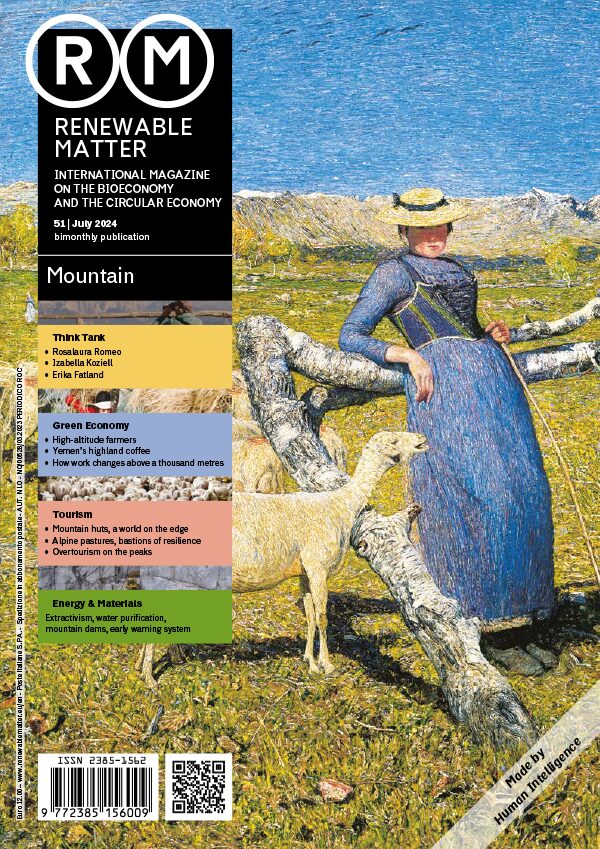
Introduction
In recent years, the concept of the circular economy has gained significant attention, with many organizations and individuals seeking to adopt sustainable practices that minimize waste and promote reuse. At the heart of this movement is the idea of utilizing materials in a more efficient and sustainable manner. This article will delve into the world of Materia Rinnovabile, a leading publication dedicated to exploring the intersection of circular economy and sustainable materials.
What is the Circular Economy?
Before we dive into Materia Rinnovabile, it’s essential to understand what the circular economy means. The traditional linear economic model focuses on extracting resources, producing goods, consuming them, and then discarding them. In contrast, the circular economy aims to reduce waste by promoting reuse, recycling, and the continuous improvement of products.
The concept of the circular economy has been gaining traction due to its potential to mitigate climate change, conserve natural resources, and create new economic opportunities. As noted by experts such as Walter Stahel, Amory Lovins, McDonough and Braungart, and Nicholas Georgescu-Roegen, the linear economy model is not sustainable in the long term, and a shift towards circularity is necessary.
The Benefits of the Circular Economy
The circular economy offers numerous benefits, including:
- Reduced waste: By promoting reuse and recycling, the circular economy can significantly reduce waste disposal costs.
- Conserved resources: The circular economy encourages the efficient use of resources, reducing the need for new raw materials.
- New economic opportunities: The circular economy creates new business models and job opportunities in industries such as recycling, upcycling, and product design.
- Climate change mitigation: By reducing waste and conserving resources, the circular economy can help mitigate climate change by decreasing greenhouse gas emissions.
Materia Rinnovabile: A Hub for Circular Economy Insights
Materia Rinnovabile is a leading publication that explores the intersection of circular economy and sustainable materials. Launched by Edizioni Ambiente, a renowned publisher of environmental literature, Materia Rinnovabile offers in-depth analysis and expert insights on the latest trends and innovations in the field.
The publication’s focus on sustainable materials, waste reduction, and efficient use of resources sets it apart from other publications in the sector. By exploring the latest developments in biomaterials, recycled materials, and innovative production methods, Materia Rinnovabile provides valuable information for professionals, policymakers, and individuals seeking to adopt more sustainable practices.
The Future of Sustainable Materials
As concerns about climate change, waste management, and resource depletion continue to grow, there is an increasing focus on sustainable materials. Some of the key areas of research in this field include:
- Biomaterials: Biomaterials are derived from renewable biological sources such as plants, animals, and microorganisms. They offer a promising alternative to traditional fossil fuel-based materials.
- Recycled materials: Recycled materials can significantly reduce waste disposal costs while also conserving natural resources.
- Innovative production methods: New production methods such as 3D printing and biotechnology are offering new opportunities for sustainable material development.
Three Pillars of the Circular Economy
Materia Rinnovabile’s approach is rooted in three key pillars:
- Recovering waste as a resource: The publication explores ways to recover waste materials, such as plastics, metals, and other commodities, to create new products or reuse them in existing applications.
- Eliminating waste of resources: Materia Rinnovabile discusses strategies for reducing waste throughout the supply chain, from production to consumption, and promoting efficient use of resources.
- Extending the life of materials: The publication examines ways to extend the life of materials, such as through design for recyclability or biodegradable materials.
Materia Rinnovabile: A Hub for International Collaboration
Materia Rinnovabile is more than just a publication; it’s a hub for international collaboration and knowledge-sharing. The publication brings together experts from around the world to share their experiences, insights, and innovative solutions in the field of sustainable materials.
Through its website and social media channels, Materia Rinnovabile facilitates exchange among professionals, researchers, policymakers, and individuals interested in adopting circular economy practices. By promoting international collaboration and knowledge-sharing, the publication helps to accelerate the transition towards a more sustainable future.
Author Team
Materia Rinnovabile’s author team includes renowned experts from various fields, including geography, urban planning, climate change, and green building. Some notable contributors include:
- Emanuele Bompan, Director of Materia Rinnovabile
- Marta Antonelli e Sergio Ferraris, both special contributors to Ideegreen.it
- Roberto Giovannini, President of FIMA
- Marco Moro, Editor-in-Chief of Materia Rinnovabile
- Edo Ronchi, President of the Fondazione per lo Sviluppo Sostenibile
- Catia Bastioli, AD of Novamont and European Inventor of 2007
Subscription Options
For those interested in staying up-to-date with the latest developments in circular economy and sustainable materials, Materia Rinnovabile offers subscription options. Readers can subscribe to receive six annual issues or access the publication’s online content.
In addition, Materia Rinnovabile is available in English under the brand “Renewable Matter,” making it accessible to a broader audience worldwide.
Conclusion
Materia Rinnovabile is a leading publication dedicated to exploring the intersection of circular economy and sustainable materials. Through its in-depth analysis, expert insights, and international collaboration, the publication provides valuable information for professionals, policymakers, and individuals seeking to adopt more sustainable practices.
As we move forward towards a more circular future, Materia Rinnovabile will continue to play a vital role in promoting innovation, knowledge-sharing, and international collaboration. Stay tuned for updates on this exciting topic!
Frequently Asked Questions
- What is the circular economy?
The circular economy is an economic model that aims to reduce waste by promoting reuse, recycling, and continuous improvement of products. - What are the three pillars of the circular economy?
The three pillars of the circular economy are: - Recovering waste as a resource
- Eliminating waste of resources
- Extending the life of materials
- Who is behind Materia Rinnovabile?
Materia Rinnovabile is published by Edizioni Ambiente, a renowned publisher of environmental literature. - What makes Materia Rinnovabile unique?
Materia Rinnovabile’s focus on sustainable materials, waste reduction, and efficient use of resources sets it apart from other publications in the sector. - How can I subscribe to Materia Rinnovabile?
Subscriptions are available for individuals or organizations through the publication’s website. - Is Materia Rinnovabble available in English?
Yes, Materia Rinnovabile is available in English under the brand “Renewable Matter.” - Who contributes to Materia Rinnovabile?
Materia Rinnovabile features contributions from renowned experts in various fields. - What is the publication’s website?
The publication’s website is www.renewablematter.eu. - Can I access online content for free?
Yes, some online content is available for free on Materia Rinnovabile’s website. - Is Materia Rinnovabile a non-profit organization?
No, Materia Rinnovabble is published by Edizioni Ambiente, a commercial publisher.
Recommendations
For those interested in learning more about the circular economy and sustainable materials, we recommend the following resources:
- The Ellen MacArthur Foundation: A leading international policy organization that works to accelerate the transition towards a circular economy.
- The World Economic Forum: A global forum that brings together business leaders, policymakers, and experts to address pressing global challenges, including climate change and sustainable development.
- The International Organization for Standardization (ISO): A global standards organization that develops standards for sustainable materials and supply chains.
By working together to promote the circular economy and sustainable materials, we can create a more resilient and sustainable future for all.


