
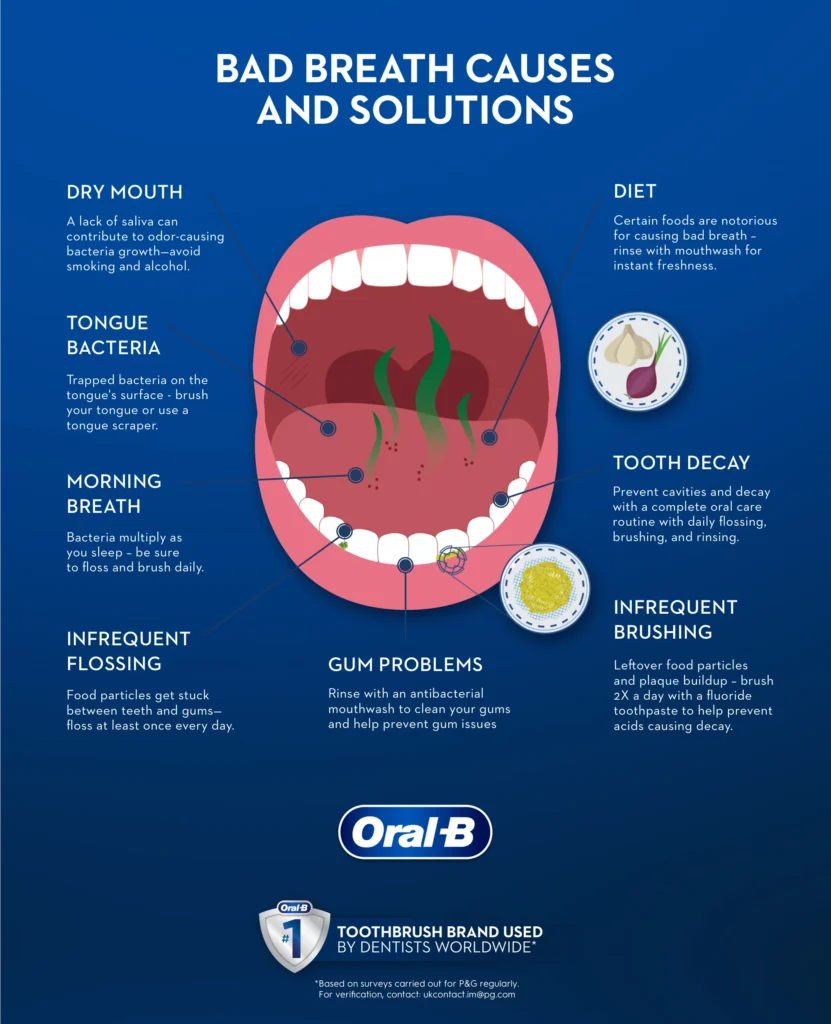
Bad breath is a universal problem that can strike anyone, at any time. But what causes it? And more importantly, how do we get rid of it? In this article, we’ll explore the common culprits behind bad breath, provide some useful tips on how to avoid them, and reveal some effective remedies to help you say goodbye to your unwanted odor.
What Causes Bad Breath?
Bad breath, also known as halitosis, is a complex issue that can be influenced by various factors. While it’s often associated with poor oral hygiene, there are other contributing factors at play. Some of the most common causes include:
- Consuming certain foods and drinks that can irritate your mouth and cause bad breath
- Not brushing and flossing regularly to remove bacteria and debris from your teeth and gums
- Having a diet high in sugar and acid, which can lead to tooth decay and gum disease
- Smoking or using tobacco products, which can damage the tissues in your mouth and throat
- Certain medical conditions, such as gum disease, diabetes, or sinus infections
Foods That Can Cause Bad Breath
While it’s not possible to eliminate all foods that can cause bad breath, there are some culprits that you may want to limit or avoid altogether. These include:
| Food | Why It’s a Problem |
|---|---|
| Cipolle | Contain sulfur compounds that can break down into hydrogen sulfide gas when digested |
| Peperoncino | Have a strong, pungent flavor that can linger in your mouth and cause bad breath |
| Aglio | Contain sulfur compounds similar to those found in garlic |
| Gorgonzola | Has a strong, pungent flavor that can leave a lingering odor |
| Pesce (acciughe o tonno) | Can have a strong fishy smell that can be overwhelming |
Drinks That Can Cause Bad Breath
Not all beverages are created equal when it comes to bad breath. Some drinks can be particularly problematic due to their acidity or flavor. These include:
- Birra (beer)
- Caffè
- Vino
- Cola
- Soda
Other Causes of Bad Breath
In addition to these common culprits, there are other factors that can contribute to bad breath. Some of these include:
- Dry mouth: a lack of saliva can allow bacteria to thrive in your mouth and cause bad breath
- Gingivitis: an inflammatory condition that affects the gums and can lead to bad breath
- Periodontal disease: a bacterial infection that damages the gums and bone supporting the teeth
- Sinus infections: inflammation or infection of the sinuses can cause bad breath
- Diabetes: high blood sugar levels can lead to gum disease and other oral health problems
Tips for Preventing Bad Breath
While it’s not possible to eliminate all causes of bad breath, there are some steps you can take to prevent it. These include:
- Brush your teeth at least twice a day with a fluoride toothpaste
- Floss daily to remove bacteria and debris from between your teeth
- Use an antibacterial mouthwash to kill germs and freshen your breath
- Avoid sugary and acidic foods and drinks that can lead to tooth decay and gum disease
- Quit smoking or using tobacco products, which can damage the tissues in your mouth and throat
- Stay hydrated by drinking plenty of water throughout the day
Natural Remedies for Bad Breath
If you’re struggling with bad breath despite following these tips, there are some natural remedies that may help. These include:
- Essential oils: peppermint, eucalyptus, and tea tree oil have antibacterial properties that can help freshen your breath
- Saltwater rinse: rinsing your mouth with warm salt water can help reduce bacteria and inflammation
- Lemon juice: the acidity of lemon juice can help kill germs and leave a refreshing flavor
- Cinnamon: this spice has natural antibacterial properties that can help fight bad breath
Medical Treatment for Bad Breath
In some cases, bad breath may be a symptom of an underlying medical condition. If you’re struggling with persistent or severe bad breath, it’s worth speaking to your doctor about the possible causes and treatment options.
- Dental care: regular dental check-ups and cleanings can help prevent gum disease and other oral health problems
- Antibiotics: if your bad breath is caused by a bacterial infection, your doctor may prescribe antibiotics to treat the underlying condition
- Sinus surgery: in some cases, sinus infections or other conditions may require surgical treatment
Conclusion
Bad breath is a common problem that can be influenced by various factors. By understanding what causes bad breath and taking steps to prevent it, you can keep your mouth healthy and fresh. Whether you’re struggling with persistent bad breath or simply want to maintain good oral hygiene, there are many effective remedies available to help you achieve your goals.
Final Tips
- Be patient: it may take some time to figure out what causes your bad breath and find a solution
- Stay consistent: regular brushing, flossing, and dental check-ups can help prevent bad breath and maintain good oral health
- Seek professional help: if you’re struggling with persistent or severe bad breath, speak to your doctor or dentist about the possible causes and treatment options
By following these tips and exploring natural remedies, you can say goodbye to unwanted odors and keep your mouth fresh and healthy.


