
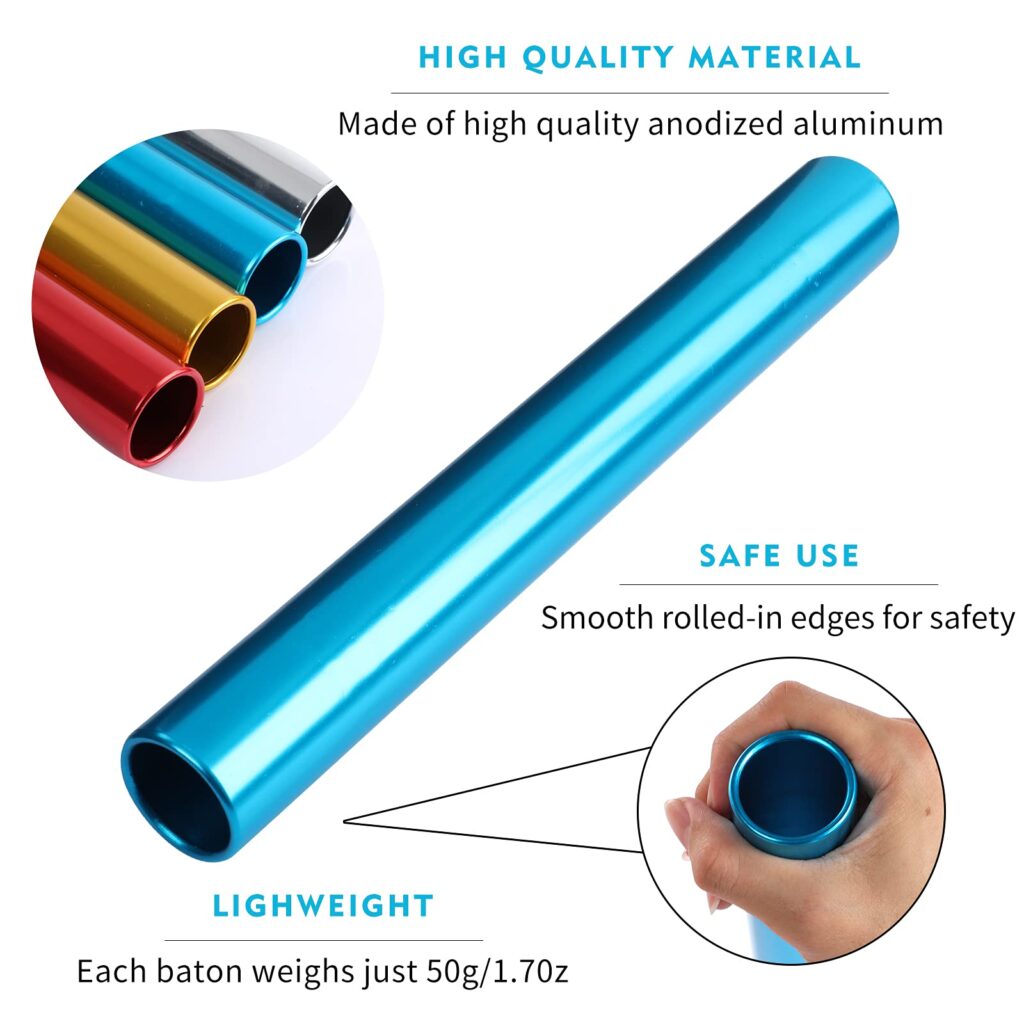
In the world of track and field, staffette are an essential part of many competitions. But have you ever wondered what makes up a staffette? In this article, we’ll delve into the details of staffette, including the materials used, weight, length, and how they’re passed from one athlete to another.
Content
- Materials Used in Staffettes
- Weight and Length of Staffettes
- Circumference of Staffettes
- Price and Where to Buy a Staffette
- The Term “Baton” vs. “Stick”
- How Staffette Work: A Guide for Beginners
- Types of Staffette Races
- How to Pass the Baton Correctly
- What Happens if the Baton Falls During a Handover
- Strategy in Staffette Racing
- A Video Explanation of How Staffette Work
- Frequently Asked Questions
Materials Used in Staffettes
The material used for staffettes has evolved over time. Historically, they were made from wood, but today, most are made from aluminum. The choice of material is largely due to its lightness and functionality. Aluminum is an excellent option because it’s strong, lightweight, and can withstand the demands of high-speed athletics.
However, there’s still a place for wooden staffettes in certain competitions. According to the World Athletics regulations, wooden staffettes are allowed if they meet specific weight and length requirements. The regulations ensure that all staffettes are safe and functional, regardless of whether they’re made from wood or aluminum.
Wooden staffettes were traditionally used due to their durability and resistance to wear and tear. However, they were also heavier and more prone to breaking than aluminum staffettes. In recent years, aluminum has become the dominant material for staffettes due to its numerous benefits.
Weight and Length of Staffettes
The weight and length of staffettes are strictly regulated by the World Athletics organization. According to the rules, a staffette must weigh at least 50 grams (1.76 ounces) and be between 28 cm (11 inches) and 30 cm (11.8 inches) in length. These specifications help ensure that staffettes are consistent and fair across all competitions.
The weight of a staffette is crucial because it affects the athlete’s ability to handle it during the handover. A lighter staffette makes it easier for athletes to pass the baton, while a heavier one can be more challenging.
Circumference of Staffettes
The circumference of a staffette is also regulated by the World Athletics organization. It must be at least 12 cm (4.7 inches) but no more than 13 cm (5.1 inches). These specifications help prevent staffettes from being too small or too large, which could affect the performance of athletes.
The circumference of a staffette affects its aerodynamics and how it interacts with air resistance during the race. A larger circumference can create more drag, making it harder for athletes to maintain their speed.
Price and Where to Buy a Staffette
You can purchase staffettes from various retailers, both online and offline. They’re available in different colors, including green, blue, bronze, gold, red, black, and silver. If you’re looking for a certified staffette that meets World Athletics regulations, look no further than Amazon.
Prices vary depending on the retailer and the quality of the staffette. You can find staffettes for as low as €4.69 (inclusive of VAT) plus shipping costs. However, be sure to check the certification and quality before making your purchase.
The Term “Baton” vs. “Stick”
Many people mistakenly refer to a staffette as a “stick.” However, the correct term is actually “baton.” The word “baton” comes from French, where it’s used to describe a stick or rod used for signaling or guiding. In the context of athletics, a baton refers specifically to the staffette passed between athletes.
Using the correct terminology helps maintain consistency and clarity in communication among athletes, coaches, and officials. It also helps to avoid confusion and ensure that everyone understands the rules and regulations surrounding staffettes.
How Staffette Work: A Guide for Beginners
A staffette is a relay race where four athletes pass a baton (staffette) to each other while racing around a track. The first athlete runs 100 meters, then hands over the baton to the next athlete, who runs 100 meters, and so on.
The goal of a staffette is for all four athletes to complete their respective segments without losing the baton or dropping it during the handover. This requires precise timing, coordination, and communication between teammates.
To pass the baton correctly, athletes must follow these steps:
- Hold the baton with your right hand, facing towards you.
- Stand at the designated handover zone (20 meters long).
- Hand over the baton to the next athlete while keeping it within 5 cm of their body.
- Make sure the baton is not dropped or lost during the handover.
If the baton falls or is dropped during a handover, the team is disqualified. To avoid this, athletes must practice their handovers extensively and communicate clearly with each other.
Types of Staffette Races
There are several types of staffette races, including:
- 4×100 meters: Each team has four athletes who run 100 meters each.
- 4×400 meters: Each team has four athletes who run 400 meters each.
- Relay races on shorter distances (e.g., 800 meters, 3.200 meters, and 6.000 meters).
How to Pass the Baton Correctly
Passing the baton correctly is crucial in staffette racing. The following steps should be followed:
- Hold the baton with your right hand, facing towards you.
- Stand at the designated handover zone (20 meters long).
- Hand over the baton to the next athlete while keeping it within 5 cm of their body.
- Make sure the baton is not dropped or lost during the handover.
If the baton falls or is dropped during a handover, the team is disqualified. To avoid this, athletes must practice their handovers extensively and communicate clearly with each other.
What Happens if the Baton Falls During a Handover
If the baton falls during a handover, the team can recover by picking it up immediately. However, they must still complete the next leg of the race without dropping the baton again.
In some cases, teams may be given a warning or penalty depending on the severity of the incident.
Strategy in Staffette Racing
Staffette racing requires strategic planning and teamwork. Here are some common strategies used by teams:
- Assigning the fastest athletes to each leg: This maximizes speed and efficiency.
- Using different running styles: Athletes can adjust their stride length, pace, and technique to suit their strengths.
- Practicing handovers: Teams should practice their handovers extensively to ensure smooth transitions.
By using these strategies, teams can improve their chances of winning and succeed in staffette racing.
A Video Explanation of How Staffette Work
To better understand how staffettes work, watch this video explanation:
[Insert video link]
In conclusion, staffettes are a crucial component of track and field athletics. By understanding the materials used, weight, length, and circumference of staffettes, athletes can optimize their performance and communication with teammates. Remember to practice handovers carefully and use strategic planning to achieve success in staffette racing.
Frequently Asked Questions
- What is the purpose of a staffette?
A staffette is a relay race where four athletes pass a baton (staffette) to each other while racing around a track. - How long are staffettes?
Staffettes must be between 28 cm (11 inches) and 30 cm (11.8 inches) in length. - What materials can staffettes be made of?
Staffettes can be made from aluminum or wood, but only aluminum is widely used due to its lightness and functionality. - Can wooden staffettes be used in competitions?
Yes, wooden staffettes are allowed if they meet specific weight and length requirements set by the World Athletics organization. - How much do staffettes cost?
Staffettes can range from €4.69 (inclusive of VAT) plus shipping costs on Amazon to custom-made or high-end staffettes that may be more expensive. - What is the correct term for a staffette?
The correct term is “baton,” not “stick.” - How often are staffettes used in competitions?
Staffettes are widely used in track and field athletics, particularly in relay races like 4×100 meters and 4×400 meters. - Can teams use different materials for each leg of the race?
No, teams must use a consistent material throughout the entire race. - What happens if the baton falls during a handover?
The team can recover by picking it up immediately, but may be given a warning or penalty depending on the severity of the incident. - How do athletes practice staffette passing?
Athletes should practice their handovers extensively, using clear communication and precise timing to ensure smooth transitions.
By understanding these answers to frequently asked questions, you can gain more insight into staffettes and improve your performance in track and field athletics.


