
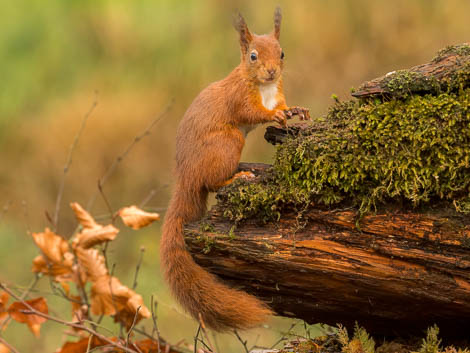
As we explore the vast array of animals that inhabit our planet, one group stands out for its remarkable adaptability: mammals. Among these, the red squirrel (Sciurus vulgaris) is a fascinating example of evolution, with characteristics that have allowed it to thrive in diverse environments.
Description of the Red Squirrel
The red squirrel is easily recognizable by its distinctive coat of fur and long, bushy tail, which can extend up to 15-20 centimeters. In repose, the tail coils around the back, serving as a makeshift balance beam or parachute when jumping between trees. This remarkable appendage also serves as a warm layer when resting.
The red squirrel measures approximately 20-28 centimeters in length and weighs between 250-350 grams. Its large ears are a notable feature, particularly during winter months, when they’re adorned with wisps of fur. The overall coloration is reddish-brown, although it can vary to include shades of marron or even black. The belly, however, remains a pale white.
Habitat and Behavior
The red squirrel inhabits forests dominated by conifers and broadleaf trees. As diurnal creatures, they’re most active at dawn and dusk, with peak activity during the spring and summer months when temperatures are warmer. During winter, their activity levels decrease significantly, but they still venture out to forage for food.
These agile creatures spend most of their time in trees, effortlessly navigating branches and leaping between trunks. When on the ground, however, they’re relatively rare, as they tend to be timid and elusive. In search of sustenance, red squirrels often descend to the forest floor, using their keen senses to locate hidden food sources.
Diet and Foraging
The red squirrel’s diet consists mainly of seeds, nuts, fruits, berries, lichens, fungi, and bark. While they primarily consume plant-based foods, they may occasionally snack on insects or bird eggs. A unique adaptation is their tendency to cache excess food in hidden spots throughout the forest, often utilizing landmarks like tree cavities or intersections.
This behavior allows them to survive during periods of scarcity, as the cached food serves as a vital resource during winter months when other sustenance is scarce. The squirrels’ ability to remember the location of these caches relies heavily on their keen spatial memory and sensory cues.
Reproduction and Lifespan
Red squirrels are capable of reproducing twice annually, typically in February-March and June-July. After a gestation period of approximately forty days, females give birth to up to four young, weighing around 10-15 grams at birth. The cubs remain dependent on their mother for the first four weeks, during which time they develop rapidly.
Within this timeframe, the cubs’ eyes open, and they begin to explore their surroundings. By the fourth week, they start to venture out of the nest, gradually gaining independence as they grow. The lifespan of a red squirrel in the wild is typically three years, although some individuals may live up to seven years, while captive squirrels can reach ten years or more.
Conservation Status and Competition
The red squirrel plays a vital role in maintaining the health of forest ecosystems, particularly through its caching behavior, which aids in seed dispersal and plant regeneration. However, their presence is threatened by competition with the gray squirrel (Sciurus carolinensis), an invasive species native to North America.
Introduced to Italy in the 1950s, the gray squirrel has outcompeted the red squirrel for resources, leading to a decline in its population. The gray squirrel’s larger size and more varied diet provide it with a competitive advantage, allowing it to dominate forest habitats and drive the red squirrel towards extinction.
Threats to Red Squirrel Populations
In addition to competition with the gray squirrel, other threats to red squirrel populations include:
- Habitat loss: The destruction of natural habitats due to urbanization, deforestation, and agriculture has reduced the availability of suitable forest habitats for red squirrels.
- Climate change: Changes in temperature and precipitation patterns can alter the distribution and abundance of food resources, making it difficult for red squirrels to adapt.
- Disease: The spread of diseases such as squirrelpox virus can have a significant impact on red squirrel populations.
- Human disturbance: Human activity, such as logging and hunting, can disrupt red squirrel behavior and habitat use.
Conservation Efforts
To address these threats, conservation efforts are underway to protect the red squirrel population. These include:
- Habitat restoration: Restoring natural habitats through reforestation and afforestation programs can help to create suitable environments for red squirrels.
- Gray squirrel control: Controlling gray squirrel populations through trapping and relocation can help to reduce competition with red squirrels.
- Climate change mitigation: Reducing greenhouse gas emissions can help to mitigate the impacts of climate change on red squirrel habitats and food resources.
- Education and outreach: Educating the public about the importance of conservation and the threats faced by red squirrel populations can help to raise awareness and promote action.
Interesting Facts About Red Squirrels
- Cache size: A single cache can contain up to 10,000 seeds or nuts, which is equivalent to several days’ worth of food for a family of squirrels.
- Tail function: The tail serves multiple functions, including balance, communication, and thermoregulation.
- Hibernation: Red squirrels do not truly hibernate, but they do experience a period of dormancy during winter months when temperatures are low and food is scarce.
- Social behavior: Red squirrels are generally solitary animals, but they may form pairs during the breeding season or interact with each other in areas where food sources are abundant.
Conclusion
In conclusion, the red squirrel is an fascinating example of evolutionary adaptation, with characteristics that have allowed it to thrive in diverse environments. However, its survival is threatened by competition with the invasive gray squirrel species and other factors such as habitat loss and climate change. Efforts to conserve and protect these incredible creatures are crucial for maintaining the health of our planet’s ecosystems.
Frequently Asked Questions
Q: What is the average lifespan of a red squirrel?
A: In the wild, red squirrels typically live up to three years, although some individuals may reach seven years or more. Captive squirrels can live up to ten years.
Q: How many young do red squirrels usually have at a time?
A: Females typically give birth to four young, weighing around 10-15 grams at birth.
Q: What is the primary source of food for red squirrels?
A: Their diet consists mainly of seeds, nuts, fruits, berries, lichens, fungi, and bark.
Q: Can red squirrels live on the ground?
A: While they spend most of their time in trees, red squirrels may occasionally descend to the forest floor in search of food or shelter.
Q: How do red squirrels remember the location of cached food?
A: They rely heavily on spatial memory and sensory cues, such as landmarks and scent marks, to recall the locations of hidden caches.
Q: What is the main threat to red squirrel populations?
A: Competition with the invasive gray squirrel species, which outcompetes them for resources and drives them towards extinction.
Q: Can red squirrels survive in captivity?
A: Yes, captive squirrels can live up to ten years, although their lifespan may vary depending on factors like diet, environment, and health conditions.
Q: How can we help conserve the red squirrel population?
A: Efforts to control invasive species, protect forest habitats, and educate the public about the importance of conservation can all contribute to preserving this incredible creature’s survival.


