
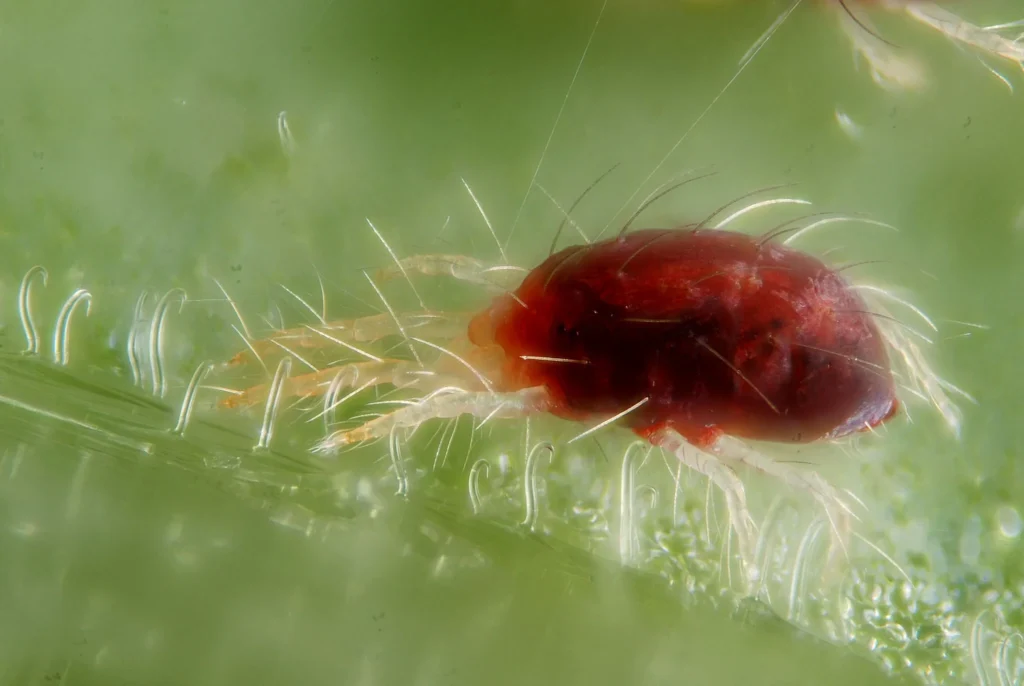
What is the Red Mite?
The red mite, also known as Ragnetto Rosso, is a tiny, reddish-colored spider-like arachnid that can cause significant damage to plants. It is a type of acaro, specifically a phytosiphonous acaro, which feeds on plant sap and can reproduce rapidly.
Why is the Red Mite a Problem?
The red mite is considered one of the most pernicious and unwanted insects among plants and gardeners due to its high potential for infestation. It affects both fruiting plants and ornamental plants, leading to significant damage if left unchecked. The mites can reproduce quickly, with females laying over 100 eggs per year.
Types of Red Mite
There are two main species of red mite: Panonychus Ulmi and Tetranychus. The latter is distinguished by the absence of white hairs on its dorsal surface, while the former has prominent white hairs.
How Does the Red Mite Feed?
The red mite feeds on plant sap, using its sharp mouthparts to pierce the plant’s tissues. This feeding behavior can lead to the destruction of leaves and stems.
Recognizing Signs of Red Mite Infestation
- Yellowing or bronzing of leaves
- Presence of white spots or patches
- Premature defoliation
- Reduced plant growth
Prevention is Key
To prevent infestations, it’s essential to maintain good hygiene practices. This includes:
- Increasing irrigation, especially during hot and dry weather
- Watering plants thoroughly
- Removing weeds that can harbor mites
Using Natural Remedies Against Red Mite Infestation
- Spraying water: The red mite is sensitive to water and can be controlled by spraying the affected areas with a strong jet of water.
- Biological control: Introducing natural predators, such as other acari or lady beetles, can help manage red mite populations.
Red Mite and Citrus Plants
Both Tetranychus urticae (the green spider mite) and Panonychus citri (the citrus spider mite) affect citrus plants. These mites feed on plant sap, causing damage to leaves and reducing fruit quality.
Managing Red Mite Infestations in Homes
- Identifying signs: Look for yellowing or bronzing of leaves, white spots or patches, and premature defoliation.
- Natural remedies: Use natural sprays, such as water or neem oil, to control the mites.
- Biological control: Introduce natural predators, such as lady beetles or lacewings.
Pest Management Strategies for Red Mite Infestations
- Cultural Control: Maintain good hygiene practices, increase irrigation, and remove weeds that can harbor mites.
- Biological Control: Use natural predators, such as other acari or lady beetles, to manage red mite populations.
- Chemical Control: Use insecticides only as a last resort and in conjunction with cultural control methods.
Prevention Strategies for Red Mite Infestations
- Monitor plants regularly for signs of infestation
- Increase irrigation during hot and dry weather
- Remove weeds that can harbor mites
Biological Control Methods for Red Mite Infestations
- Introduce natural predators, such as other acari or lady beetles
- Use beneficial nematodes to control red mite populations
- Apply Bacillus thuringiensis (Bt) to control aphids and other pests that can harbor red mites.
Conclusion
The red mite is a significant pest that can cause significant damage to plants. Understanding its behavior and using natural remedies are key to managing infestations. By adopting good hygiene practices, introducing biological control methods, and using cultural control strategies, gardeners can effectively manage red mite populations and protect their plants.
Frequently Asked Questions (FAQs)
- What is the best way to get rid of red mites?
- The most effective method is a combination of natural remedies, such as spraying water or neem oil, and introducing biological control agents.
- Can red mites be killed with insecticides?
- While insecticides can provide temporary relief, they are not an effective long-term solution. Red mite populations can quickly rebuild after treatment.
- How do I prevent red mite infestations in my garden?
- Maintain good hygiene practices, such as increasing irrigation and removing weeds that can harbor mites.
- Can red mites be controlled with soap solutions?
- Soap solutions may provide some control, but they are not an effective method for managing large-scale infestations.
- Are there any natural predators of red mites?
- Yes, there are several natural predators that can help control red mite populations, such as other acari or lady beetles.
By understanding the behavior and biology of the red mite, gardeners can effectively manage infestations using a combination of natural remedies and biological control methods. Regular monitoring and preventive measures can also help reduce the risk of infestation.


