
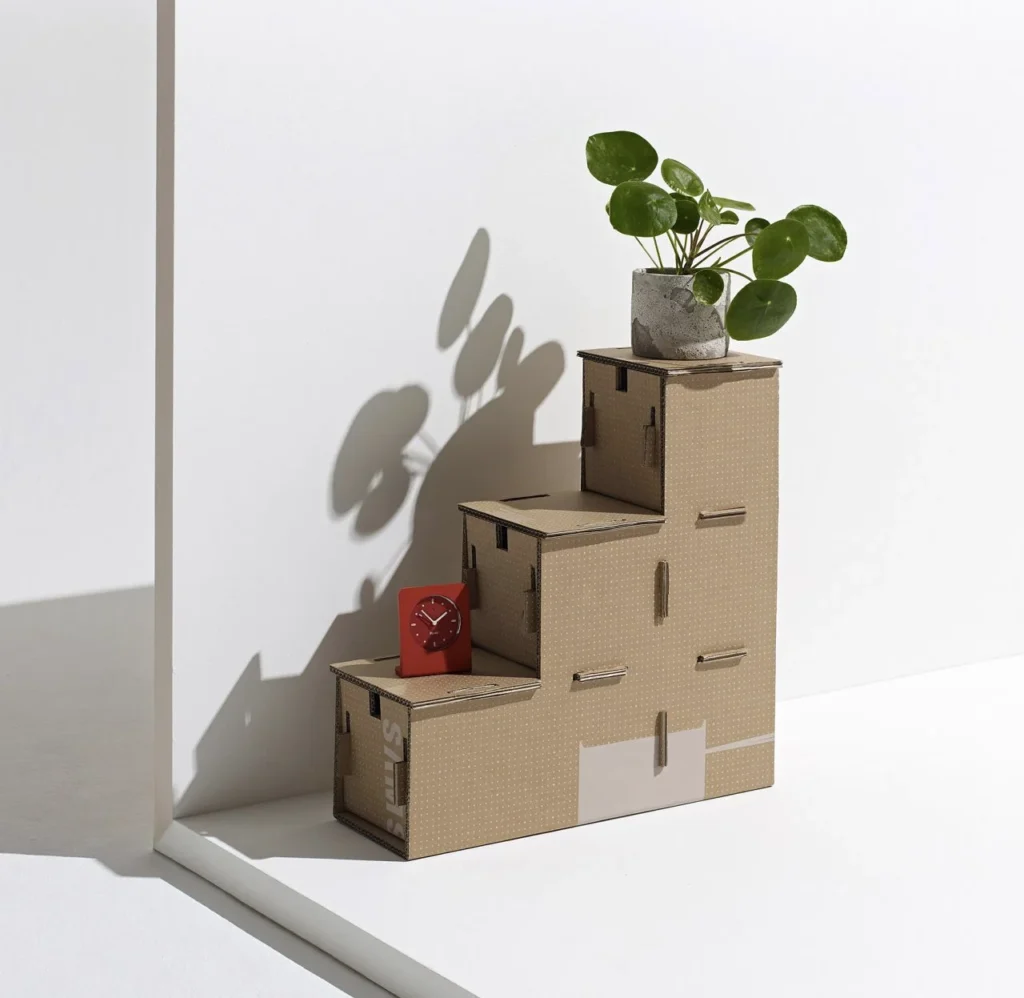
The art of transforming recycled cardboard into a work of design is on full display at the Milan Design Week, scheduled for April 9-14, 2013. The eco-friendly collection by P-One, in collaboration with renowned designer Roberto Pamio’s studio, Pamio Design, will be showcased in Attico Interni’s showroom (c/o Spazio Seventy, via Pontaccio 10, Milano).
For this occasion, P-One presents exclusive furniture pieces that were unveiled to the public for the first time. Sustainable Materials Meet Innovative Design
The P-One collection features seats, bookshelves, and tables crafted from recycled cardboard, which have been paired with components made from textiles, metals, and woods. This deliberate combination elevates the products, making them more stable, solid, and aesthetically appealing.
A thoughtful synthesis of elements was used to highlight the unique qualities of the recycled cardboard material. The lightweight nature of the cardboard is complemented by the added value of its recyclability, creating a harmonious balance between form and function. The Story Behind P-One’s Sustainable Approach
The cardboard used in P-One’s products comes from Pro-Gest, Italy’s leading private company for paper recycling, to which P-One belongs. Pro-Gest holds complete control over the entire production chain, from waste collection to finished products.
“We’ve always been fascinated by the potential of recycled materials,” says Roberto Pamio, founder of Pamio Design. “By combining cardboard with other elements like cotton and metal, we’ve created products that not only reduce waste but also offer a unique design experience.”
A Collaboration for Sustainable Excellence
Pamio Design’s partnership with P-One has led to significant advancements in the field of eco-friendly furniture design. “The collaboration with Pamio Design has been instrumental in elevating our product quality,” notes Tiziano Remor, managing director at P-ONE. “Together, we’ve pushed the boundaries of sustainable technology and design, showcasing Italy’s expertise in this area.”
Breaking Down Barriers: Affordable High-Quality Furniture
According to Paolo Pamio, co-founder of Pamio Design, the key to making eco-friendly furniture accessible to a wider audience lies in balancing quality with affordability. “We’ve made sure that our designs serve both functionality and style,” he explains.
P-One’s commitment to sustainability has allowed them to reduce waste while maintaining high-quality standards. By using recycled materials and incorporating cutting-edge technology, they have created products that not only appeal to environmentally conscious consumers but also offer a unique design experience.
The Production Process: From Sourcing to Finishing
P-One’s production process involves several key steps:
- Material sourcing: P-One works closely with Pro-Gest to source high-quality recycled cardboard.
- Printing and cutting: The cardboard is then printed with custom designs and cut into specific shapes and sizes using state-of-the-art machinery.
- Assembly: The components are assembled using a combination of traditional craftsmanship and innovative technology.
- Finishing touches: The final products undergo rigorous quality control checks before being packaged and shipped to customers.
Digital Printing: A Game-Changer in Sustainable Design
Digital printing has played a significant role in P-One’s design process, allowing for complex designs to be printed directly onto the cardboard without the need for mold-making or other traditional techniques. This not only reduces waste but also enables P-One to produce unique and intricate designs that would be difficult or impossible to achieve using traditional methods.
Innovative Materials: A Key to Sustainable Design
P-One’s use of recycled cardboard has been supplemented by innovative materials such as cotton, metal, and wood. These materials have been carefully selected for their sustainability credentials and ability to enhance the aesthetic appeal of P-One’s products.
Cotton, for example, is a highly renewable resource that can be sourced from organic farms with minimal environmental impact. Metal components are often sourced from suppliers who adhere to strict recycling standards, reducing waste and minimizing the environmental footprint of the finished product.
Wooden elements have been carefully selected for their durability and aesthetic appeal, adding warmth and depth to P-One’s products. By incorporating these materials into their designs, P-One has created a range of products that not only showcase sustainable design principles but also demonstrate a commitment to innovation and quality.
Breaking Down Barriers: Affordable High-Quality Furniture
Paolo Pamio believes that the key to making eco-friendly furniture accessible to a broader audience lies in balancing quality with affordability. “We’ve made sure that our designs serve both functionality and style,” he explains. “Our goal is to create products that are not only sustainable but also desirable, appealing to consumers who value quality and design.”
P-One’s commitment to sustainability has allowed them to reduce waste while maintaining high-quality standards. By using recycled materials and incorporating cutting-edge technology, they have created products that not only appeal to environmentally conscious consumers but also offer a unique design experience.
Conclusion
As we continue to navigate the complexities of sustainability, it’s essential to recognize innovative approaches like P-One’s design philosophy. By merging recycled materials with cutting-edge technology, designers can create products that not only minimize waste but also delight consumers.
P-One’s collaboration with Pamio Design has set a new standard for sustainability in the furniture industry, demonstrating the potential for eco-friendly design to drive innovation and growth. As we move forward into an increasingly sustainable future, it’s clear that P-One’s commitment to innovation, quality, and affordability will continue to inspire designers and consumers alike.
Frequently Asked Questions
-
What inspired you to use recycled cardboard in your designs?
We believe that every material has potential for innovation and sustainability. -
Can you walk us through the production process of P-One’s furniture pieces?
From sourcing materials to printing and cutting, our process is designed to minimize waste while maximizing quality. -
How does Pro-Gest contribute to the eco-friendly aspect of your products?
Pro-Gest’s commitment to recycling ensures that all cardboard used in our products comes from environmentally responsible sources. -
What role does design play in making sustainable furniture accessible to a broader audience?
Good design can bridge the gap between functionality and affordability, enabling consumers to appreciate eco-friendly options. -
How do you see P-One’s collaboration with Pamio Design impacting your future projects?
This partnership has set a new standard for sustainability in our industry, and we’re excited to explore further innovative approaches together. -
Can you tell us more about the role of digital printing in your design process?
Digital printing enables us to produce complex designs while minimizing waste and ensuring high-quality finishes. -
How do you ensure that P-One’s products meet both functional and aesthetic standards?
Our design team works closely with clients to understand their needs and preferences, ensuring that every product meets the highest quality expectations. -
What advice would you give to designers looking to incorporate sustainable materials into their work?
Experiment with different materials, consider the entire production chain, and prioritize innovation while maintaining high-quality standards.


