
Rechargeable batteries, also known as secondary cells, are batteries that can be completely recharged by the addition of electrical energy. The most common rechargeable batteries include classic AA-style batteries and those found in portable electronic devices such as smartphones, laptops, tablets, and e-readers.
The Expansion of the Rechargeable Battery Market
The market for rechargeable batteries is growing rapidly and manufacturers are diversifying their products. The need to develop more powerful electric batteries is driven by two main demands: the automotive industry for electric mobility and the energy sector for storing clean energy.
Battery Lifespan
The lifespan of rechargeable batteries can vary greatly depending on the technologies used to produce them. Among common, widely available batteries (AA-style, AAA, etc.), Panasonic’s Eneloop models are popular for up to 3,000 charge cycles.
Rechargeable batteries in devices like laptops, smartphones, and other portable electronics can have their lifespan increased by following energy-saving strategies (e.g., not leaving apps open in the background, reducing screen brightness, disabling vibration, turning off Bluetooth and Wi-Fi when not in use).
One often-asked question is: “Should you fully discharge a battery before recharging it or recharge it when there’s still some charge left?” This question is both understandable and intelligent!
Some types of rechargeable batteries are sensitive to complete discharge (e.g., lead-acid, lithium-ion), so it’s best not to completely drain them. Allowing a partial discharge can help prolong the battery’s lifespan.
Recharging Notebook and Smartphone Batteries
For notebooks and smartphones with lithium-ion batteries, it’s recommended to fully recharge them when their energy level drops below 20%.
Other types of batteries, however, are affected by what is known as “memory effect” (or lazy battery), where a full discharge can lead to quicker degradation. In such cases, these batteries should be charged only when completely drained.
Types of Rechargeable Batteries
The market offers a wide range of rechargeable batteries based on their application and usage. Researchers are focusing on developing more efficient and faster-charging batteries.
Some of the technologies currently used or being researched include:
- Pb-acid: Lead-acid batteries
- Gel: Gel battery technology
- Solid elettrolite: Batteries with a solid electrolyte
- Lithium-ion (Li-ion): Lithium-ion rechargeable batteries
- Li-ion polymer: Polymer-based lithium-ion rechargeable batteries
- Sodium sulfide: Sodium sulfide rechargeable batteries
- Nickel-iron: Nickel-iron rechargeable batteries
- Nickel-metal hydride (NiMH): Nickel-metal hydride rechargeable batteries
- Lithium-iron-phosphate: Lithium-iron-phosphate rechargeable batteries
- Sodium metal chloride: Sodium metal chloride rechargeable batteries
- Zinc-air: Zinc-air rechargeable batteries
- Silver-zinc: Silver-zinc rechargeable batteries
- Bicarbonate: Bicarbonate-based rechargeable batteries
Rechargeable Batteries and Energy Storage
For other energy storage systems, please refer to the article “All Types of Energy Storage: From Nanotubes to Compressed Air”.
Disposal of Rechargeable Batteries
The disposal of rechargeable batteries is not a simple task. Piles can be disposed of by placing them in designated containers found at retail stores and commercial areas.
Automotive battery recycling has advanced, with many car manufacturers implementing recovery and restoration systems. Additionally, the recycling of battery materials helps recover valuable “rare earth” elements used in electronics manufacturing.
Environmental Benefits
The use of rechargeable batteries offers several environmental benefits. For example:
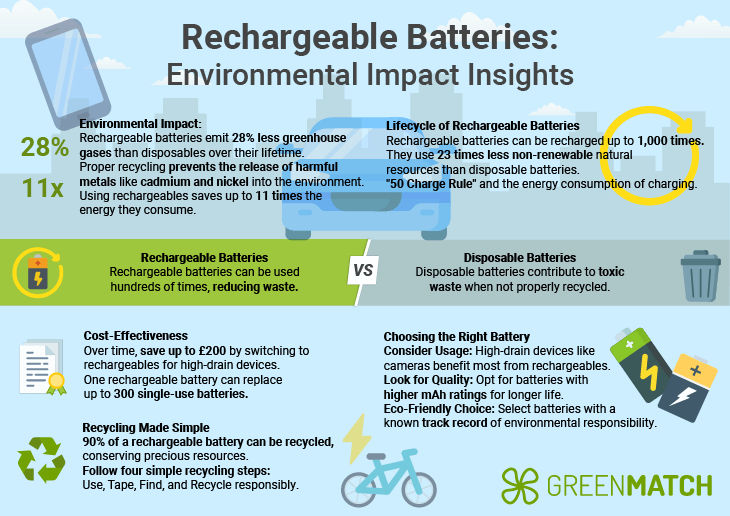
- Reduced energy consumption: Rechargeable batteries can significantly reduce energy consumption compared to disposable batteries.
- Waste reduction: The disposal of rechargeable batteries is more environmentally friendly than the production and disposal of disposable batteries.
- Lower greenhouse gas emissions: The use of rechargeable batteries can help lower greenhouse gas emissions associated with battery production.
Recycling Rechargeable Batteries
The recycling of rechargeable batteries is an important practice. Recycling helps recover valuable materials, reduce waste, and conserve natural resources.
Some organizations specialize in the recycling of rechargeable batteries, such as:
- The Closed Loop Battery Company
- The Call2Recycle Program
These programs provide resources for individuals to recycle their rechargeable batteries responsibly.
Conclusion
Rechargeable batteries are a crucial component of our daily lives. They offer numerous advantages, including reduced energy consumption and waste reduction. Proper use and recycling of these batteries can help extend their lifespan and reduce environmental impacts.


