
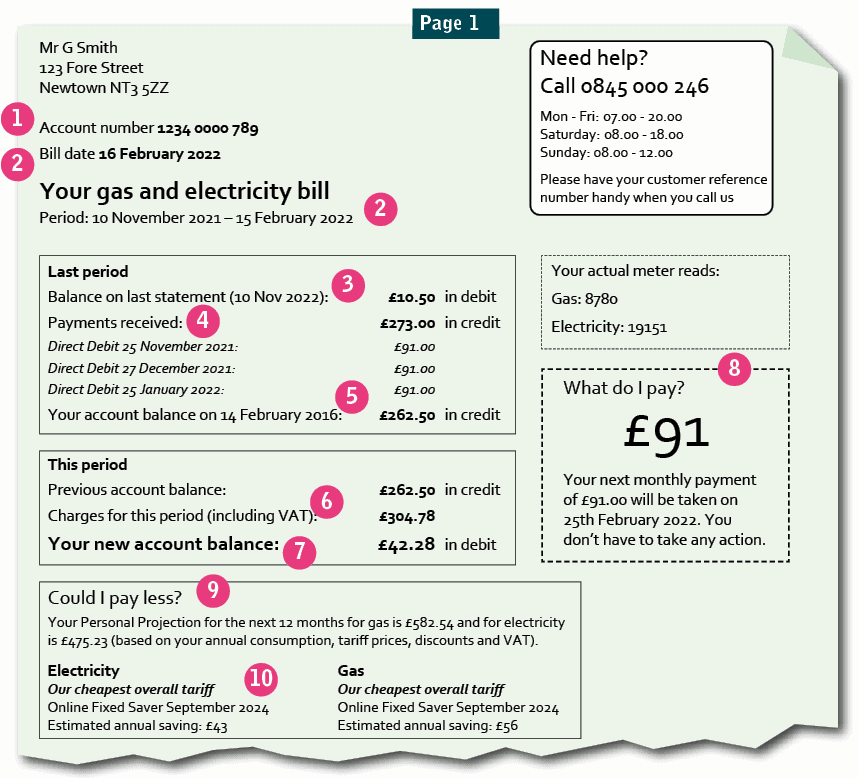
As you read through your electricity bill, it’s essential to understand how the consumption and usage patterns are calculated to determine the final energy price. You might be surprised to learn that only about 40% of what you pay on your bill is actually the electricity consumed, while the rest are taxes and fixed charges applicable to all.
Metered Readings vs. Self-Readings
The first thing you need to know about page 2 is whether your metered reading or self-reading has been taken. This information can be found in a column on the “Readings and Consumption” table. Metered readings are recorded directly by the distributor and communicated to the supplier, while self-readings are recorded by the customer and reported to the supplier.
Understanding the Different Types of Consumptions
The “Readings and Consumption” table summarizes energy consumption (metered or self-recorded), but it’s not necessarily the same as what is listed on your bill. There are several types of consumptions, each with its own unique characteristics:
- Consumption Rilevated (Metered): The difference between the numbers displayed on the meter at two different dates, which corresponds to the amount of electricity consumed between those dates.
- Stimulated Consumption: Estimated consumption based on historical data available to the supplier if there are no readings or self-recordings available.
- Consumption Fatturato (Billled): The actual consumption listed on your bill for a given period of time.
Annual Total and Breakdown by Periods
Page 2 in the “Readings and Consumption” section reports an annual total (total and broken down by periods) based on readings that cover a 12-month period or the best available estimate. For each month billed, it shows actual consumption divided into periods with energy costs indicated as well as the percentage of energy used during F1 hours (higher cost), F2/F3 hours (lower cost).
Energy Consumption Periods
There are two main types of energy consumption periods:
- Household Uses:
- F1= 8am to 7pm weekdays;
- F2 and F3 = 7pm to 6 am, weekends and holidays.
- Business Uses:
- F1= 8am to 7pm weekdays;
- F2= 7am to 8 am and 7 pm to 11 pm (Saturdays)
- F3= 11 pm to 6 am, weekends and holidays.
Breakdown of Costs on Page 1
The breakdown of the costs on page 1 shows that the cost of electricity service is divided into four main components:
- Services of Supply: This includes the costs incurred by the seller for purchasing and selling electricity to the customer. Services of supply include a fixed quota (independent of consumption) and an energy quota (payable according to the amount of electricity used).
- Services of Network: These are the costs paid by the Distributor for transporting electricity from the power plant to the customer’s site, reading consumption, and funding the National Electric Power System.
- Taxes: This section includes income taxes on energy consumption, excise tax, and any local or regional surcharges. Taxes are calculated on the amount of electricity consumed, with domestic customers eligible for a reduction if their consumption is low.
- Other Charges Not Directly Related to Supply: These include all expenses not directly related to providing electricity, such as installing or removing the meter, adjusting power, rounding off, etc.
Dispatching Costs and Network Losses
Dispaching costs are additional charges on electricity bills due to the need for a balance between demand and supply. When transporting electricity from the power plant to the customer’s site, energy loses some of its value as it is transmitted through the network (10.4% at low voltage and 4% at medium voltage). This causes an extra charge on your electricity bill.
Taxes and Other Charges
Taxes are calculated on the amount of electricity consumed, with domestic customers eligible for a reduction if their consumption is low. Other charges not directly related to supply include all expenses not directly related to providing electricity.
Conclusion
Reading your electricity bill can be a complex task, but understanding how consumption and usage patterns are calculated can help you make sense of your energy costs. By knowing the different types of consumptions, annual totals, and breakdown by periods, you can better manage your energy usage and reduce your bills.
Frequently Asked Questions (FAQs)
- What is metered reading, and how does it differ from self-reading?
- Metered reading is recorded directly by the distributor and communicated to the supplier.
- What is stimulated consumption, and how is it calculated?
- Stimulated consumption is estimated based on historical data available to the supplier if there are no readings or self-recordings available.
- How do I determine my actual electricity consumption for a given period of time?
- You can find your actual electricity consumption by looking at the “Readings and Consumption” table on page 2 of your bill.
- What is the difference between services of supply and services of network?
- Services of supply include the costs incurred by the seller for purchasing and selling electricity to the customer, while services of network are paid by the Distributor for transporting electricity from the power plant to the customer’s site.
- How do I calculate my taxes on energy consumption?
- Taxes are calculated on the amount of electricity consumed, with domestic customers eligible for a reduction if their consumption is low.
- What are dispatching costs, and how do they affect my electricity bill?
- Dispatching costs are additional charges due to the need for a balance between demand and supply.
- How much energy is lost when transmitting electricity through the network?
- At low voltage, 10.4% of the energy value is lost, while at medium voltage, 4% is lost.
- Can I reduce my taxes on energy consumption?
- Yes, domestic customers with low energy consumption may be eligible for a reduction in their taxes.
Understanding Your Electricity Bill: Tips and Tricks
Here are some additional tips to help you make the most of your electricity bill:
- Use energy-efficient appliances: Replacing traditional incandescent bulbs with LED bulbs can save up to 80% on your energy bills.
- Adjust your thermostat: Lowering your thermostat by just 1°C can save up to 5% on your heating bills.
- Unplug appliances when not in use: This simple habit can save up to 10% on your energy bills.
- Conduct an energy audit: Identifying areas of inefficiency in your home or business can help you make targeted improvements and reduce your energy bills.
Conclusion
Reading your electricity bill is a complex task, but by understanding how consumption and usage patterns are calculated, you can better manage your energy usage and reduce your bills. Whether you’re looking to save money on your energy bills or simply understand the intricacies of your electricity bill, this guide has provided valuable insights and tips to help you achieve your goals.
Additional Resources
If you have any further questions or concerns about your electricity bill, there are several additional resources available:
- Your electricity supplier: Your supplier can provide detailed information on their billing practices, including metered readings, self-readings, consumption patterns, and more.
- Your utility company: Your utility company can provide information on the services of supply, network losses, dispatching costs, and other charges not directly related to supply.
- Energy efficiency resources: There are numerous energy efficiency resources available online, including tips, tricks, and advice from experts in the field.
By taking advantage of these additional resources and applying the knowledge gained from this guide, you can make informed decisions about your electricity bill and achieve a more sustainable future.


