
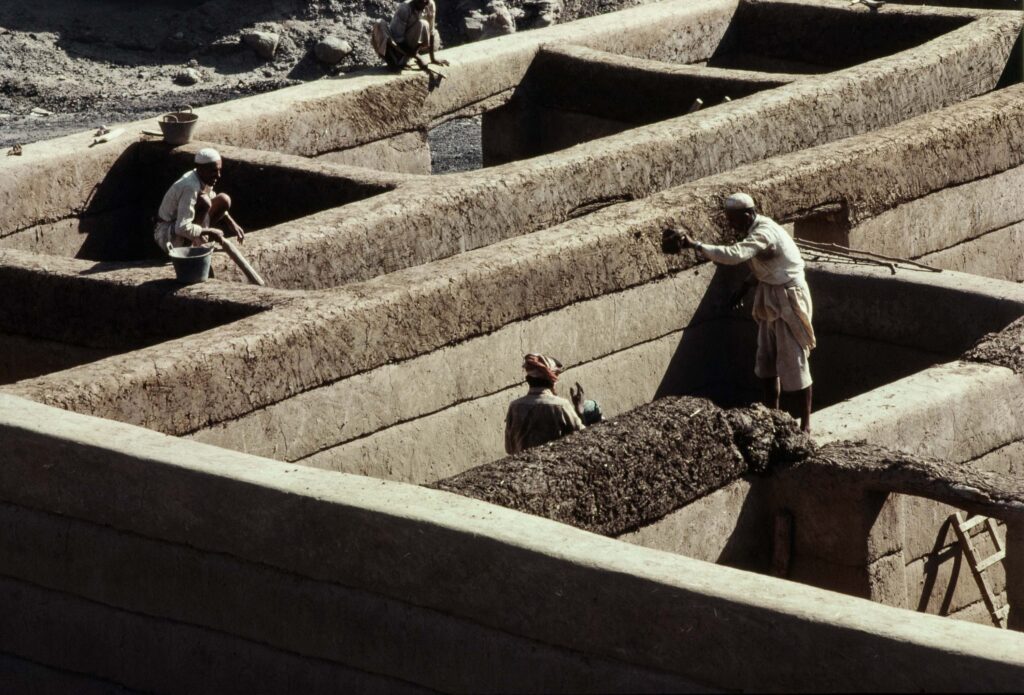
Terra cruda, also known as raw earth or natural concrete, is a bio-based material used in construction that boasts excellent eco-friendly and structural properties. This ancient material has been widely used for centuries, with approximately one-third of the world’s buildings composed of terra cruda structures. Many of these can be found in Africa, Europe, and Central America.
Characteristics of Terra Cruda
The composition of terra cruda varies depending on its location of extraction, but common components include a mixture of clay, silt, and sand. Its structure and properties change according to the granulometry of the component materials.
Despite being an abundant and recyclable material, terra cruda has a minimal environmental impact when used in construction, making it an excellent choice for sustainable building practices.
Benefits of Using Terra Cruda
Using terra cruda offers numerous benefits for builders, architects, and homeowners. Some of these advantages include:
- Minimal environmental impact: Terra cruda is made from natural materials that can be sourced locally, reducing the need for transportation and minimizing carbon emissions.
- Low energy consumption during the manufacturing process: Unlike traditional concrete, which requires significant amounts of energy to produce, terra cruda can be mixed on-site using manual or low-energy equipment.
- High strength-to-weight ratio: Terra cruda is a strong and durable material that provides excellent structural integrity while minimizing weight, making it an ideal choice for building design.
- Good insulation properties: When combined with other lightweight materials like straw or perlite, terra cruda can provide excellent thermal insulation, reducing energy consumption and improving indoor air quality.
- Can be used in combination with other materials to enhance its performance: Terra cruda is a versatile material that can be blended with other natural building materials, such as wood or bamboo, to create sustainable and durable structures.
Creating Components with Terra Cruda
Terra cruda can be molded into various components, including walls, floors, ceilings, and other structural elements. When combined with other lightweight materials like straw, sawdust, or perlite, terra cruda’s thermal insulation properties are significantly improved.
In addition to its natural composition, terra cruda can also be engineered to meet specific building codes and standards. By mixing terra cruda with other materials, such as cement or lime, architects can create custom blends that provide the desired strength, durability, and aesthetic appeal.
Sustainable Building Practices with Terra Cruda
Using terra cruda in construction not only benefits the environment but also contributes to creating healthier indoor spaces. By incorporating terra cruda into building designs, architects can create microclimates that promote a sense of well-being and comfort for occupants.
Some sustainable building practices that incorporate terra cruda include:
- Passive house design: Terra cruda’s excellent insulation properties make it an ideal choice for passive house designs, which aim to minimize energy consumption through efficient heating, cooling, and ventilation systems.
- Biomimicry: By emulating nature’s design principles, architects can create structures that mimic the natural world’s ability to self-regulate and adapt to changing environmental conditions.
- Regenerative building practices: Terra cruda is a regenerative material that can help to sequester carbon dioxide from the atmosphere and promote soil health through its use in construction.
History of Terra Cruda Construction Techniques
The use of terra cruda dates back thousands of years, with various construction techniques developed over time. Some of the most well-known methods include:
- Adobe: A traditional building method that originated in Africa, adobe involves mixing earth, water, and other natural materials to create a durable and sustainable building material.
- Pisé: A French technique that dates back to the 16th century, pisé involves creating walls using a mixture of clay, sand, and straw.
- Bauge: A traditional building method from South America, bauge involves mixing earth, water, and other natural materials to create a strong and durable material for building walls and structures.
- Faconnage: A French technique that dates back to the 18th century, faconnage involves creating decorative elements using terra cruda, such as arches, columns, and ornate details.
Terra Cruda: A Versatile Building Material
In conclusion, terra cruda is a versatile building material that offers numerous benefits for sustainable construction practices. Its eco-friendly properties make it an attractive choice for architects, builders, and homeowners looking to create healthier and more environmentally friendly spaces.
By incorporating terra cruda into their designs, architects can create structures that are not only durable and functional but also sustainable and regenerative. As the world becomes increasingly aware of its impact on the environment, the use of natural materials like terra cruda is likely to continue growing in popularity.
FAQs
- What are the primary components of terra cruda?
- Clay, silt, and sand
- How is terra cruda used in construction?
- As a building material for walls, floors, ceilings, and other structural elements
- What are the benefits of using terra cruda in construction?
- Minimal environmental impact, low energy consumption, high strength-to-weight ratio, good insulation properties, etc.
- Can terra cruda be used with other materials?
- Yes, often combined with lightweight materials like straw or perlite to enhance its thermal insulation properties
- Is terra cruda a suitable material for modern buildings?
- Absolutely, due to its sustainability and eco-friendly features
- How long has terra cruda been used in construction?
- Thousands of years, with various techniques developed over time
- Can terra cruda be recycled or reused?
- Yes, as it is an abundant and recyclable material


