
Introduction
The homing pigeon is a remarkable bird species known for its incredible ability to find its way back home from distances of over 1,000 kilometers. But how do these birds achieve this feat? In this article, we will explore the science behind the homing pigeon’s ability, its history, and how it can be trained.
What are Homing Pigeons?
Homing pigeons are a domesticated species of pigeon (Columba livia domestica) that originated from wild rock doves. They have been bred for their exceptional homing abilities, which make them invaluable for messaging and communication.
The History of Homing Pigeons
The use of homing pigeons as messengers dates back over 3,000 years to ancient Egypt and Greece. The birds were prized for their ability to navigate long distances and deliver messages with high accuracy. During World War I and II, homing pigeons played a crucial role in military communication, with some pigeons flying over 1,500 kilometers to deliver vital information.
The Ancient Art of Homing Pigeon Training
In ancient times, pigeon training was an art form that required great skill and patience. Pigeons were trained using a variety of techniques, including the use of visual cues, scent markings, and even music to guide them back home. The most effective method, however, involved creating a network of homing pigeons that would fly from one location to another, carrying messages between cities.
How Do Homing Pigeons Find Their Way?
The homing pigeon’s ability to find its way home is made possible by a combination of genetic predisposition and environmental cues. Scientists have discovered that these birds possess a unique “compass” system that allows them to detect the Earth’s magnetic field, which helps them navigate.
Studies have shown that homing pigeons can detect the Earth’s magnetic field using specialized magnetite-based receptors in their brains. This allows them to determine their direction of flight and make adjustments as needed. The magnetic field also plays a crucial role in guiding the pigeon back home, as they use it to calculate their distance from their loft.
Visual Cues
In addition to the magnetic field, homing pigeons also rely on visual cues to navigate. They can detect the shape of buildings and landmarks from afar, which helps them determine their direction of flight. This is particularly important during long-distance flights, when the magnetic field may not be as strong.
Olfactory Cues
Homing pigeons also use olfactory cues to guide them back home. They can detect specific scents associated with their loft, such as the smell of hay or manure, which helps them recognize their surroundings and navigate back home.
Training Homing Pigeons
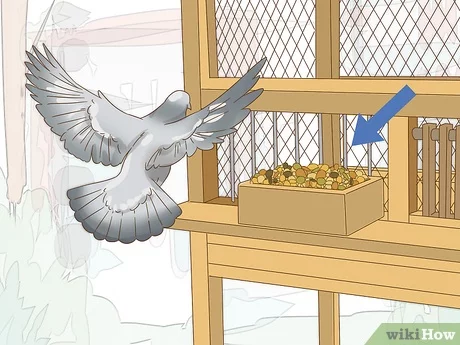
To train a homing pigeon, it is essential to start with young birds and socialize them from an early age. The training process involves gradually increasing the distance between the bird and its loft, while providing regular food and water rewards. The most effective training method is the “launching” technique, where multiple pigeons are released at once, allowing the strongest flyers to take the lead.
Key Characteristics of Homing Pigeons
To distinguish a homing pigeon from a regular pigeon, look for the following characteristics:
- Mottled feathers: Homing pigeons have distinctive mottled feathers that reflect light and give them a unique appearance.
- Bright eyes: Homing pigeons have bright, expressive eyes that are essential for their navigation abilities.
- Agility: Homing pigeons are known for their incredible agility and speed in flight.
Velocities of Homing Pigeons
While homing pigeons can fly at impressive speeds, their average cruising speed is around 80 kilometers per hour. During long-distance flights, however, they can reach speeds of up to 1,600-1,800 kilometers per hour.
Physiological Adaptations
Homing pigeons have a number of physiological adaptations that enable them to fly for extended periods without rest. These include:
- High-capacity lungs: Homing pigeons have highly efficient lungs that allow them to take in large amounts of oxygen.
- Efficient metabolism: Homing pigeons can slow down their metabolism to conserve energy, allowing them to fly for longer periods.
Behavioral Adaptations
Homing pigeons also exhibit a range of behavioral adaptations that enable them to navigate and find their way home. These include:
- Strong homing instinct: Homing pigeons have an innate ability to navigate back home, which is triggered by specific cues such as the shape of buildings and landmarks.
- Excellent memory: Homing pigeons can remember complex routes and recall specific scents associated with their loft.
Conclusion
The homing pigeon’s incredible ability to find its way home has captivated humans for centuries. By understanding the science behind this remarkable phenomenon, we can appreciate the intelligence and resilience of these birds. Whether used for messaging or recreational purposes, homing pigeons remain an iconic symbol of avian excellence.
Frequently Asked Questions
Q: How long does it take to train a homing pigeon?
A: Training a homing pigeon requires patience and dedication, with most birds taking several months to develop their navigation skills.
Q: Can any type of pigeon be trained as a homing pigeon?
A: No, only certain breeds of pigeons have been specifically bred for their homing abilities. These include the Belgian Blue, Dutch Featherleg, and German Giant.
Q: How far can homing pigeons fly?
A: Homing pigeons are capable of flying up to 1,500 kilometers without rest, making them one of the most impressive migratory birds in the world.
Q: Are homing pigeons endangered?
A: No, homing pigeons are not considered an endangered species. However, their numbers have declined in recent years due to habitat loss and urbanization.
Q: Can I keep a homing pigeon as a pet?
A: Yes, keeping a homing pigeon as a pet can be a rewarding experience, but it requires a significant commitment of time, space, and resources.
Q: Are homing pigeons intelligent animals?
A: Absolutely! Homing pigeons have been shown to possess exceptional problem-solving skills and memory abilities.


