
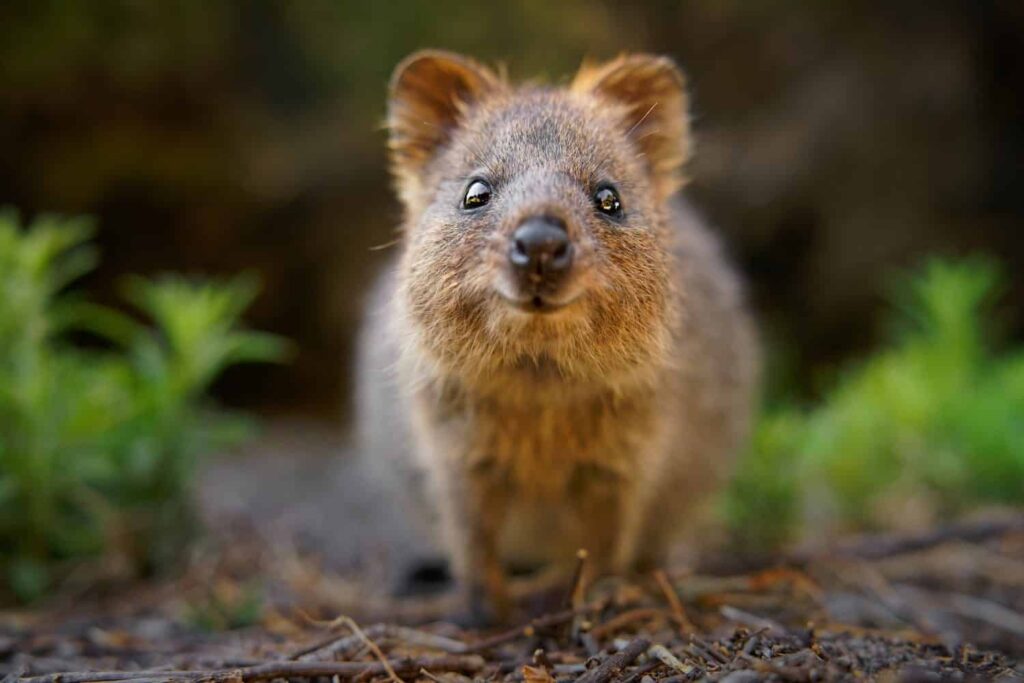
The quokka is a small wallaby native to Western Australia, known for its smiley face and friendly demeanor. This adorable animal has captured the hearts of many, becoming an internet sensation and a symbol of happiness. But there’s more to the quokka than just its cute appearance. In this article, we’ll delve into the quokka’s characteristics, habitat, curiosities, reproduction, risks, and where to see one.
Quokka Characteristics
The quokka is a marsupial belonging to the family Macropodidae, which also includes kangaroos and wallabies. Its scientific name is Setonix brachyurus, and it’s the only member of the genus Setonix Lesson. The quokka has a stout body, reaching up to half a meter in length, with no feline features. It weighs between 2.5 and 5 kg (5.5-11 lbs) and has a brown-bristled coat with a lighter patch on its belly.
Despite not being athletic, the quokka can easily climb onto small trees and shrubs, feeding on grasses, carps, succulents, and foliage. Its diet consists of plant-based foods rich in iron, essential for maintaining its excellent health. At night, it moves with a gait similar to kangaroos, accompanied by large and small leaps.
The quokka’s distinctive smile is also worth noting. This natural expression has become an iconic feature of the animal, and many people consider it the happiest animal in the world. However, this nickname might not be entirely accurate, as the species is endangered due to habitat destruction and other factors.
Habitat and Origins of the Quokka
The quokka’s origins are Australian, and it can be found living on Rottnest Island, off Western Australia’s southwest coast. The island is home to many quokkas, but they are rare due to habitat destruction and human introduction of predators such as wolves, dogs, cats, and dingos.
The quokka’s history dates back to 1650 when Samuel Volckertzoon, an Olandese sailor, reported seeing “a wild cat” on Rottnest Island. In 1696, Willem de Vlamingh mistakenly identified it as a rat and named the island “Rottenest,” meaning “rat’s nest” in Dutch.
Quokka Curiosities
The quokka is known for its unique social behavior. While it’s generally a solitary animal, more courageous or curious individuals have been observed approaching humans first. Unfortunately, it’s forbidden to handle them in any way, as this can harm both humans and quokkas.
One of the most fascinating aspects of the quokka is its ability to recognize and interact with humans. Researchers have observed quokkas looking at people for longer periods than usual, suggesting a level of curiosity or even affection. However, it’s essential to maintain a safe distance from these animals, as they can be unpredictable.
Reproduction of the Quokka
The quokka reproduces once a year, except for exceptions, and females give birth to only one young every year. This limited reproduction rate contributes to the species’ vulnerability to extinction.
In the wild, female quokkas typically mate in April or May, after which they enter a state of dormancy until their young is ready to be born. The gestation period lasts around 32 days, during which time the mother produces milk for her offspring.
Quokka: Risks
Human activities are major threats to the quokka’s survival. Intensive agricultural development has destroyed many areas that were once green and provided food for the quokkas. Additionally, cats, dogs, dingos, and wolves are more numerous and aggressive predators that harm the quokkas.
When visiting Rottnest Island, it’s essential to avoid feeding the quokkas bread, as this can compromise their health and well-being. In fact, feeding quokkas is not recommended, as it can lead to negative consequences for both humans and quokkas.
Conservation Efforts
Several organizations are working tirelessly to protect the quokka and its habitat. The Rottnest Island Authority has implemented measures such as predator control and habitat restoration to help conserve this unique species.
Individuals can also make a difference by supporting conservation efforts, spreading awareness about the quokka’s plight, and reducing their carbon footprint to mitigate habitat destruction.
Where to See a Quokka
To meet the quokka, you need to visit Rottnest Island off Western Australia’s southwest coast. The island is home to many quokkas, but they are rare due to habitat destruction and human introduction of predators. If you’re interested in seeing quokkas up close, consider visiting Perth Zoo in Australia, where some quokkas are bred in captivity.
Tips for Visitors
When visiting Rottnest Island, it’s essential to follow guidelines and regulations to ensure the quokka population remains healthy and safe. Here are some tips:
- Keep a safe distance: Maintain at least 2 meters of distance from the quokkas to avoid stressing them out.
- Avoid feeding bread: Refrain from feeding the quokkas bread, as this can harm their health.
- Stay on designated trails: Follow designated walking paths and trails to prevent habitat destruction.
- Respect wildlife: Never touch or handle quokkas, as this can cause physical harm.
Conclusion
The quokka is a fascinating animal that has captured the hearts of many with its cute appearance and friendly demeanor. However, it’s essential to remember that this species is endangered due to habitat destruction and other factors. By learning more about the quokka’s characteristics, habitat, curiosities, reproduction, risks, and where to see one, we can appreciate these amazing animals and work towards their conservation.
Frequently Asked Questions
- What does a quokka eat?
Quokkas are herbivores and feed on grasses, carps, succulents, and foliage. - Where do quokkas live?
Quokkas can be found living on Rottnest Island off Western Australia’s southwest coast and in some areas of the mainland. - Why is the quokka endangered?
The quokka is endangered due to habitat destruction, human introduction of predators, and limited reproduction rate. - Can I feed a quokka?
No, feeding quokkas is not recommended as it can compromise their health and well-being. - How do quokkas reproduce?
Quokkas reproduce once a year, except for exceptions, and females give birth to only one young every year. - What are some threats to the quokka’s survival?
Human activities such as intensive agricultural development and introduction of predators pose significant threats to the quokka’s survival. - Can I see quokkas in captivity?
Yes, some quokkas are bred in captivity at Perth Zoo in Australia. - How can I help conserve quokkas?
Support conservation efforts by visiting protected areas, spreading awareness about the quokka’s plight, and reducing your carbon footprint to mitigate habitat destruction.


