
What is Quinoa?
Quinoa, often referred to as the “sacred grain” of the Incas, is not a cereal but rather a pseudo-cereal that belongs to the same family as spinach (Chenopodiaceae). Its small yellow grains resemble those of a cereal. This versatile and nutritious food has been gaining popularity worldwide due to its unique properties and numerous health benefits.
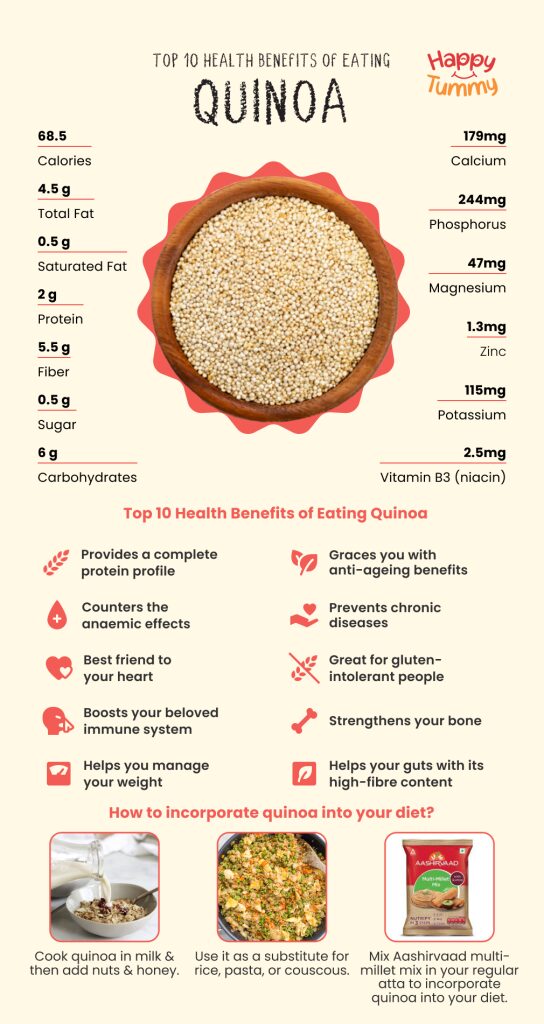
Nutritional Values and Content
- 100 grams of quinoa contains:
- Calories: 368
- Carbohydrates: 64.2g
- Fat: 6.2g
- Protein: 14.1g
- Fiber: 5.8g
- Water content: 13.3g
Quinoa is an excellent source of vitamins and minerals, including:
- Vitamin A: 1 μg
- Vitamin B1: 0.36mg
- Vitamin B2: 0.32mg
- Vitamin B6: 0.49mg
- Vitamin B3: 1.52mg
- Vitamin B9: 184 μg
- Folate: 70mg
- Manganese: 2.0mg
Benefits of Quinoa
Quinoa has been recognized for its numerous health benefits, including:
- High-quality protein that meets 90% of the daily recommended intake of essential amino acids
- Rich in fiber and antioxidants, which help protect against chronic diseases such as heart disease, diabetes, and certain types of cancer
- Low glycemic index, making it an excellent choice for people with diabetes or those who want to manage their blood sugar levels
- Anti-inflammatory properties due to its high content of magnesium and other minerals
Quinoa also has various uses beyond its nutritional benefits:
- Gluten-free: Quinoa is a suitable option for individuals with gluten intolerance or celiac disease.
- Versatile cooking method: Quinoa can be cooked in various ways, including boiling, steaming, roasting, and microwaving.
History and Cultural Significance
Quinoa has been a staple crop in the Andean region for thousands of years. The Incas considered quinoa a sacred food, using it as a form of currency and as an offering to their gods. Today, quinoa is still widely cultivated in Bolivia, Peru, Ecuador, and the United States.
The history of quinoa dates back to around 2000 BCE, when the Incas first domesticated the plant. Quinoa was not only a staple food but also played a significant role in Andean culture and spirituality.
Growing Quinoa
Quinoa is an annual herbaceous crop that grows up to 3 meters tall. It has alternate leaves with a central stem that branches out depending on the variety. The fruit of the quinoa plant is an orchid-like structure containing seeds surrounded by a perisperma (starchy tissue).
There are over 200 varieties of quinoa, each with its own unique characteristics and growth habits. Quinoa prefers well-drained soil with moderate temperatures between 15-20°C.
Quinoa farming is an environmentally friendly practice that can help mitigate climate change:
- Low water usage: Quinoa requires minimal irrigation, making it a suitable crop for areas with limited water resources.
- Soil conservation: Quinoa’s extensive root system helps to stabilize the soil and prevent erosion.
Saponins and Controversies
Some varieties of quinoa contain saponins, which can give the seeds an unpleasant taste. However, these saponins are naturally occurring compounds that help protect the plant from insects and other predators. The removal of saponins during processing makes quinoa safe for human consumption.
However, some research suggests that cooking quinoa with water or using a rice cooker may reduce the saponin content:
- Cooking quinoa: Soaking and boiling quinoa can break down saponins, making it safer to eat.
- Rice cookers: Using a rice cooker can also help to reduce saponin levels in quinoa.
Cooking Quinoa
Quinoa is versatile and can be cooked in various ways:
- Toasting: Grains can be toasted to bring out their nutty flavor.
- Salads: Quinoa pairs well with fresh vegetables, herbs, and citrus fruits.
- Soups: Quinoa can be added to soups for its nutritional benefits.
- Baking: Quinoa flour can be used as a substitute for wheat flour in baked goods.
Quinoa in Space Exploration
NASA has recognized quinoa’s potential as a nutrient-rich food source for long-duration space missions. Its high protein content, ability to adapt to different environments, and resistance to pests make it an attractive option for future space exploration.
In 2013, NASA awarded a grant to the University of Nebraska-Lincoln to study the feasibility of using quinoa as a sustainable food source for astronauts:
- Nutritional value: Quinoa provides essential amino acids, fiber, and antioxidants that support astronaut health.
- Space adaptation: Quinoa’s ability to adapt to different environments makes it suitable for space exploration.
Conclusion
In conclusion, quinoa is a nutrient-dense food that offers numerous health benefits, including its high-quality protein, fiber, and antioxidants. With over 200 varieties grown worldwide, quinoa has become an increasingly popular ingredient in modern cuisine. As research continues to explore its potential uses in space exploration, quinoa’s significance as a food source will only continue to grow.
Frequently Asked Questions (FAQs)
- Is Quinoa Gluten-Free?
Yes, quinoa is gluten-free and safe for individuals with celiac disease or those who follow a gluten-free diet. - Can I Eat Raw Quinoa?
While it’s technically possible to eat raw quinoa, it’s not recommended due to its high phytic acid content, which can inhibit nutrient absorption. - How Do I Cook Quinoa?
Quinoa can be cooked by rinsing the grains and then boiling them in water or using a rice cooker. - Is Quinoa Good for Weight Loss?
Yes, quinoa is an excellent choice for those trying to lose weight due to its high fiber and protein content. - Can I Use Quinoa Flour as a Substitute for Wheat Flour?
While quinoa flour can be used as a substitute in some recipes, it’s essential to note that the flavor and texture may differ from wheat flour.
Additional Resources
For more information on quinoa cultivation, nutritional values, and recipes, visit:
- The United States Department of Agriculture (USDA)
- The Food and Agriculture Organization (FAO) of the United Nations
- Slow Food


