
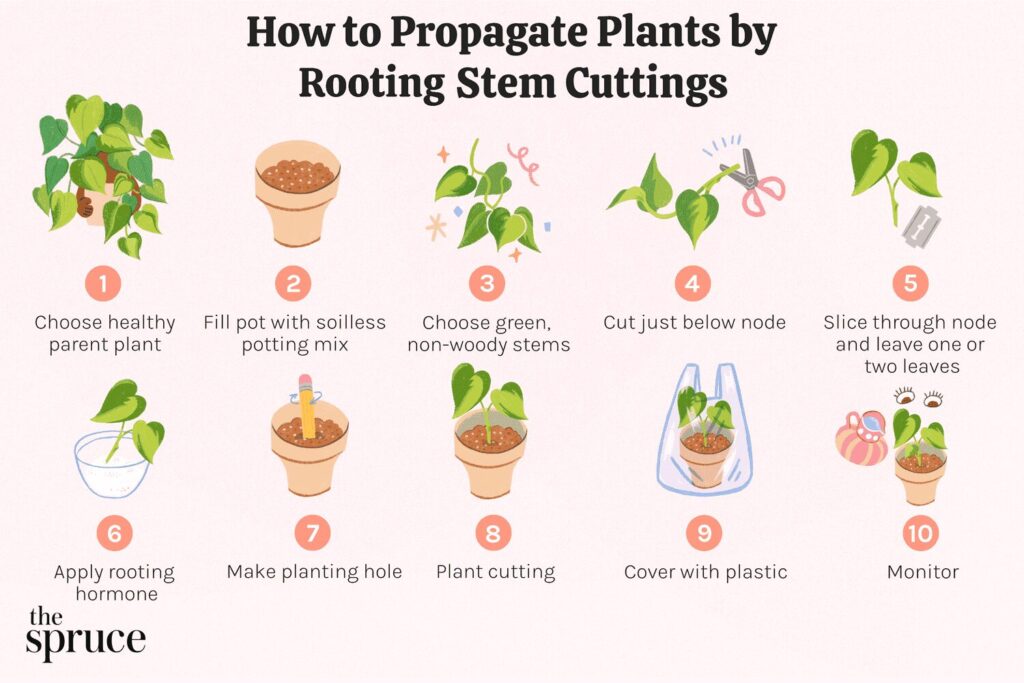
The art of propagation by cutting is a technique used to create new plants from existing ones. This method involves making a cut on the plant stem, allowing it to develop roots and eventually grow into a new individual.
Understanding Cuttings
A cutting can be defined as a section of a plant stem that has been removed for the purpose of rooting. These cuttings can come in various forms, such as:
- Legnous cuttings: Mature wood sections that have fallen off the plant.
- Semilegnous cuttings: Wood sections with some leaves attached.
- Foliage cuttings: Mature leaves or stems that have fallen off the plant.
- Herbaceous cuttings: Young shoots or stems.
Each type of cutting has its own unique characteristics and requirements for successful propagation. It is essential to research the specific needs of the plant species you are working with.
Preparation
Before making a cut, it’s crucial to prepare the stem properly. This involves:
- Choosing a healthy stem with at least two nodes (the joint where a leaf meets the stem)
- Cleaning and disinfecting the cutting tool
- Making a clean incision on the stem just above a node
The goal is to minimize damage to the plant tissue and promote optimal rooting.
Planting
Once the cut has been made, it’s time to plant the cutting. This involves:
- Planting the cutting in a well-draining medium, such as potting mix or perlite
- Making sure the node is buried and the leafy part of the stem is exposed to air
- Watering thoroughly but avoiding overwatering
The key is to create an environment that encourages root growth without rotting the cutting.
Waiting
After planting, it’s essential to wait for the cutting to develop roots. This process can take anywhere from a few days to several months. During this time:
- Monitor the cutting’s progress regularly
- Adjust the care routine as needed
- Provide adequate light and temperature conditions
Be patient, as root development may take time.
Success Factors
To increase your chances of successful propagation by cutting, consider the following factors:
- Use clean tools and equipment
- Water thoroughly but avoid overwatering
- Provide adequate light and temperature conditions
- Monitor the cutting’s progress regularly
By understanding the different types of cuttings and following these phases, you can successfully propagate your favorite plants. Remember to be patient, as root development may take time.
Frequently Asked Questions (FAQs)
-
What type of cutting is best for propagation?
The best cutting type depends on the plant species. Legnous cuttings are suitable for trees and shrubs, while semilegnous cuttings work well for plants like camellias and rhododendrons.
2. How often should I water my cutting?Watering frequency varies depending on the medium and environment. Make sure to check the soil moisture regularly and adjust your watering schedule accordingly.
3. Can I propagate a plant by cutting without rooting hormones?While rooting hormones can enhance root growth, they’re not always necessary. Some plants may still produce roots without them, but it’s essential to research specific plant requirements before attempting propagation.
4. What are the most common mistakes when propagating cuttings?Common errors include overwatering, underwatering, and inadequate light conditions. Monitor your cutting’s progress regularly and adjust your care routine as needed.
5. How long does it take for a cutting to produce roots?Root development times vary depending on factors like plant species, medium, and environmental conditions. Generally, roots may emerge within 20-30 days, but this can range from several weeks to months or even years in some cases.
6. Can I propagate cuttings indoors or outdoors?Propagation by cutting can be done both indoors and outdoors. Choose a suitable location based on the plant’s requirements for light, temperature, and humidity.
7. What should I do if my cutting fails to produce roots?If your cutting doesn’t root successfully, try adjusting the care routine or exploring alternative propagation methods, like layering or seed division.
8. Can I propagate cuttings in the winter months?Winter is not usually an optimal time for propagation by cutting, as many plants are dormant during this period. However, some species can still be propagated using specialized techniques and materials.
By following these guidelines and being patient, you’ll increase your chances of successfully propagating your favorite plants through cutting.


