
The Production of Bioethanol: A Complex Process
Bioethanol production is often viewed as a simple process, but it’s far from it. In the United States, bioethanol is primarily produced from starch-rich crops like corn and potatoes. The production of bioethanol has also been linked to the phenomenon of “land-grabbing,” where multinational companies purchase vast areas of land in the south to cultivate corn for ethanol production.
Understanding the Three Phases of Bioethanol Production
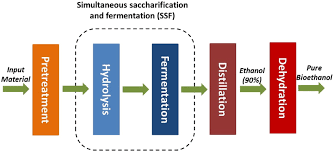
The production of bioethanol can be divided into three phases: preparation of the molasses, fermentation, and distillation. These phases can occur using different techniques, and the preparation of the molasses can be done using various substrates (sugars, starches, cellulose…).
Phase 1: Preparation of Molasses
The first phase involves preparing a solution of sugars, known as molasses, which will then undergo fermentation. This process typically starts with dry-grinding, where corn is ground into a coarse flour. The mixture is then watered and heated to prepare it for the next step.
Dry-grinding is an essential step in bioethanol production, as it converts starches into fermentable sugars. The dry-grinding process can be done using different techniques, such as hammer milling or roller milling. Hammer milling involves grinding the corn into a fine powder, while roller milling uses a series of rollers to crush and grind the corn.
Once the corn has been ground into a coarse flour, it is mixed with water to create a slurry. The mixture is then heated to a temperature between 160°F (71°C) and 180°F (82°C), which helps to activate the enzymes that convert starches into sugars.
Phase 2: Fermentation
In the second phase, the molasses undergoes fermentation using enzymes that produce high concentrations of ethanol. However, the resulting ethanol is not pure but rather mixed with water and other liquids. To obtain pure ethanol, the mixture must be distilled under controlled pressure and temperature.
Fermentation is a crucial step in bioethanol production, as it converts the sugars produced during dry-grinding into ethanol. The fermentation process typically takes 3-5 days to complete, depending on factors such as temperature and enzyme activity.
During fermentation, yeast cells convert the sugars into ethanol through a series of chemical reactions. The resulting mixture is called “wash,” which contains both ethanol and water.
Phase 3: Distillation
The final phase involves distilling the ethanol to produce a pure product. This process requires careful control of temperature and pressure to ensure optimal results.
Distillation can be done using different techniques, such as pot still distillation or vacuum distillation. Pot still distillation involves heating the wash in a large pot still, while vacuum distillation uses a combination of heat and vacuum to separate the ethanol from the water.
Once the ethanol has been distilled, it is collected and stored for further processing. The resulting product is called “anhydrous ethanol,” which contains less than 1% moisture.
Bioethanol of First Generation
First-generation bioethanol is produced from crops grown specifically for ethanol production, such as corn. The most common method used in the United States involves dry-grinding corn and then fermenting it with enzymes to produce ethanol.
- Dry-grinding: Corn is ground into a coarse flour.
- Fermentation: Molasses is prepared by mixing the ground corn with water and heating it.
- Distillation: The resulting mixture is distilled under controlled pressure and temperature to produce pure ethanol.
Challenges in Producing Bioethanol of Second Generation
Second-generation bioethanol is produced from wood chips or other biomass waste, which presents several challenges. One major issue is the lignin content in these materials, which inhibits enzyme activity and hinders sugar extraction.
To overcome this challenge, companies are developing more complex processes that combine chemical and physical treatments to break down the lignin and extract sugars from the biomass waste.
One approach is to use a process called “briquetting,” where biomass waste is compressed into small pellets. These pellets can then be used as a feedstock for bioethanol production.
Another approach involves using enzymes that are specifically designed to break down lignin, such as laccase and peroxidase. These enzymes work by converting the lignin molecules into smaller fragments that can be easily extracted.
Conclusion
In conclusion, producing bioethanol involves a series of complex steps, including preparation of molasses, fermentation, and distillation. While first-generation bioethanol is relatively straightforward, second-generation production poses significant challenges due to the presence of lignin in biomass waste materials.
By understanding the complexities of bioethanol production, we can better appreciate the significance of this renewable energy source and work towards its widespread adoption.
Frequently Asked Questions
- What are the main differences between first and second-generation bioethanol?
First-generation bioethanol is produced from crops grown specifically for ethanol production, such as corn. Second-generation bioethanol is produced from wood chips or other biomass waste. - How does lignin affect the production of bioethanol?
Lignin in biomass waste materials inhibits enzyme activity and hinders sugar extraction. - What are some potential solutions to overcome the challenges of second-generation bioethanol production?
Companies are developing more complex processes that combine chemical and physical treatments to break down lignin and extract sugars from biomass waste.
By addressing these challenges, we can unlock the full potential of second-generation bioethanol and contribute to a more sustainable energy future.


