
As we navigate the complexities of demographic changes, it’s essential to examine the data from recent censuses to grasp the shifting landscape of our society. The Italian Institute of Statistics (ISTAT) has recently released the first data from the 2018 and 2019 censuses, providing valuable insights into population composition, education levels, and foreign presence.
In this article, we’ll delve into the key findings from these censuses, exploring trends and implications for our economy, society, and individual lives.
The Censuses: A Permanent and Continuous Measure
The ISTAT conducts a permanent census of the population and its abodes, which allows for continuous data collection and updates. This differs from the previous decennial census, making the data more accurate and relevant to current demographic changes.
This approach also enables us to monitor population growth over time, allowing policymakers to make informed decisions about resource allocation and infrastructure development.
The use of permanent censuses has several benefits:
- Increased accuracy: By conducting a permanent census, ISTAT can update its data in real-time, reducing the risk of discrepancies between different sources.
- Improved data quality: Continuous data collection allows for a more comprehensive understanding of population trends and characteristics.
- Enhanced decision-making: Permanent censuses provide policymakers with up-to-date information to inform decisions about resource allocation, infrastructure development, and social services.
Population Trends
The 2018-2019 censuses reveal some concerning trends:
- Italy’s population decreased by 124,427 individuals between 2011 and 2018.
- The country’s median age rose from 43 to 45 years, with the region of Campania being the youngest (42 years) and Liguria the oldest (46 years).
- The proportion of people aged 65 and above increased from 20.8% in 2011 to 23.4% in 2019.
These statistics highlight concerns about the economic impact of an aging population on our country.
Foreign Population
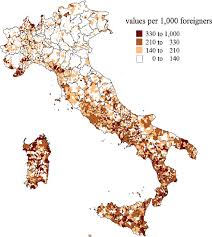
The foreign population grew by 43,480 individuals between 2018 and 2019, with a total of 5,039,637 people of non-Italian nationality living in Italy. This represents:
- An increase of 3.9 million foreigners compared to 2001.
- A 10.2% share of the foreign population being women.
Despite these numbers, immigrants account for only 8.4 individuals per every 100 censused.
The foreign population is an important aspect of Italy’s demographic landscape:
- Economic contributions: Foreign workers contribute to the Italian economy by filling labor gaps and injecting new skills and ideas.
- Cultural diversity: Immigration brings diverse perspectives and experiences, enriching Italian culture and society.
- Demographic challenges: Managing immigration flows and ensuring integration of immigrants into Italian society are essential for addressing demographic challenges.
Education Levels
The education levels in Italy are concerning:
- Only 13.9% of the population has obtained a university degree.
- The median age of students is lower than that of the general population (34.7 years).
- Women make up a slight majority among immigrants (51.7%).
These statistics highlight concerns about education and training in Italy:
- Workforce development: Investing in education and training programs can help address labor shortages and ensure a skilled workforce.
- Innovation and competitiveness: A well-educated population is essential for driving innovation and increasing competitiveness.
- Social cohesion: Education plays a critical role in promoting social cohesion and reducing disparities within Italian society.
Economic Trends
The censuses also reveal some positive trends in employment:
- The labor force grew by 0.6% between 2011 and 2019.
- Unemployment rates decreased from 5.8% to 6.9%.
- The gender gap in employment has narrowed.
These statistics suggest that Italy’s economy is adapting to the changing workforce:
- Job market dynamics: The labor force growth rate indicates a stable job market, with fewer job losses and more job creation.
- Employment opportunities: Unemployment rates have decreased, providing more opportunities for Italians to find employment.
- Inclusive policies: Narrowing the gender gap in employment reflects efforts to promote inclusivity and equal opportunities.
The “Borghi più belli d’Italia” Initiative
A regional project aimed at revitalizing underpopulated areas, the “Borghi più belli d’Italia” initiative has shown positive results:
- Younger people (0-4 and 5-9 years) have increased in number.
- Immigrants are more likely to settle in these towns.
This trend may be driven by a desire for a better work-life balance, as well as an appreciation for nature and local culture.
The initiative highlights the importance of regional development:
- Local economy: Revitalizing underpopulated areas can boost local economies through increased tourism, business investment, and community engagement.
- Quality of life: These towns offer a unique quality of life, with lower costs of living, more green spaces, and stronger community bonds.
Creating Interactive Maps and Graphs
To explore the data further, visit the ISTAT website (http://esploradati.censimentopopolazione.istat.it/), which allows you to visualize data by region, municipality, or other parameters, and create custom graphs directly online.
Here’s an example of a dashboard created using these statistics for the Lombardy region:
We hope this article has provided valuable insights into the demographic trends in Italy.


