
Introduction
The Pomeranian, also known as the “pocket dog” in English, is a German breed that has taken the top spot in popularity in the United States. Despite its small size, this canine has gained fame as a celebrity dog and is widely recognized for its unique characteristics. But what makes this breed so special?
Origin
The Pomeranian’s origins date back to Germany, specifically from the region of Pomerania. This area was once part of Prussia, but today it lies within Poland’s borders, close to Germany. The breed claims German roots.
It is worth noting that some sources may claim that the Pomeranian originated in Russia, rather than Germany. However, this theory has been largely debunked by experts and historians.
The Miniature Misunderstanding
A common misconception surrounds the “Pomeranian nano” or toy version. In reality, this is simply a smaller version of the original Pomeranian. The true miniature version is actually that of the Spitz breed, with some even referring to it as the Toy Spitz.
This misunderstanding may have arisen from the fact that the Spitz breed has been bred for centuries in various parts of Europe, including Germany and Russia. Over time, some breeders may have selectively bred smaller individuals to create a “toy” version of the Spitz, which eventually became known as the Pomeranian.
Physical Description
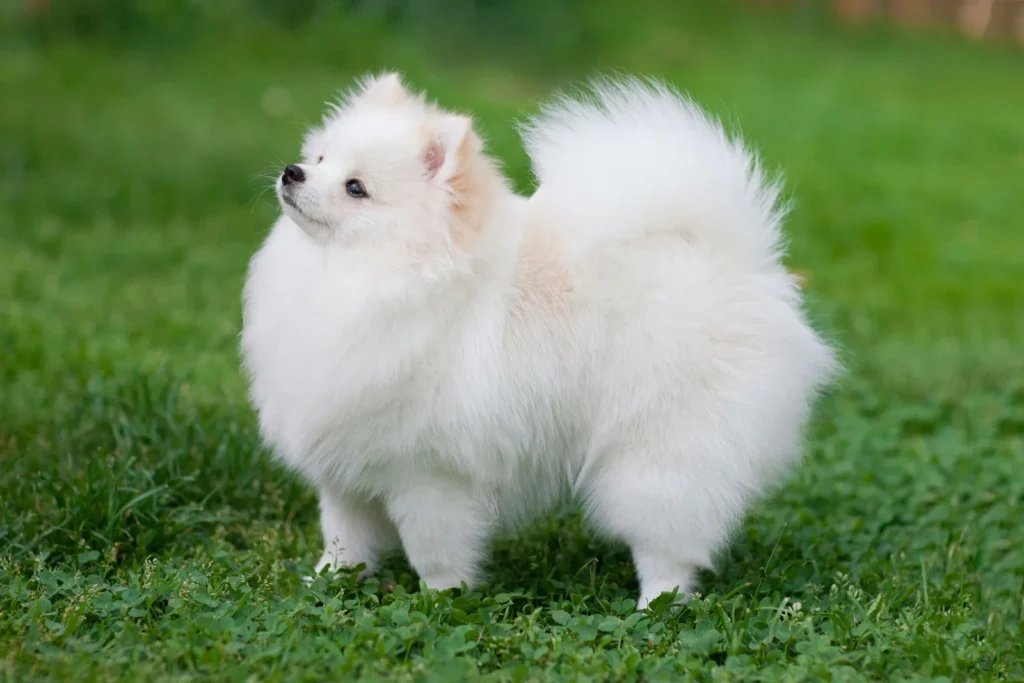
At its peak height of 30 cm (12 inches), the Pomeranian boasts a robust yet compact physique. Weighing around 5 kg (11 lbs), this small dog has a sturdy build and a solid muscle structure. Despite being small, the Pomeranian exudes confidence and has an impressive musculature.
One of the most distinctive features of the Pomeranian is its thick coat, which can come in a variety of colors including white, red, orange, black, and gray. The breed’s double coat consists of a dense undercoat and a longer, coarser outer coat that repels water and provides excellent insulation.
Movement and Agility
This breed showcases remarkable agility and quick movement, thanks to its Spitz heritage. Its powerful hind legs and elastic movements make it an excellent watchdog. The Pomeranian’s athleticism also makes it a great companion for outdoor activities such as hiking, running, or playing fetch.
However, it is essential to provide regular exercise and mental stimulation for your Pomeranian to prevent boredom and destructive behavior. Daily walks and playtime can help maintain their physical and mental well-being.
Facial Features
The Pomeranian’s facial features are characterized by its well-proportioned muzzle, which balances the rest of its body. Its eyes are dark, almond-shaped, and expressive, much like those of a fox. Even its ears, pointed and triangular, add to its distinctive charm.
The breed’s facial structure is also notable for its narrow, slightly upturned snout and prominent cheekbones. These features contribute to the Pomeranian’s endearing and intelligent expression.
Color Variations
While white Pomeranians are the most common, they can also come in red, orange, black, or gray. The breed’s thick coat is soft and fluffy, with a dense undercoat that repels water and provides excellent insulation.
It is worth noting that some breeders may claim that certain colors, such as blue merle or silver, are part of the Pomeranian breed standard. However, these colors are not recognized by most kennel clubs and breed associations.
Personality and Temperament
The Pomeranian is an affectionate and social dog that thrives as a companion animal. Its high intelligence, sensitivity, and keen instincts make it an effective watchdog. Despite its small size, the Pomeranian has a strong protective instinct and will defend its owner at all costs.
However, this protective nature can also make them wary of strangers if not properly socialized. It is essential to introduce your Pomeranian to new people and environments gradually to prevent anxiety and fear-based behaviors.
Training and Exercise
Pomeranians are relatively easy to train due to their high intelligence and eager-to-please nature. Regular exercise and mental stimulation can help prevent boredom and destructive behavior. However, it is essential to socialize your Pomeranian well, as they can become wary of strangers if not properly introduced.
Positive reinforcement training methods, such as clicker training or reward-based training, are recommended for this breed. Consistency, patience, and clear communication are also crucial for effective training.
Health and Grooming
Pomeranians require regular grooming to maintain their thick coats. They are generally healthy dogs with a lifespan of 12-15 years, although some may live up to 20 years or more.
However, certain health issues can affect this breed, such as patellar luxation, tracheal collapse, and eye problems. Regular veterinary check-ups, genetic testing, and preventative care can help prevent or detect potential health problems.
Price and Purchase
Cute Pomeranian puppies can cost between €800 to €1000, depending on breeder reputation and bloodline. As with any purchase, it’s essential to research reputable breeders and inspect the dog before making a decision.
Reputable breeders should provide health clearances for their breeding stock, such as OFA (Orthopedic Foundation for Animals) certification or genetic testing for inherited disorders. They should also be willing to answer questions and provide guidance on caring for your new puppy.
Conclusion
The Pomeranian is an endearing and adaptable breed that has captured hearts worldwide. Its unique features, playful personality, and loyalty make it a cherished companion for many families. With proper care and attention, this small but mighty dog can thrive as a loving and loyal friend.
FAQs:
-
Q: What is the typical lifespan of a Pomeranian?
A: 12-15 years, although some may live up to 20 years or more. -
Q: How much exercise does a Pomeranian require?
A: Regular daily walks and playtime are essential for maintaining physical and mental well-being. -
Q: Are Pomeranians easy to train?
A: Yes, they are highly intelligent and eager-to-please, making them relatively easy to train. -
Q: Can Pomeranians make good watchdogs?
A: Yes, their keen instincts and loyalty make them effective watchdogs, although they can be wary of strangers if not properly socialized. -
Q: How much grooming does a Pomeranian require?
A: Regular brushing is necessary to maintain their thick coat and prevent matting. -
Q: What are some common health issues in Pomeranians?
A: Regular veterinary check-ups, genetic testing, and preventative care can help prevent or detect potential health problems. -
Q: Can I keep a Pomeranian as a pet if I live in a small apartment?
A: Yes, their compact size makes them suitable for city living, provided they receive regular exercise and attention. -
Q: How often should I feed my Pomeranian?
A: A balanced diet that meets the breed’s nutritional needs is essential; consult with your veterinarian for personalized feeding recommendations.
Follow us on social media for more animal-related content!
Additional Resources
- American Kennel Club (AKC) – Pomeranian Breed Standard
- United Kennel Club (UKC) – Pomeranian Breed Standard
- The Dog Breeders Association of America (DBAA) – Pomeranian Information
Please note that the resources listed above are subject to change and may not reflect the most up-to-date information on the breed. It’s essential to consult reputable sources and experts in the field for accurate and reliable information on dog breeds.


