
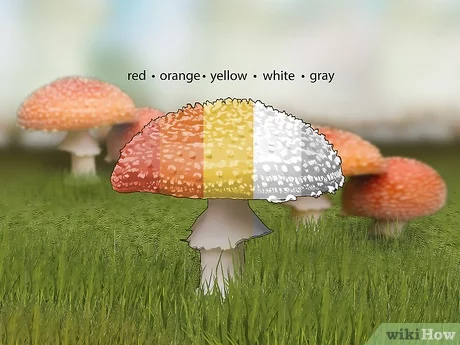
As you stroll through even a short distance in a woodland area, it’s likely that you’ll notice some mushrooms. It’s not uncommon for small mushrooms to grow in your garden, on your path, or right in the middle of a field. Mushrooms are fascinating: humidity, shade, a few spores, and… growth begins.
As autumn arrives, news reports highlight cases of poisoning and intoxication from mushrooms. Yet, the fundamental rule remains the same: if you’re unsure about the edibility of a mushroom, don’t eat it! In Europe, around 10,000 food poisonings caused by poisonous mushrooms are reported annually, while deaths range between 200 and 300 each year.
When we talk about edible or poisonous mushrooms, nothing should be assumed!
There are 100,000 different species of mushrooms, and before evaluating the edibility of a mushroom colony you’ve discovered, it’s better to consult an expert and hear multiple opinions. In Europe, there thrive 50,000 species of fungi, and only 50 are poisonous.
Understanding Poisonous Mushrooms: A Guide
The topic of poisonous mushrooms is always current, botanists and mycologists over the years have sought a schematic model for identifying poisonous mushrooms but unfortunately, it’s true that the only way to identify a poisonous mushroom with certainty consists in knowing the different species and being able to assign them a name.
If you plan to go mushroom hunting, you should know just a few species (and really well) rather than knowing many but only superficially. If you intend organizing a mushroom collection, focus on the most common species and those that you’ll definitely be able to recognize.
When trying to identify poisonous mushrooms, we must forget popular beliefs. One of the most widespread and also most wrong myths is that white, delicious-tasting mushrooms are necessarily edible: utterly false!
The Amanita primaverile is one of the most dangerous poisonous mushrooms, it’s white, and has a good taste but should never be picked or destroyed: Italian law protects poisonous or deadly fungi because they’re essential to maintaining our ecosystems.
Another incorrect belief consists in believing that the discoloration of silverware, garlic, or onion after cooking a mushroom makes it toxic. Many poisonous mushrooms don’t cause any reactions and don’t darken silverware, garlic, or onions!
It’s equally false to think that if a mushroom is eaten by other animals such as slugs or insects, it is “safe”: every organism has different reactions, so what might be safe for a slug (or for a dog!) can be poisonous for us humans.
Setting aside popular beliefs, an excellent starting point for learning to identify poisonous mushrooms is in manuals illustrated. Among the available volumes we recommend three of them to answer various needs.
Mushrooms from our mountains, forests and fields. Good, bad, toxic and poisonous
Price: 6.80 €
Written by the President and Scientific Coordinator of Orto Europa Group Micologico and member of the National Scientific Committee of Bresadola Association Micologica.
Strengths: a book about mushrooms written by an enthusiastic mushroom photographer.
All Mushrooms. Search for them, recognize them, collect them
Price: 12.67 €
Contains 200 illustrated sheets with photos and comparisons between poisonous fungi and edible fungi that resemble each other! For every mushroom are explained its characteristics such as preferred habitat, morphology (cap, stem, flesh), edibility and/or toxicity, similarities and varieties, season of growth, etymology, and curiosities.
Complete Guide to Identifying Mushrooms. With DVD
Price: 21.17 €
A very complete and easy-to-use book. The manual contains illustrations and recognition sheets. Even in this case, there are sheets that compare poisonous fungi with their corresponding edible ones highlighting the characteristics that can help recognize poisonous species. Alongside the book is a DVD packed with practical advice for the correct search and collection of mushrooms.
Identifying Poisonous Mushrooms: Photos
To help you identify poisonous mushrooms, we suggest taking a close look at our photo gallery dedicated to “Poisonous Mushrooms: How to Identify Them”, the gallery collects photos of few poisonous mushrooms, compared to the sheets suggested by books are a small quantity but are a simple starting point. Don’t think about going mushroom hunting with only the knowledge you’ve gained in this article!
You might also find interesting our article on Prugnolo Fungo.
Mushrooms that are edible
Poisonous Mushrooms
The Importance of Proper Identification
If you’re caught eating poisonous mushrooms, it can lead to serious illness or even death. In fact, according to the Food and Drug Administration (FDA), there have been cases where people have died from mushroom poisoning. The FDA advises that if a mushroom has not been previously identified as edible, it should be avoided.
Warning Signs of Poisonous Mushrooms
Some poisonous mushrooms can cause symptoms like nausea, vomiting, diarrhea, abdominal pain, and even organ failure in severe cases. In some cases, the symptoms may appear within minutes or hours after consumption. Some common signs to watch out for include:
- Skin rash
- Swelling of the face
- Difficulty breathing
Poisonous Mushroom Species
There are many species of poisonous mushrooms, and it’s essential to know which ones to avoid. Here are some of the most common poisonous mushroom species:
- Death Cap (Amanita phalloides): One of the deadliest mushrooms in the world.
- Destroying Angel (Amanita virosa): Another highly toxic mushroom that can be fatal if ingested.
- False Morel (Gyromitra esculenta): Contains a toxin called gyromitrin, which can cause vomiting, diarrhea, and abdominal pain.
- Deadly Webcap (Cortinarius rubellus): A highly toxic mushroom that can cause kidney failure.
Precautions for Mushroom Foraging
If you plan to go mushroom foraging, here are some precautions to take:
- Research: Learn about the different species of mushrooms and their habitats.
- Identification: Bring a guidebook or consult with an expert before eating any mushroom.
- Caution: Avoid touching or handling unknown mushrooms.
Conclusion
Recognizing poisonous mushrooms requires knowledge, caution, and attention to detail. By understanding the differences between edible and poisonous mushrooms, you can enjoy the benefits of foraging while minimizing the risks. Don’t assume that a mushroom is safe just because it looks like something you’ve eaten before!
Mushrooms are a fascinating topic, but they should not be taken lightly.


