
Introduction to the Tectonic Plates Theory
Have you ever wondered how continents move? This question has puzzled many, and I’m excited to share with you the fascinating theory of tectonic plates. In this article, we’ll delve into the world of geology and explore the concept of plate tectonics, its significance, and how it helps us understand our dynamic planet.
The Origins of Plate Tectonics Theory
The idea of plate tectonics emerged in the late 1960s and early 1970s, building upon research conducted by scientists on oceanic floors. By studying the chemical and geological characteristics of these plates, researchers began to comprehend how continents have shifted over time.
The Unifying Power of Plate Tectonics
One of the most compelling aspects of plate tectonics is its ability to unify disparate discoveries and theories. By grounding these findings in a single framework, plate tectonics provides a cohesive explanation for various geological phenomena. This unified theory helps us better understand the complex interactions between the Earth’s interior and surface.
The Composition and Movement of Tectonic Plates
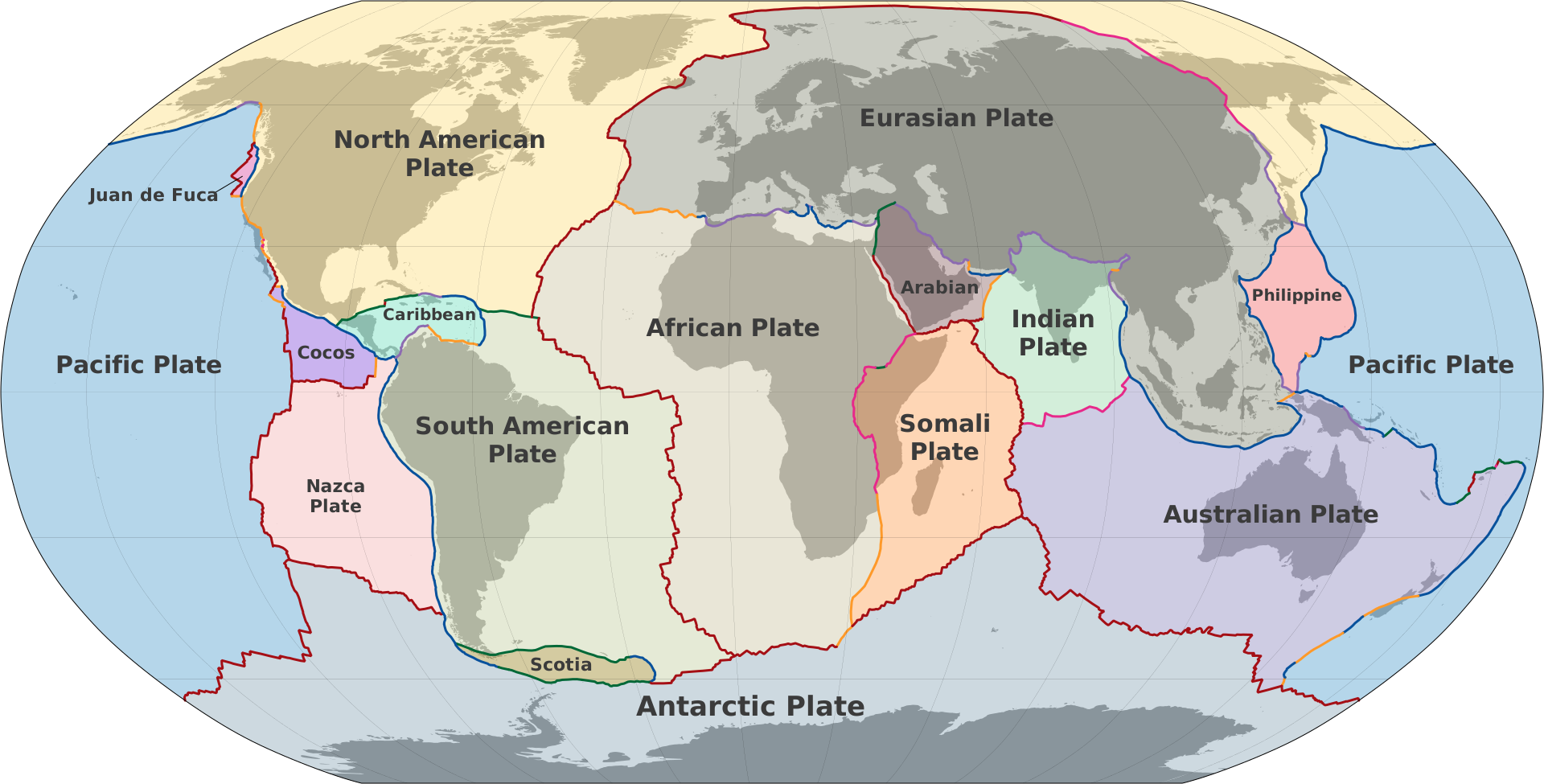
Plate tectonics postulates that the lithosphere (the outermost solid layer of the Earth) is fragmented into 20 large plates, or “tectonic plates.” These rigid bodies glide over the asthenosphere, a layer beneath the lithosphere, moving horizontally. As they move, these plates carry continents and oceans with them.
Properties of Tectonic Plates
It’s essential to recognize that tectonic plates possess specific characteristics:
- They can fracture if subjected to sufficient force.
- They can collide or pull away from each other.
- Their movement can result in the formation of mountains (orogenesis) and volcanic activity along their boundaries.
Key Principles of Plate Tectonics
To grasp the significance of plate tectonics, consider the following fundamental concepts:
- Continental Drift: The movement of continents relative to each other.
- Sea Floor Spreading: The creation of new oceanic crust at mid-ocean ridges.
Major Plates and Their Boundaries
The seven largest tectonic plates are:
- Pacific Plate
- North American Plate
- South American Plate
- Eurasian Plate
- African Plate
- Indo-Australian Plate
- Antarctic Plate
These plates interact at their boundaries, leading to a range of geological processes.
Visualizing Plate Tectonics
Instead of relying on static diagrams, we propose using interactive tools like talking globes (starting from $80) that provide up-to-date information and insights into various countries’ populations, languages, currencies, time zones, and local specialties. These features add a dynamic touch to our exploration.
Fissures and Fault Lines
When studying plate tectonics, we encounter fault lines with different characteristics:
- Transcurrent faults: Moving horizontally.
- Transform faults: Relieving stress between plates.
These movements can lead to earthquakes and other seismic phenomena.
The African Rift Valley
In Africa, a significant fracture has formed in the Earth’s crust, stretching 20 km (12.4 miles) in length and reaching depths of up to 40 km (24.8 miles). This feature offers an opportunity to revisit the concept of plate tectonics.
Consequences of Plate Tectonics
The movement of tectonic plates has significant consequences for our planet:
- Mountain building: The collision of plates can lead to the formation of mountains, such as the Himalayas.
- Volcanic eruptions: The movement of plates can result in volcanic activity, such as earthquakes and lava flows.
Geological Events and Their Relationship with Plate Tectonics
Plate tectonics plays a crucial role in shaping our planet’s geology. Understanding its principles and concepts helps us better comprehend various geological events, including:
- Earthquakes: The movement of plates can lead to earthquakes, which are caused by the sudden release of energy.
- Volcanic eruptions: Plate tectonics is responsible for volcanic activity, as the movement of plates can result in magma rising to the surface.
Evidence Supporting Plate Tectonics
The theory of plate tectonics has been extensively supported by various lines of evidence:
- Fit between continents: The shapes and edges of continents fit together like a jigsaw puzzle.
- Mid-ocean ridges: The existence of mid-ocean ridges, where new oceanic crust is created, provides strong evidence for plate tectonics.
Future Research Directions
While the theory of plate tectonics has made significant progress in explaining geological phenomena, there are still many areas that require further research:
- Plate boundary interactions: The study of how plates interact with each other at their boundaries is crucial to understanding plate tectonics.
- Earth’s internal dynamics: Further research is needed to better comprehend the Earth’s internal dynamics and how they influence plate tectonics.
Conclusion
The theory of plate tectonics has revolutionized our understanding of the Earth’s geology, providing a cohesive explanation for various phenomena. By grasping these fundamental principles and concepts, we can better comprehend the dynamic nature of our planet.


