
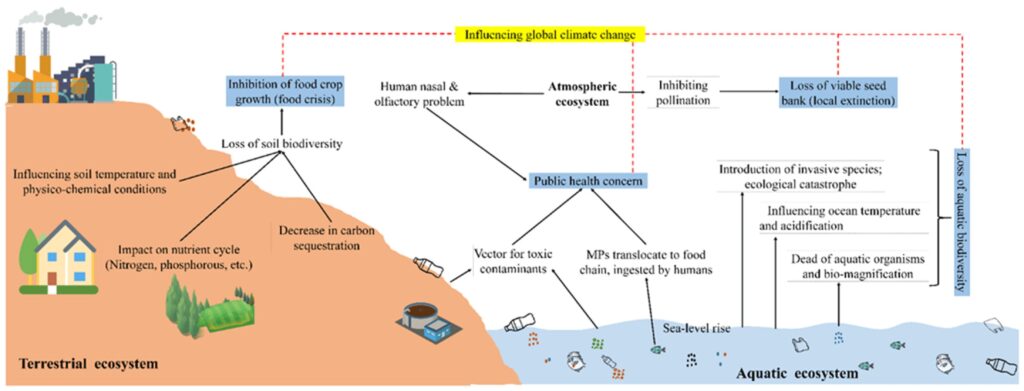
As the world grapples with the consequences of plastic pollution, a stark warning has been sounded by the World Wildlife Fund (WWF). Without a drastic change in course, an estimated 104 million tons of plastic will be released into the environment by 2030, posing catastrophic risks to ecosystems, economies, and human health.
The Alarming Numbers
The WWF’s new report, “Responsabilità e rendicontazione,” highlights the staggering statistics. Since 2000, global plastic production has surpassed the cumulative output of all previous years. The production of virgin plastic has increased by 200 times since 1950, with an annual growth rate of 4% until 2000. In 2016, plastic production reached 396 million tons, equivalent to 53 kg per every person on the planet. These quantities alone in 2016 caused emissions of approximately 2 billion tons of CO2, accounting for 6% of total emissions.
The Future of Plastic: A Growing Concern
As predictions suggest that plastic production may increase by 40% by 2030, the prospect appears daunting. Currently, one-third of plastic waste, equivalent to 100 million tons, has been dispersed into the environment, causing soil pollution, freshwater contamination, and marine pollution.
The Devastating Impacts of Plastic Pollution
According to the report, “today 37% of all plastic waste is not managed or is poorly managed, increasing the risk of becoming a source of environmental pollution.” The consequences are far-reaching. Plastic pollution damages ecosystems, kills wildlife, and contributes to climate change. Each year, CO2 emissions grow due to plastic production and burning.
Economic and Health Impacts
The effects on the environment have direct economic and health implications. Fishing, maritime commerce, and tourism are negatively impacted, while human and animal species ingest increasing amounts of microplastics through food and water, with unknown long-term effects.
A Call to Action from WWF
Based on the study’s findings, the WWF launches an urgent appeal to governments, industries, and citizens to tackle the plastic crisis. Despite current projections indicating that the crisis will worsen, the organization believes it is possible to halt it by adopting a unified and shared approach. WWF emphasizes that the turning point lies in a coordinated and timely action from all parties involved, which would counteract the uncontrolled growth of plastic waste.
Strategies for Reducing Plastic Waste
The WWF suggests several key strategies:
- Ban single-use plastics, such as straws and bags, to reduce demand by 40% by 2030.
- Eliminate “take away” culture, which would decrease plastic waste in landfills by 188 million tons (57% less than current levels).
- Develop recycling strategies aimed at recycling 60% of plastic waste (approximately 113 million tons).
The development of reusable products and the selection of suitable plastics for recycling will be essential. This would increase the capacity for recycling, benefiting both the environment and the economy.
A Plastic-Free Nature: The Ultimate Goal
To achieve a “natura plastic-free” scenario, the WWF recommends developing effective strategies to recycle 60% of all plastic waste (approximately 113 million tons). By adopting these measures, we can create an environmentally friendly and economically viable future.
Government Initiatives and Regulations
Governments play a vital role in addressing the plastic crisis. Implementing policies such as extended producer responsibility, taxation on single-use plastics, and banning certain types of plastics could help reduce waste. Governments must also prioritize investment in recycling infrastructure to ensure that the benefits of recycling are shared equitably among communities.
Private Sector Innovation
The private sector has a critical role to play in reducing plastic waste through innovation. Companies can invest in sustainable packaging solutions, improve supply chain efficiency, and design products for recyclability. Encouraging businesses to adopt circular economy practices will help create a more environmentally friendly production system.
Community Engagement and Education
Education and awareness-raising are crucial components of addressing the plastic crisis. Communities must be empowered to make informed decisions about their waste management practices. Public engagement campaigns can encourage behavioral change, while educational programs can equip people with knowledge on sustainable living practices.
Policy Recommendations for Cities
Cities have a unique role in addressing the plastic crisis due to their scale and impact. Municipalities can implement policies such as banning single-use plastics, reducing plastic packaging, and promoting recycling infrastructure development. Cities must also prioritize waste management planning, ensuring that residents are informed about available services and recycling options.
The Role of International Cooperation
Global coordination is essential in tackling the plastic crisis. International agreements and frameworks can facilitate cooperation between countries to address plastic pollution. Organizations such as the United Nations Environment Programme (UNEP) and the World Health Organization (WHO) must continue their efforts in monitoring global plastic pollution trends and promoting sustainable practices.
Solutions for a Sustainable Future
Implementing effective measures to reduce plastic waste is essential to achieve a sustainable future. By adopting strategies such as banning single-use plastics, eliminating “take away” culture, and developing recycling strategies, we can mitigate the impacts of plastic pollution on ecosystems, economies, and human health.


