
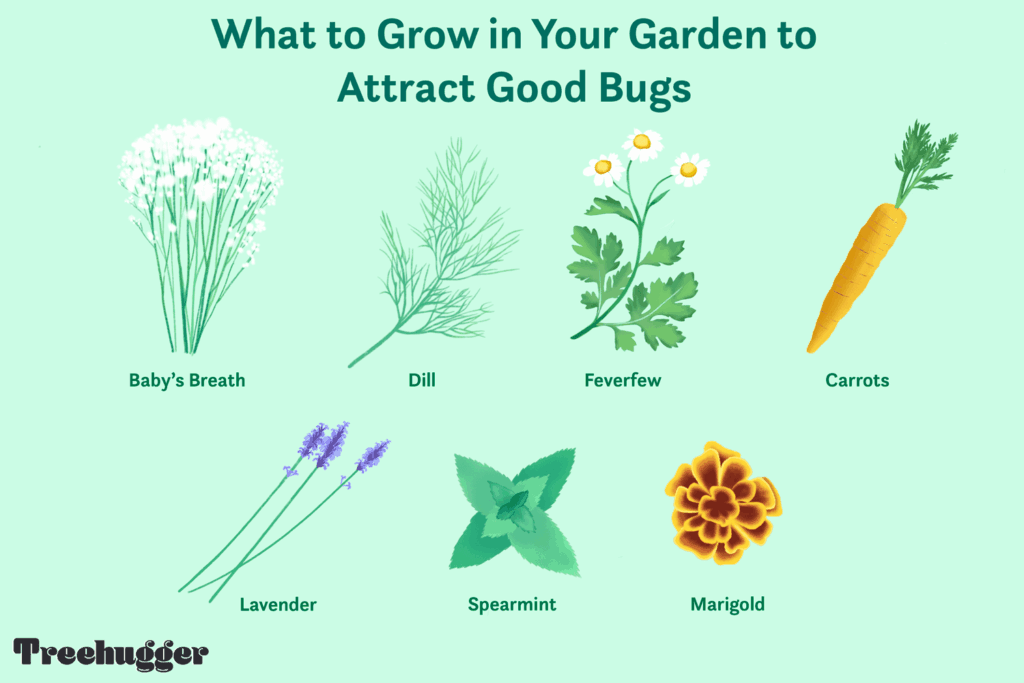
Have you ever heard of biological pest control? The term refers to a technique that leverages the relationships between living organisms to contain populations of pests. In essence, this approach aims to increase the presence of beneficial insects like ladybugs, bees, and lacewings to combat pesky pests.
But how can we boost these beneficial insects to weaken or at least deter those unwanted guests? That’s where plants come in – specifically, certain species that attract beneficial insects in our gardens. Let’s explore which ones are worth growing.
Planting Beneficial Insects: The Ultimate Garden Allies
The key benefit of biological pest control is the reduction or elimination of chemical pesticides and substances, which not only harm beneficial insects but also pests themselves. By incorporating plants that attract these helpful allies, we can create a more balanced ecosystem in our gardens.
So, what are some plants that attract beneficial insects? Here’s an overview:
Taraxacum officinale: The Dandelion of Life
Also known as the “dental plant” or “lion’s tooth,” taraxacum officinale is a versatile plant with numerous benefits. One of its most notable properties is its ability to attract ladybugs, making it an excellent addition to any garden.
Taraxacum officinale has been used for centuries in traditional medicine, and its properties have been extensively studied. Its roots contain compounds that exhibit depurative and anti-inflammatory effects. The plant’s versatility and medicinal properties make it a valuable asset to any garden ecosystem. In fact, research suggests that the compound taraxasterol found in taraxacum officinale may possess potential anti-cancer properties.
In addition to its health benefits, taraxacum officinale is also a great natural fertilizer for your plants. As it breaks down, it releases nutrients into the soil, providing essential micronutrients and macronutrients for plant growth. This natural process not only enhances soil fertility but also promotes healthy microbial communities.
Taraxacum officinale can be grown as a perennial or annual herb, depending on the climate. In temperate climates, it thrives in partial shade to full sun conditions and prefers well-drained soil with moderate moisture levels. You can harvest the leaves for salads, add them to smoothies, or use them in homemade teas.
For more information on using taraxacum officinale, please read our article “The Many Uses of Taraxacum Officinale”.
Orticaria: The Cabbage Family
This plant is a dear friend to ladybugs, making it an excellent natural antiparasitic agent. Its macerated form has been discussed at length in previous articles; however, its application is multifaceted and can be used to combat pests like aphids (beans, peas, lentils, citrus fruits, pears, plums, peaches, and cherries) and the red spider mite (tomatoes, zucchini, melons, citrus fruits).
Orticaria’s macerated form has been shown to exhibit antiparasitic properties, effectively repelling pests from plants. This makes it a valuable addition to any garden, particularly for those growing fruit trees or vegetables.
In addition to its pest-repelling abilities, orticaria also has antimicrobial and anti-inflammatory properties. Its roots contain compounds that exhibit antibacterial and antifungal effects, making it a natural remedy for skin conditions like eczema and acne.
Orticaria is relatively easy to grow, thriving in partial shade to full sun conditions with well-drained soil and moderate moisture levels. You can harvest the leaves for salads, add them to smoothies, or use them in homemade teas.
For more information on using orticaria, please read our article “The Power of Orticaria: A Natural Solution”.
Potentilla fruticosa: A Delightful Companion Plant
Not only is this plant a visual delight, but it’s also a favorite among ladybugs! By incorporating potentilla fruticosa into your garden design or creating a small border, you can attract these beneficial insects and create a haven for them.
Potentilla fruticosa is an adaptable shrub that thrives in various conditions and has been used as an ornamental plant. Its delicate white flowers are a favorite among bees and butterflies, while its leaves provide a natural food source for ladybugs and lacewings.
In addition to its beauty and beneficial insects, potentilla fruticosa also has medicinal properties. Its roots contain compounds that exhibit anti-inflammatory and antimicrobial effects, making it a natural remedy for skin conditions like eczema and acne.
Potentilla fruticosa can be grown as a shrub or hedge, depending on the desired shape and size. It thrives in partial shade to full sun conditions with well-drained soil and moderate moisture levels. You can prune the plant regularly to maintain its desired shape and promote healthy growth.
For more information on the uses and benefits of potentilla fruticosa, please read our article “The Forgotten Beauty of Potentilla Fruticosa”.
Salvia officinalis: The Bee Magnet
These plants are a bee’s paradise, drawing them in with their salvias’ allure. Beyond their beauty, Salvia officinalis is renowned for its medicinal properties in homeopathy. This perennial plant can survive for over 15 years naturally and up to 5-7 years in cultivation.
Salvia officinalis has been used for centuries in traditional medicine, and its properties have been extensively studied. Its leaves contain compounds that exhibit antimicrobial and anti-inflammatory effects, making it a natural remedy for skin conditions like eczema and acne.
In addition to its medicinal properties, salvia also attracts beneficial insects like bees and butterflies. Its flowers are a rich source of nectar, providing essential nutrients for these pollinators.
Salvia officinalis can be grown as a perennial herb, thriving in partial shade to full sun conditions with well-drained soil and moderate moisture levels. You can harvest the leaves for teas, add them to salads, or use them in homemade remedies.
For more information on the uses and benefits of salvia, please read our article “The Healing Properties of Salvia Officinalis”.
Calendula: The Unsung Hero
This plant is a valuable ally in any garden, with its roots emitting compounds that repel certain pests. But what’s truly remarkable about calendula is how its petals attract lacewings – beneficial insects that feed on aphids and other pests.
While it may not be as charismatic as some of the other plants on this list, calendula is indeed a valuable asset to any garden ecosystem. Its petals are rich in antioxidants and have anti-inflammatory properties, making them a natural remedy for skin conditions like eczema and acne.
Calendula can be grown as an annual herb or perennial flower, depending on the desired shape and size. It thrives in full sun conditions with well-drained soil and moderate moisture levels. You can harvest the petals for salads, add them to smoothies, or use them in homemade remedies.
For more information on the uses and benefits of calendula, please read our article “The Healing Properties of Calendula”.
Tulipa: The Bee’s BFF
This fragrant, delicate flower is an attractive addition to any garden, drawing in bees like nobody’s business! Moreover, tulip bulbs contain compounds that provide a haven for lacewings.
While often overlooked, these plants are indeed valuable allies in the battle against pests. Tulips have been used for centuries as ornamental flowers and natural remedies. Their bulbs contain compounds that exhibit anti-inflammatory and antimicrobial effects, making them a natural remedy for skin conditions like eczema and acne.
Tulip bulbs can also be harvested and consumed raw or cooked to release their medicinal properties. Some species of tulips have been used in traditional medicine to treat various ailments, including respiratory issues and digestive problems.
Tulips come in a wide variety of colors and species, making them an excellent choice for gardeners looking to attract beneficial insects. They thrive in full sun conditions with well-drained soil and moderate moisture levels. You can harvest the flowers for arrangements or use them in natural remedies.
For more information on the uses and benefits of tulips, please read our article “The Hidden Beauty of Tulips”.
Conclusion
By incorporating these beneficial plants into your garden design, you can create an ecosystem that attracts helpful insects like ladybugs, bees, lacewings, and more! This approach not only reduces the need for chemical pesticides but also promotes a healthier balance in nature.
In addition to their beneficial properties, these plants are also valuable allies in the battle against pests. They provide essential nutrients for beneficial insects, creating a natural food source that supports healthy populations of beneficial organisms.
By growing these plants in your garden, you’re not only promoting a healthier ecosystem but also contributing to a more sustainable future. With a little creativity and planning, you can create a haven for beneficial insects that will reward you with a bountiful harvest and a thriving garden ecosystem.
Recommended Reading
- “The Many Uses of Taraxacum Officinale”
- “The Power of Orticaria: A Natural Solution”
- “Potentilla Fruticosa: Characteristic Analysis and Potential Uses”
- “Fiordaliso: Fiore Curativo”
- “Tiempo: Características y Propiedades”
Published by Anna De Simone on March 14, 2023
Please note that the above article is for informational purposes only. It’s always recommended to consult with a healthcare professional before using any new herbal remedy or treatment. Additionally, it’s essential to follow proper gardening practices and use these plants responsibly in your garden ecosystem.


