
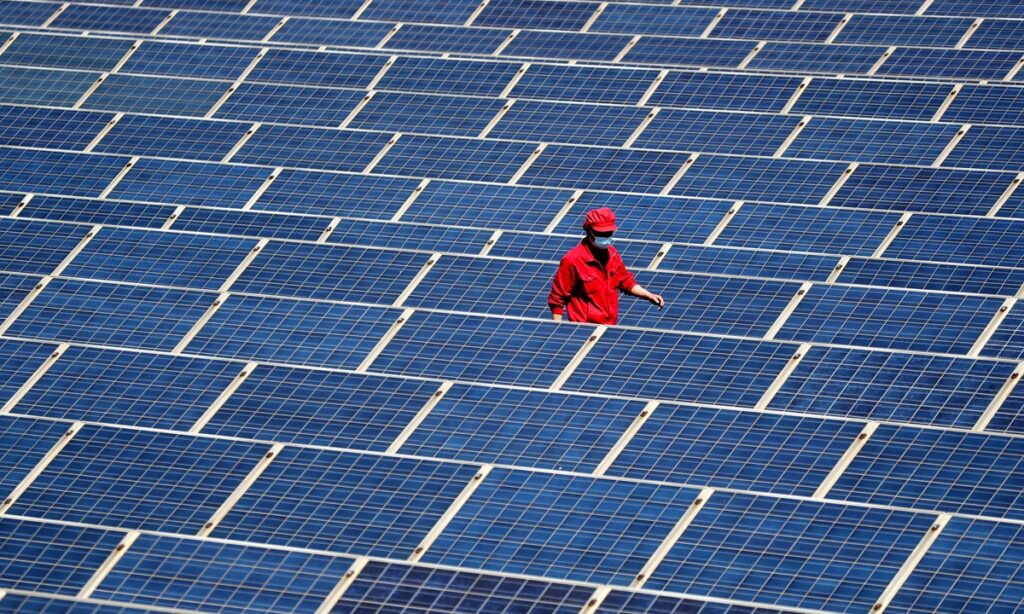
The world of solar panel manufacturing has long been dominated by Asian countries, particularly China. With the increasing demand for renewable energy, China’s dominance in this sector is only growing stronger.
A Brief History of Chinese Solar Panel Manufacturing
China has been a leader in solar panel production for over two decades. The country’s commitment to renewable energy and its large-scale investments in solar panel manufacturing have made it the top producer of solar panels globally. According to recent statistics, China produces over 70% of the world’s solar panels, with the majority being exported to countries around the globe.
Why is China So Good at Making Solar Panels?
Several factors contribute to China’s success in solar panel manufacturing:
- Low Labor Costs: China has a large and relatively inexpensive workforce, which enables manufacturers to keep production costs low.
- Government Support: The Chinese government provides significant financial support to the solar industry through subsidies and tax breaks.
- Large-Scale Manufacturing Capacity: China has invested heavily in its manufacturing infrastructure, allowing it to produce large quantities of solar panels at a high level of quality.
How Does China’s Dominance Affect the Solar Industry?
China’s dominance in solar panel production has significant implications for the global solar industry:
- Competition from Chinese Manufacturers: The influx of low-cost Chinese solar panels into the global market has put pressure on other manufacturers, leading to reduced prices and increased competition.
- Trade Agreements and Tariffs: Many countries have implemented tariffs or other trade restrictions to protect their domestic solar industries from cheap imports. This has led to a complex web of trade agreements and regulations that can impact global supply chains.
Case Studies: How Chinese Solar Panel Manufacturers Have Adapted
Several Chinese solar panel manufacturers have adapted to changing market conditions by expanding their product portfolios:
- JA Solar: Initially, JA Solar focused on producing high-quality cells but later diversified into manufacturing complete modules.
- Hareon Solar: Like JA Solar, Hareon Solar started by focusing on cell production before entering the module market.
The European Perspective: Challenges and Opportunities
European countries face unique challenges in responding to China’s dominance in solar panel production:
- Trade Agreements and Tariffs: Many EU countries have implemented tariffs or other trade restrictions to protect their domestic solar industries from cheap imports.
- Investment in Research and Development: To remain competitive, European manufacturers are investing heavily in R\&D to improve the efficiency and reduce costs of their products.
Consequences of China’s Dominance
China’s dominance in solar panel production has far-reaching consequences for the global energy landscape:
- Reduced Dependence on Imported Fossil Fuels: The growth of renewable energy sources, including solar power, reduces our reliance on imported fossil fuels and helps to mitigate climate change.
- Increased Energy Security: By developing domestic capacity in solar panel production, countries can reduce their dependence on foreign energy imports and improve their energy security.
- Economic Opportunities: The growth of the solar industry creates new economic opportunities for manufacturers, installers, and other stakeholders.
Technological Advancements
Advances in technology have played a crucial role in China’s dominance in solar panel production:
- Efficiency Improvements: Researchers have made significant strides in improving the efficiency of solar panels, which has led to cost reductions and increased adoption.
- Cost Reductions: The development of new manufacturing technologies has enabled the reduction of costs, making solar panels more competitive with traditional energy sources.
- Innovative Materials: The discovery of innovative materials, such as perovskites, has opened up new possibilities for improving the efficiency and reducing the cost of solar panels.
The Future of Solar Panel Manufacturing
As the global demand for renewable energy continues to grow, it is likely that China’s dominance in solar panel production will endure. However, there are also opportunities for other countries to emerge as major players:
- Emerging Markets: Countries like India, Brazil, and Vietnam are investing heavily in solar panel manufacturing and may become significant competitors to China in the future.
- Innovation and R\&D: The development of new technologies and materials will continue to drive innovation in the solar industry, creating opportunities for countries with a strong focus on research and development.
- Policy and Regulation: Governments around the world are implementing policies and regulations that support the growth of the renewable energy sector, including solar panel manufacturing.
Conclusion
China’s dominance in solar panel production is a complex issue with both benefits and drawbacks. As the global energy landscape continues to evolve, it will be crucial for manufacturers and policymakers to address these challenges and opportunities head-on.
Frequently Asked Questions (FAQs)
-
What drives China’s success in solar panel production?
Low labor costs, government support, and large-scale manufacturing capacity all contribute to China’s dominance in the solar industry.
* How does China’s dominance affect the global solar industry?The influx of cheap Chinese solar panels has put pressure on other manufacturers, leading to reduced prices and increased competition.
* What are some notable examples of Chinese solar panel manufacturers that have adapted to changing market conditions?Companies like JA Solar and Hareon Solar have diversified their product portfolios by entering the module market.
* How do European countries respond to China’s dominance in solar panel production?EU countries have implemented tariffs or other trade restrictions, while investing heavily in R\&D to improve efficiency and reduce costs.
* What are some challenges facing European manufacturers in responding to China’s dominance?The main challenge is adapting to the pace of technological change, as well as addressing the impact of cheap imports on their businesses.
* How can policymakers support the development of a more competitive solar industry globally?Policymakers can implement policies that promote innovation and trade competitiveness, while also ensuring fair competition in the global market.


