
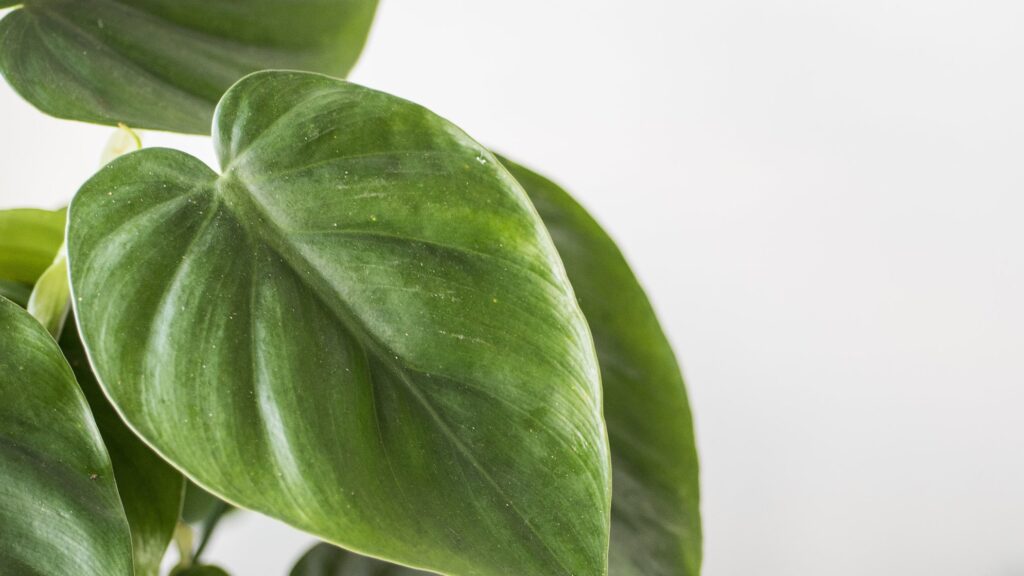
As the name suggests, the Philodendro is a plant that loves trees. Its own name, derived from the Greek words “philos” (love) and “dendron” (tree), reveals its instinctual nature of climbing onto trees like they are embracing them in a loving gesture. However, this plant can thrive just as well on shelves or in pots, provided with support or letting it cascade down to become a beautiful front door decoration.
Philodendro: The Plant
The Philodendro is one of the most popular indoor plants in Europe and Italy, but there are over 500 species that differ from each other in terms of colors, dimensions, and climate preferences. All of these species originated from South America, with the majority being climbing varieties.
The typical climbing type has slender stems and fleshy leaves that are oval or heart-shaped. Another unique feature of these climbing types is their many internode-like roots that wrap around any available support they find.
Less common upright species have longer and more pointed leaves, often with brighter colors and smaller dimensions.
Philodendro: Varieties
Going through all the existing varieties would be impossible, but we can start by exploring some of the most commonly found ones in stores or those that have particularly caught our eye.
The Philodendron hederaceum (also known as Scandens or Oxycardium) is one of the most widely available species. It has dense and dark green leaves that are mostly monochromatic, except for some cultivars like Brazil, which also display yellow stripes in the center. This plant thrives well even in low-light conditions.
The Philodendron hastatum (or Domesticum), native to Brazil, develops large, fleshy, and bright green leaves. It’s a robust species that grows quite quickly and can reach almost two meters in height.
Another common variety is the Philodendron bipinnatifidum (Selloum). This plant has impressive dimensions with leaves that are up to 60 cm long and 45 cm wide. With its large size, it can be challenging to keep it indoors, but there’s a more compact version available called ‘Xanadu’, which is widely available in stores.
Other Types of Philodendron
There are many other types of Philodendron beyond these three main varieties. Some notable examples include:
- Philodendron Speciosum: Similar to bipinnatifidum with leafy edges and teeth-like margins.
- Philodendron Erubescens: A climbing species up to 2 meters tall, native from Colombia, easy to care for, and has beautiful, dark green leaves that appear almost metallic in the light.
- Philodendron tuxtlanum: Also known as Orecchie di Elefante. It’s a small climber with slow growth.
These are just a few of the many Philodendron varieties out there, but this gives you an idea of the diversity within the family.
The Fruit-Producing Philodendro
Not all varieties of Philodendro produce fruit or flowers, and those that do tend to be less common. The ones that do are fortunate enough to offer edible fruits.
When Philodendros are cultivated in outdoor environments with careful attention from their caretakers, they gift us beautiful, green, fruit-like structures (which are almost as large as the leaves).
While it’s challenging to get these fruits from indoor Philodendros, you can at least try growing them in pots outside where they’ll be able to soak up plenty of sunlight.
Philodendro: A Symbol of Adaptability
One common trait among all Philodendro varieties is their ability to adapt to any indoor environment. They create a beautiful green corner that’s easy to care for and can thrive even in less-than-ideal conditions.
Some popular species used in Italy include the Scandens and Hastatum. The Philodendro has versatile leaves, often with different colors or patterns.
Philodendro Gigante
There are larger varieties of Philodendro that resemble small trees when they grow upright. These have more substantial stems and sometimes irregular leaf edges. Less common in Italy, these types require outdoor cultivation to reach their full potential and can grow up to two meters tall.
One notable example is the Monstera deliciosa, a climbing plant similar to Philodendro but not part of the same family. When grown indoors, it can become gigantic if left unchecked.
Philodendro Price
Beyond its aesthetic appeal, Philodendros are also relatively affordable, with pots starting at around €10 in stores and online.
When growing Philodendras that climb, you’ll need to provide additional support like plastic tubes wrapped in sponge. Regular watering during the summer is necessary, while a less frequent but thorough watering in winter should suffice.
A bright spot without direct sunlight can be ideal for these plants.
How to Care for Your Philodendro
To get the most out of your plant and keep it healthy, here are some tips:
- Provide enough light: Most Philodendros require at least 4-6 hours of indirect sunlight per day. East or west-facing windows are ideal.
- Water carefully: Overwatering is a common mistake that can lead to root rot and other problems. Check the soil moisture by sticking your finger into it, and water only when necessary.
- Maintain humidity: Philodendros prefer a humid environment, but they can adapt to average humidity levels. You can use a humidifier or group plants together to create a microclimate.
- Fertilize sparingly: Feed your Philodendro with a balanced fertilizer during the growing season (spring and summer). Dilute the fertilizer to half the recommended strength to avoid burning the roots.
- Prune regularly: Pruning helps maintain the plant’s shape, promotes healthy growth, and encourages new leaves to emerge. Remove any dead or damaged leaves, and trim back overgrown stems.
Conclusion
The Philodendro is a versatile and adaptable plant that can thrive in a variety of environments. With its wide range of species and cultivars, there’s something for every gardener and homeowner. By following these tips and choosing the right variety for your space, you can enjoy the beauty and benefits of this amazing plant.
Interesting Facts
- Philodendros are toxic to cats and dogs if ingested.
- The heart-shaped leaves of some Philodendro species have been used in traditional medicine to treat various ailments.
- Philodendros can be trained to climb up trellises or other supports, making them a great option for small spaces.


