
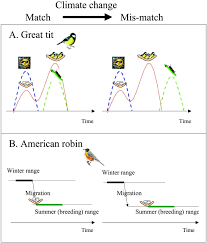
As the world grapples with the challenges of climate change, it’s essential to understand the impact of rising temperatures on our planet’s ecosystems. One crucial aspect of this understanding is phenology, the study of the timing of recurring biological events such as plant flowering, migration, and breeding. In this article, we’ll delve into the world of phenology, exploring its definition, measurement methods, and applications in understanding climate change.
What is Phenology?
Phenology is the study of the relationships between environmental factors, such as temperature, humidity, and photoperiod, and biological events like plant growth, flowering, and migration. It’s a crucial area of research, as it helps us understand how climate change affects ecosystems and biodiversity. By studying phenology, scientists can identify patterns and trends in biological events that can inform our understanding of climate change impacts.
Why is Phenology Important?
Phenology plays a critical role in understanding the impacts of climate change on ecosystems. Changes in temperature and precipitation patterns can disrupt the delicate timing of biological events, leading to shifts in species distribution, behavior, and extinction risk. By studying phenology, scientists can:
- Identify early warnings signs: Phenological changes can serve as early warning signs for climate-related disruptions.
- Inform conservation efforts: Understanding phenology helps develop effective conservation strategies for vulnerable species.
- Improve climate modeling: Phenological data is essential for improving climate models and predicting future changes.
How is Phenology Measured?
Phenological measurements can be made using various methods, including:
- Field observations: Scientists collect data on biological events through direct observation in the field.
- Remote sensing: Satellite and airborne sensors are used to measure phenological indicators like vegetation index (NDVI).
- Modeling: Computer models are employed to simulate and predict phenological changes.
Phenological Metrics: A Key to Understanding Climate Change
Several metrics have been developed to quantify phenological changes, including:
- Start of Season (SOS): The date when plants begin growing.
- End of Season (EOS): The date when plants stop growing.
- Length of the Season (LOS): The duration between SOS and EOS.
- Maximum Vegetation Index (MAX_VI): The highest NDVI value during the growing season.
These metrics provide a comprehensive framework for understanding phenological changes, enabling scientists to identify patterns and trends in biological events.
Applications of Phenology
Phenology has numerous applications in various fields, including:
- Agriculture: Understanding phenological changes helps farmers plan crop management strategies.
- Conservation: Identifying vulnerable species and habitats informs conservation efforts.
- Climate modeling: Incorporating phenological data improves climate models and prediction accuracy.
Case Studies: Phenology in Action
Phenology is not just a theoretical concept; it has real-world applications. Let’s take a look at some case studies that illustrate the importance of phenology:
- Changes in Planting Dates: In the United States, warmer temperatures are causing plants to bloom earlier. This shift affects farmers’ planting dates and crop yields.
- Migration Patterns: Changes in temperature and precipitation patterns affect bird migration patterns, leading to shifts in species distribution.
- Fisheries Management: Understanding phenological changes helps fisheries managers predict fish populations and optimize fishing strategies.
Challenges and Future Directions
While significant progress has been made in understanding phenology, challenges persist:
- Data availability: Limited data availability, particularly for remote regions, hinders research progress.
- Methodological limitations: Current methods have limitations, requiring further refinement and development.
To address these challenges, researchers are exploring new approaches, such as:
- Machine learning algorithms: Improved machine learning techniques can enhance phenological analysis.
- Citizen science initiatives: Engaging citizens in phenological research expands data availability and community engagement.
International Collaboration: The Future of Phenology
Phenology is a global phenomenon that requires international collaboration to fully understand its implications on ecosystems and climate change. By sharing knowledge, resources, and expertise, researchers from around the world can:
- Develop standardized methods: Establishing common phenological metrics and measurement techniques enhances comparability across regions.
- Enhance data integration: Combining data from diverse sources creates a more comprehensive understanding of phenological changes.
- Improve climate modeling: Incorporating phenological data from multiple regions improves climate model predictions.
Conclusion
Phenology is a vital area of research, offering insights into the impacts of climate change on ecosystems. By understanding phenological changes, scientists can identify early warning signs, inform conservation efforts, and improve climate modeling. While challenges persist, ongoing research and innovative approaches will continue to advance our knowledge of phenology, ultimately informing effective strategies for addressing climate change.
Frequently Asked Questions
- Q: What is the main goal of studying phenology?
A: Understanding how environmental changes affect biological events and ecosystems. - Q: How can phenology inform conservation efforts?
A: By identifying vulnerable species and habitats, informing effective conservation strategies. - Q: What are some common methods used to measure phenology?
A: Field observations, remote sensing (e.g., NDVI), and modeling. - Q: Can phenological changes predict climate change impacts?
A: Not directly, but understanding phenological changes can inform predictions of future climate-related disruptions. - Q: How can citizens contribute to phenological research?
A: Participating in citizen science initiatives or collecting data through online platforms.
References
- Barnosky et al. (2016): “Has the Earth’s sixth mass extinction already arrived?” Nature, 532(7602), 430-433.
- Carpenter et al. (2007): “Phenology and climate change.” Trends in Ecology & Evolution, 22(11), 577-583.
- Parmesan et al. (2013): “A global synthesis of phenological changes.” Biological Conservation, 165, 113-121.
By continuing to study and understand phenology, we can unlock the secrets of climate change’s impact on ecosystems and develop effective strategies for mitigating its effects.


