
Introduction
The Amanita phalloides is a large mushroom known worldwide for being the deadliest fungus, responsible for over 90% of mushroom-related deaths in Europe. It’s essential to take good care when dealing with this deadly fungus.
Where to Find the Amanita Phalloides
The Amanita phalloides can be found in many parts of Europe, including the UK and Ireland, as well as in other European countries at lower altitudes. It also grows in Africa, Asia, and the United States, where it was introduced from Europe through tree imports.
History
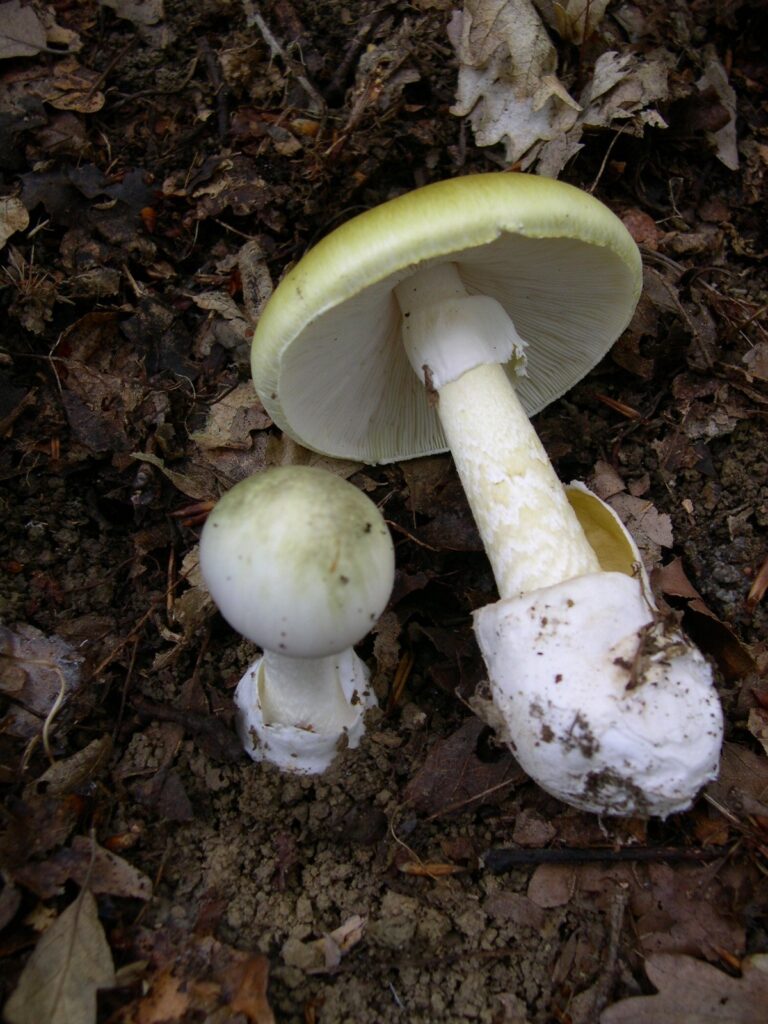
The name “phalloides” comes from its distinctive shape, which has given rise to this specific epithet. In some countries, such as the US, this species is known as the Death Cup or Death Cap. This deadly fungus has a long history of use in medicine, but it was eventually banned due to its extreme toxicity.
Toxicity
This mushroom contains various toxins, but the main culprit that damages the liver and kidneys is α-amanitin. This toxin cannot be reduced by freezing or cooking the mushrooms before consumption, making it impossible to “depotenize” this deadly fungus.
The amatoxins in this mushroom cause gastrointestinal disturbances with symptoms like diarrhea, nausea, and abdominal pain within 5-12 hours after ingestion. It appears that the body seems to recover from these symptoms for several hours or even a day or two before returning more severe symptoms: kidney and liver damage may already be irreversibly damaged at this point.
Without treatment, coma and death are almost inevitable. Unfortunately, people who receive late medical attention in an episode of amatoxin poisoning can only be saved with significant surgical intervention and liver transplant, and even then, recovery is a precarious, painful, and prolonged process.
Prevention
To avoid the risk of mushroom poisoning, you must learn to identify this deadly fungus correctly and unambiguously and distinguish it from edible species like the Agaricus sylvicola, which can be found in the same habitat as Amanita phalloides, or the Agaricus campestris, which is often found in fields delimited by deciduous trees.
Sadly, this mushroom can also be mistaken for other similar fungi, such as Lycoperdon perlatum or Lycoperdon pyriforme. Furthermore, despite its unpleasant odor, young Amanita mushrooms are almost odorless and may have a pleasant taste, increasing the risk of accidental ingestion in a meal.
Conclusion
In conclusion, it is essential to learn how to identify these two deadly mushrooms: Amanita viscosa and its closest allies, before venturing into the hobby of mushroom foraging. You can further explore this fascinating fungus through numerous online publications.
You will also discover that Amanita phalloides has been known by ancient Greeks and Romans as a deadly poison and was even used as an instrument of murder throughout history. Unfortunately, it still causes many tragic and painful deaths today.
The color of the mushroom varies depending on location and individual specimens, but the most common form has a pale greenish-yellow or olive-green cap. However, there is also a completely white Amanita phalloides that has the same deadly consequences as other colored specimens.
Frequently Asked Questions
- What are the symptoms of mushroom poisoning?
- Symptoms appear within 5-12 hours after ingestion and include gastrointestinal disturbances such as diarrhea, nausea, and abdominal pain.
- Can Amanita phalloides be “cooked” to reduce its toxicity?
- No, this fungus cannot be “depotenziated” by cooking or freezing before consumption due to the presence of α-amanitin, a toxin that damages the liver and kidneys.
- How can I prevent accidental ingestion of Amanita phalloides?
- Learn to identify this deadly fungus correctly and unambiguously and distinguish it from edible species like Agaricus sylvicola or Agaricus campestris.
- Can the color of a mushroom indicate its toxicity?
- No, the color of Amanita phalloides varies depending on location and individual specimens, but it is not reliable for identifying toxicity.
- What is the best way to treat amatoxin poisoning?
- Treatment involves significant surgical intervention and liver transplant, followed by a precarious, painful, and prolonged recovery process.
- How many deaths are caused annually by Amanita phalloides?
- Unfortunately, there is no official data on the number of annual deaths due to amatoxin poisoning.
- Can children accidentally ingest Amanita phalloides?
- Yes, children can accidentally ingest this deadly mushroom if they are not taught how to identify it correctly and unambiguously.
- Is there any scientific research on the effectiveness of treatments for amatoxin poisoning?
- Some studies have shown that prompt medical attention with significant surgical intervention and liver transplant can save lives, but recovery is always precarious, painful, and prolonged.
By understanding the dangers posed by Amanita phalloides and taking necessary precautions when handling this deadly fungus, you can minimize your risk of accidental ingestion. Always remember to learn how to identify edible mushrooms correctly before venturing into mushroom foraging.
In addition to learning about the risks associated with Amanita phalloides, it’s also important to understand the different types of mushrooms that are safe to eat and how to prepare them. Here are some general guidelines for identifying edible mushrooms:
- Research the species: Before attempting to forage for wild mushrooms, research the species you’re interested in eating. Look at pictures, read descriptions, and learn about its habitat and characteristics.
- Use multiple field guides: Consult multiple field guides and mushroom identification apps to confirm your findings.
- Join a mushroom club or online community: Connecting with experienced mushroom enthusiasts can be incredibly valuable for learning more about the species you’re interested in eating.
Additional Resources
- Mushroom identification websites:
- iNaturalist
- Mushroom Observer
- Field Guide to Mushrooms
- Mushroom identification apps:
- Mushroom Identifier
- Fungi Finder
- Mushroom Identification
Conclusion
In conclusion, the Amanita phalloides is a deadly mushroom that can cause severe illness and death if ingested. By understanding its characteristics, habits, and risks, you can minimize your risk of accidental ingestion and enjoy the many benefits of foraging for wild mushrooms.
If you’re new to mushroom foraging, start by learning about the different types of mushrooms that are safe to eat and how to prepare them. Join a mushroom club or online community to connect with experienced mushroom enthusiasts and learn more about the species you’re interested in eating.
Remember, safety should always be your top priority when it comes to foraging for wild mushrooms. Never take unnecessary risks, and always prioritize caution over curiosity.


