
The Peter Pan syndrome, popularized by Disney’s iconic character, has become a common phenomenon where individuals struggle with immaturity and refuse to grow up. However, what exactly is this syndrome, and how does it affect people? In this article, we’ll delve into the causes, symptoms, and effects of the Peter Pan syndrome, as well as its impact on relationships and overall well-being.
What is the Peter Pan Syndrome?
The Peter Pan syndrome refers to a psychological condition where individuals exhibit immaturity, refusal to take responsibility, and an excessive focus on pleasure and entertainment. They often struggle with emotional maturity, intimacy, and commitment, leading to difficulties in personal and professional relationships.
While it’s true that having fun and enjoying life is essential, the Peter Pan syndrome takes this to an extreme, causing harm to oneself and others. Individuals suffering from this condition may appear charming and carefree on the surface but secretly struggle with feelings of inadequacy and anxiety.
The Origins of the Peter Pan Syndrome
Contrary to common myths, the Peter Pan syndrome is not solely caused by a overprotective mother or childhood trauma. While these factors can contribute to the development of this condition, it’s also linked to underlying psychological issues such as:
- Insecurity and low self-esteem: Feeling inadequate or uncertain about one’s place in the world.
- Fear of commitment and intimacy: Difficulty with emotional closeness and vulnerability.
- Difficulty with emotional regulation: Struggling to manage emotions, leading to mood swings and impulsivity.
- Lack of accountability and responsibility: Avoiding tasks and decisions that require maturity and decision-making.
These underlying issues can lead individuals to cling to their youthful energy and avoid taking on adult responsibilities.
Sintomi della Sindrome Peter Pan
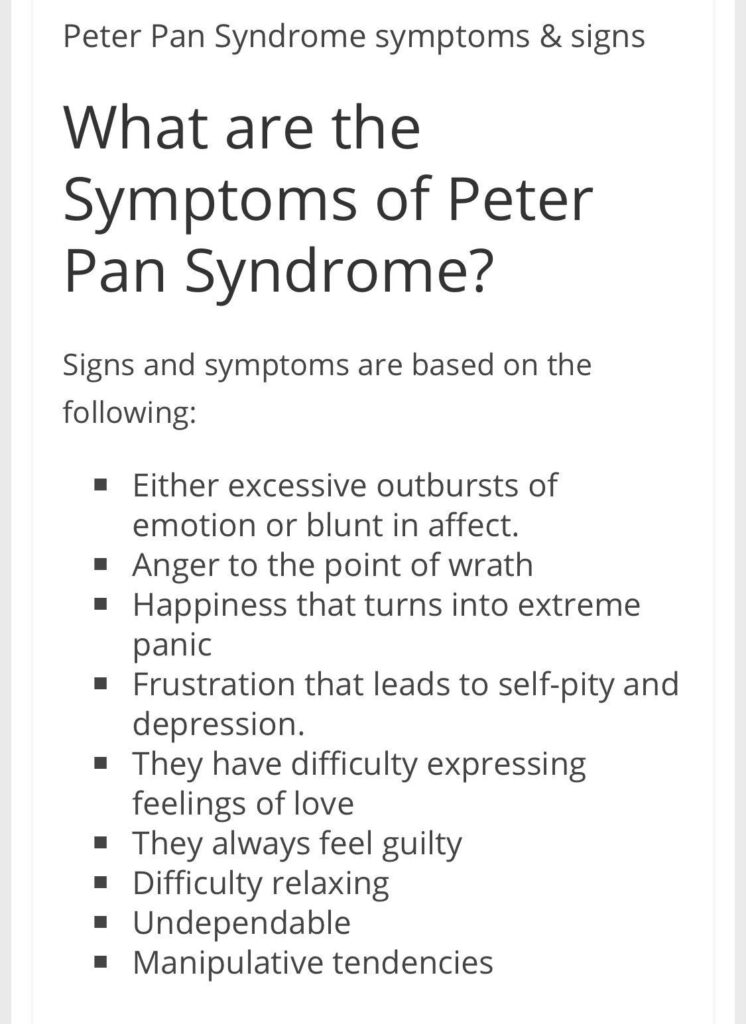
Some common symptoms of the Peter Pan syndrome include:
- Immaturity: Refusal to take responsibility, difficulty with decision-making, and a lack of emotional maturity.
- Egoism: Excessive focus on personal pleasure and entertainment, often at the expense of others.
- Avoidance: Difficulty dealing with stress, anxiety, or difficult emotions.
- Narcissism: Grandiose sense of self-importance and a need for constant validation.
These symptoms can manifest in various ways, such as:
- Engaging in immature behaviors, like playing video games or watching excessive amounts of TV.
- Avoiding responsibilities, such as paying bills or taking care of personal hygiene.
- Struggling with relationships due to lack of emotional maturity and intimacy.
Sindrome Peter Pan: amore e relazioni
While the Peter Pan syndrome can manifest in various ways, its impact on romantic relationships is particularly notable. Individuals suffering from this condition may:
- Avoid commitment: Fear of getting tied down or losing their freedom.
- Struggle with intimacy: Difficulty with emotional closeness and vulnerability.
Despite these challenges, some people find partners who are also dealing with the Peter Pan syndrome. In these cases, the relationship can be fulfilling for both parties, as they:
- Complement each other’s strengths
- Learn to navigate their immaturity together
However, when one partner is more willing to grow up and take responsibility than the other, the relationship can become unbalanced.
Cura della Sindrome Peter Pan
Fortunately, the Peter Pan syndrome is not an irreversible condition. With self-awareness, support, and a willingness to change, individuals can overcome their immaturity and develop emotional maturity.
Some strategies for overcoming the Peter Pan syndrome include:
- Therapy: Working with a therapist to address underlying issues and develop coping skills.
- Self-reflection: Identifying areas of improvement and working on self-awareness and personal growth.
- Healthy relationships: Surrounding oneself with supportive people who encourage emotional maturity.
By acknowledging the Peter Pan syndrome and its effects, individuals can take the first step towards overcoming their immaturity and developing a more fulfilling life.
Frequently Asked Questions
- What is the Peter Pan syndrome?
- The Peter Pan syndrome is a psychological condition where individuals exhibit immaturity, refusal to take responsibility, and an excessive focus on pleasure and entertainment.
- How common is the Peter Pan syndrome?
- The Peter Pan syndrome affects both men and women, with some studies suggesting that it’s more prevalent in males.
- Can the Peter Pan syndrome be cured?
- Yes, the Peter Pan syndrome can be overcome with self-awareness, support, and a willingness to change.
- How does the Peter Pan syndrome affect relationships?
- The Peter Pan syndrome can lead to difficulties in romantic relationships due to lack of emotional maturity and intimacy.
- What are some signs that someone has the Peter Pan syndrome?
- Signs may include immaturity, egoism, avoidance, and narcissism.
Conclusion
The Peter Pan syndrome is a complex issue with far-reaching consequences for individuals and their loved ones. By understanding its causes, symptoms, and effects, we can take steps towards overcoming this condition and developing emotional maturity. Whether through therapy, self-reflection, or surrounding ourselves with supportive people, there’s hope for growth and transformation.
Ultimately, the Peter Pan syndrome is not a fixed state of being; it’s a journey that requires self-awareness, effort, and support. By acknowledging its presence in our lives and taking action to address it, we can break free from the constraints of immaturity and live a more fulfilling life.


